Skip to content



For years, the typical B2B buying journey started with a static PDF catalog emailed back and forth. It was accompanied by multiple phone calls and manual price confirmations. This model worked when catalogs were small, and buyer expectations were low. Today, it simply can’t keep up. And that’s why ecommerce catalogs have moved beyond being digital versions of PDFs. They’ve transformed into dynamic, real-time systems that centralize products, pricing, inventory, and ordering. In this guide, we will understand what today’s B2B ecommerce catalog looks like, its key components, benefits, and tips to manage them.
What is a B2B ecommerce catalog?
A B2B ecommerce catalog is a digital system that presents a wholesaler’s complete product assortment to business buyers. It is shared in an interactive and transaction-ready format. Unlike static catalogs, it adapts to who the buyer is. This means it is capable of showing the right products at the right prices to the right buyers.
The core objective of today’s B2B product catalog is simple. To reduce friction in the buying process while giving wholesalers like you full control over complex B2B operations like negotiated pricing and bulk ordering.
Key components of a B2B ecommerce catalog
Here are the essential elements that form a part of most business to business catalogs:
- Product information management: This is the core of any catalog. Every product is organized with accurate SKUs, relevant images, variants, key attributes, and other detailed specifications.
- Customer-specific pricing: Modern B2B catalogs support account-level pricing and volume-based discounts. Instead of one universal price list, each buyer sees prices tailored to their contract with the wholesaler.
- Inventory visibility: Buyers can view real-time or near-real-time stock availability based on defined rules. This may include warehouse-level visibility or even backorder logic.
- Minimum order quantities: B2B buying rarely involves small quantities. Ecommerce catalogs can enforce minimum order quantities. This ensures every order aligns with operational and logistical constraints without affecting the buying experience.
- Dynamic filters and search features: Advanced search and filter options help buyers navigate large catalogs efficiently. This is important, especially when catalogs run into thousands of SKUs.
Why are digital B2B catalogs important to wholesalers?
Here are some of the key benefits wholesalers experience when moving from traditional PDF catalogs to modern B2B ecommerce catalogs:
- Enhanced product presentation: Digital catalogs allow wholesalers to present products in a more structured and visual manner. This makes it easier for buyers to understand offerings and choose the right products without back-and-forth.
- Faster order cycles: Thanks to real-time pricing and inventory availability, buyers can place orders instantly. This significantly shortens the sales-to-order cycle compared to manual, email-driven workflows.
- Reduced dependency on sales teams for orders: Buyers can independently browse catalogs and place orders without involving sales teams at every step. This streamlines operations while allowing sales teams to focus on relationship-building.
- Better control over pricing and margins: You can enforce customer-specific pricing and offer tier-based discounts strategically. This ensures margin discipline without relying on manual checks.
- Fewer order errors and returns: Automated validations around SKUs, quantities, pack sizes, and availability reduce mistakes that typically occur with manual order entry.
- Improved customer experience for buyers: A consistent, predictable buying experience builds trust. Buyers know what they can order and when they can expect delivery, every time they log in.
- Data-driven insights: Some digital catalog solutions capture buyer behavior, popular SKUs, reorder patterns, and drop-offs. This gives you actionable insights to refine pricing and plan inventory.
How does a B2B ecommerce catalog differ from a traditional wholesale catalog?
Here is a summary of all the differences between a B2B ecommerce catalog and the traditional PDF wholesale catalog:
| Factor | Offline/PDF wholesale catalog | B2B ecommerce catalog |
| Pricing | Fixed price lists are shared periodically | Dynamic pricing with real-time discounts |
| Updates | Product, price, or availability changes require reprinting or resending updated PDFs | Updates happen instantly across products, pricing, and inventory |
| Scalability | Difficult to manage as SKUs grow | Built to handle large catalogs |
| Personalization | Same catalog shared with all buyers | Catalog adapts to each buyer with tailored products and prices |
| Inventory Visibility | No real-time visibility; availability confirmed via calls or emails | Real-time visibility built directly into the catalog |
| Ordering Experience | Orders placed via phone, email, or manual forms | Self-serve ordering with carts, reorders, and bulk purchase flows |
| Possibility of errors | High risk of pricing and quantity errors | Automated rules reduce manual errors and order discrepancies |
| Integration | Standalone documents with no system connectivity | Integrated with ERP and backend systems for data consistency |
How to implement a B2B ecommerce catalog?
A B2B ecommerce catalog is usually implemented using an ecommerce platform tailored for wholesale selling. Interestingly, these platforms don’t just host your product catalog. They also manage pricing logic, customer accounts, ordering workflows, and inventory sync.
So, instead of juggling multiple tools, you can run your entire digital wholesale operation, including catalog management, from a single system built specifically for B2B complexity. WizCommerce is a classic example of such a platform.
Using a B2B ecommerce solution like WizCommerce for catalog implementation comes with several advantages:
- You gain access to various advanced B2B ecommerce features out of the box, apart from catalog management.
- You experience faster time-to-launch as most of the core functionalities are readily available and easily configurable.
- You experience much lower operational overheads compared to building or custom-coding a catalog system from scratch.
- These platforms are designed for quick adoption by both internal teams and buyers. This makes it easier to scale digital sales without heavy technical dependence.

How to select the right ecommerce platform for catalog management?
Choosing the right B2B ecommerce platform for catalog management is critical. This is because your catalog sits at the center of the entire commerce experience, and the right platform will make sure your operations scale along with your growing catalog. So, here are the key capabilities to evaluate when choosing an ecommerce platform:
1. Flexibility in price management
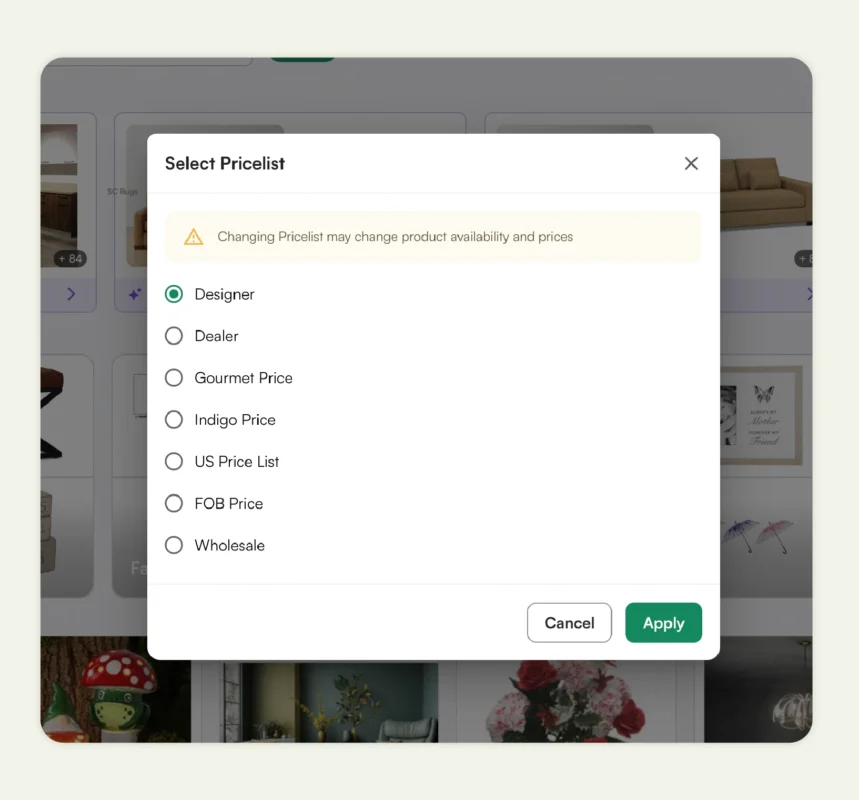
B2B pricing is rarely standardized. Different buyers have different pricing requirements. On top of this, there are negotiated contracts, volume slabs, regional rules, and promotional terms. Your ecommerce platform must be able to manage this complexity digitally without workarounds.
WizCommerce, for instance, supports custom price lists out of the box. This lets you set tailored prices for different retailers based on buyer personas, business units, or geography. WizCommerce also offers item-level and cart-level discounts to run targeted promotions without affecting base prices. Contract pricing and login-based price visibility are also available to all users.
2. Ability to manage complex SKUs, variants, and attributes
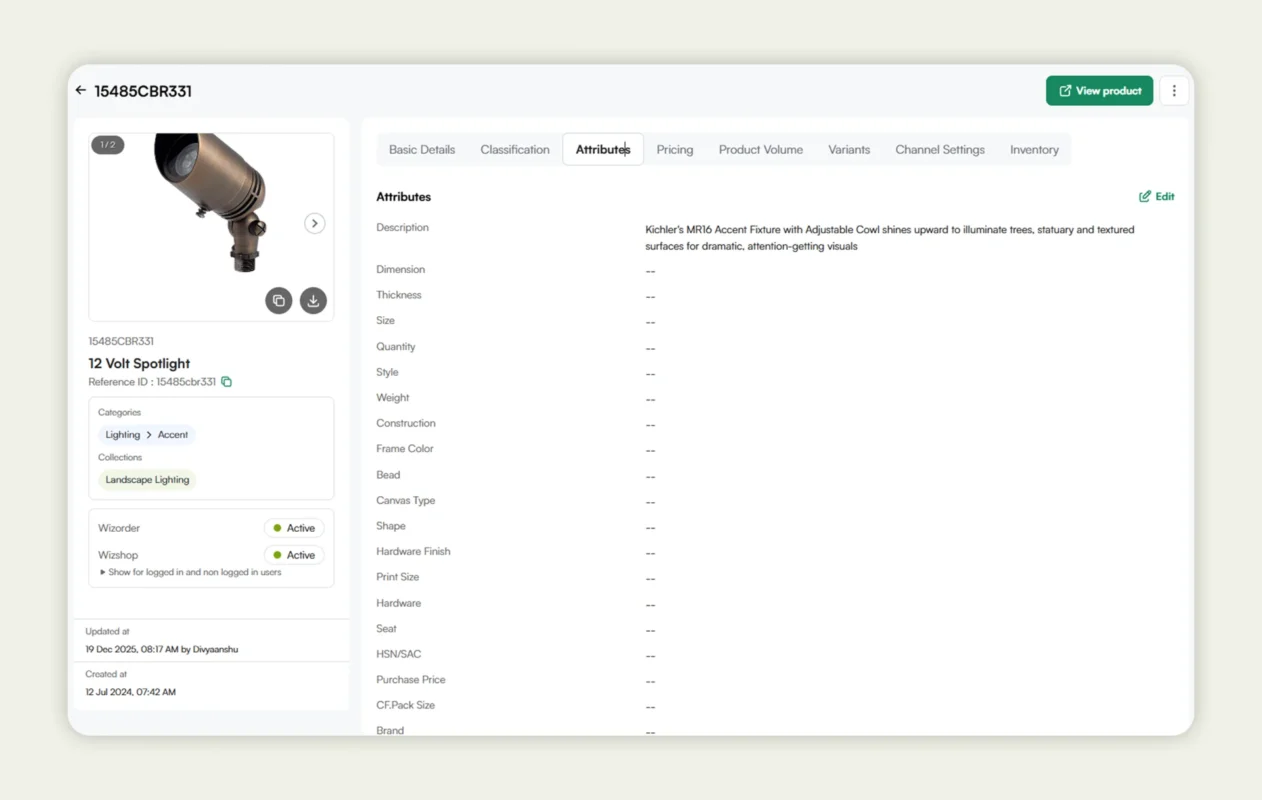
Unlike simple catalogs, a B2B catalog often includes thousands of SKUs with different variants, technical specifications, packaging options, and compliance-related attributes. Managing this level of detail manually becomes error-prone.
WizCommerce is designed to handle product complexity at scale by helping you manage everything from multiple variants to attaching unique attributes to products in a consistent format.
3. Ease of integration with ERP
Your catalog is only as reliable as the data powering it. That data typically lives in your ERP. So, the platform you choose should integrate seamlessly with your ERP to sync product information, pricing, inventory levels, and customer records. This ensures your buyers always see accurate, up-to-date data every time.
WizCommerce supports seamless integration with some of the top ERPs in the market, including Microsoft Dynamics 365 Business Central, NetSuite, Sage, Epicor Prophet 21, SAP Business One, and SAP S/4HANA.
4. Customization without heavy development effort
A good B2B commerce platform allows you to configure catalog rules, visibility, workflows, and user experiences through settings and not through custom code. This reduces reliance on developers and speeds up iteration.
WizCommerce is designed to be “configuration-first”. This means you can tailor everything from pricing rules to product visibility via built-in settings. In other words, you or your team can make catalog-related changes quickly with minimal training.
5 . Offline support
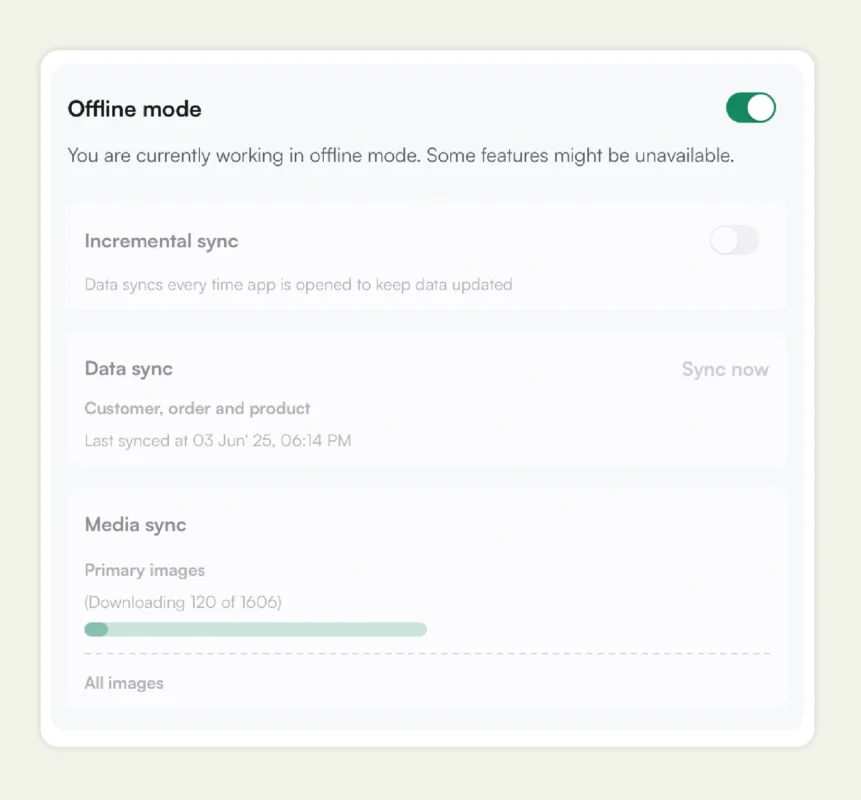
Offline access is one of the most ignored (but important) requirements in B2B catalog management. This is particularly useful if your sales teams operate on the field. For instance, if they are at a trade show with patchy internet connectivity, they might lose valuable selling opportunities without full access to the product catalog. An effective B2B platform should allow your catalog to remain visible even without an active internet connection.
WizCommerce provides offline capabilities for 24/7 order capture. It allows your reps to continue selling even in low or no-connectivity environments. Reps can browse the full product catalog, access customer-specific price lists, create orders, and use barcode or QR scanning for faster product selection. Payments can also be captured on the spot via POS. Once connectivity is restored, all orders and customer data are automatically synchronized with the WizCommerce cloud.
6. Ability to support both self-serve buyers and assisted selling
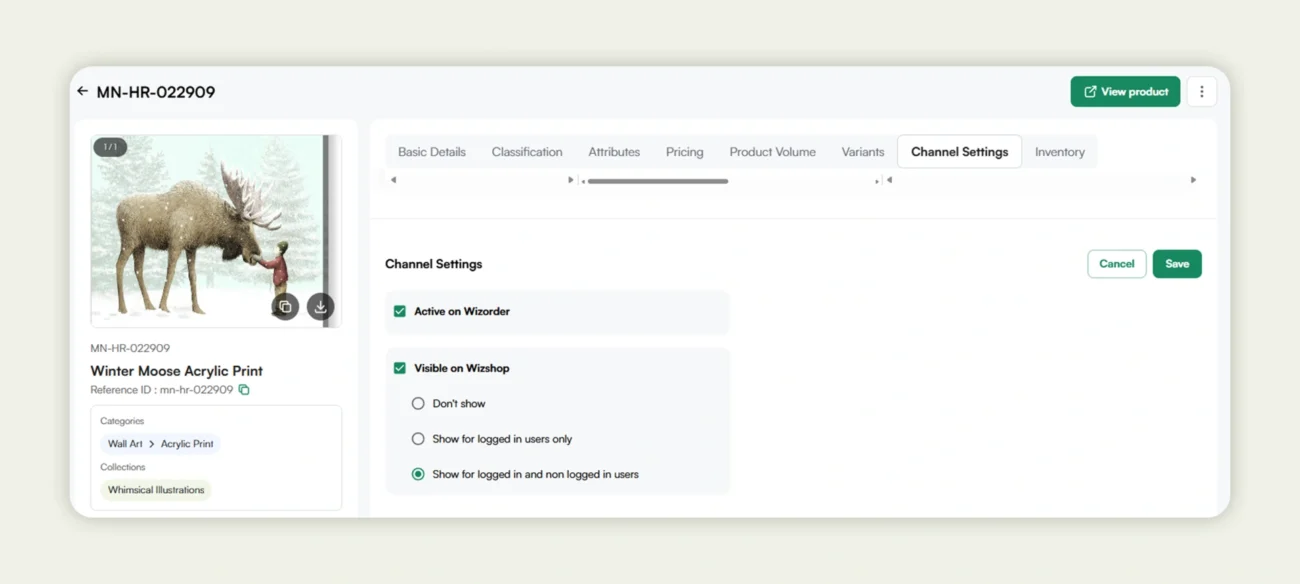
Today’s buyers prefer a self-serve ordering experience, no doubt. However, when it comes to highly customized or high-value orders, direct sales assistance is preferred. A strong B2B catalog must support both independent buying and rep-led transactions. The reps should be able to place orders on the buyer’s behalf without duplicating data or breaking workflows.
WizCommerce supports this through its dedicated sales-rep order-taking app, WizOrder. This app is designed specifically for reps to access the same live catalog and pricing displayed to buyers. It ensures buyers and your reps operate from a single source of truth.
7. Speed, performance, and catalog load times
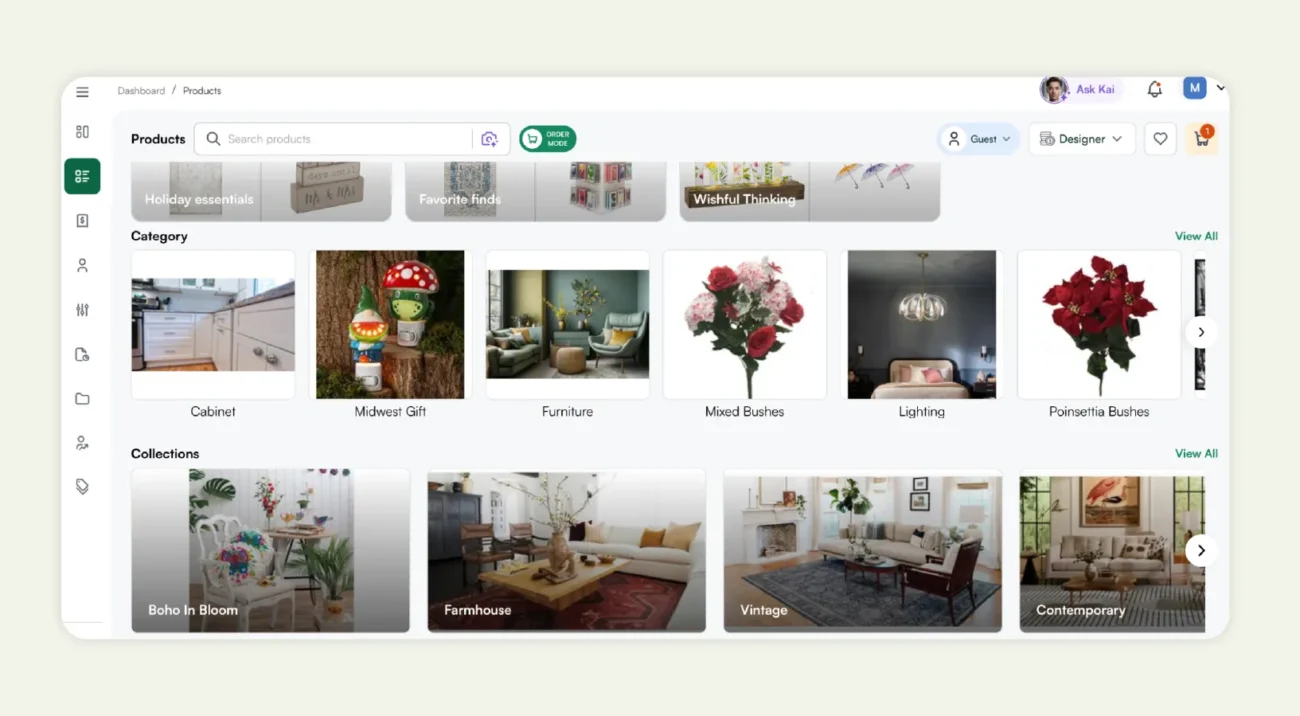
Performance directly impacts catalog adoption. If pages load slowly or the search feels sluggish, buyers quickly revert to manual ordering channels, or worse, switch to competitors. A modern B2B ecommerce platform must deliver fast load times and smooth navigation regardless of catalog size.
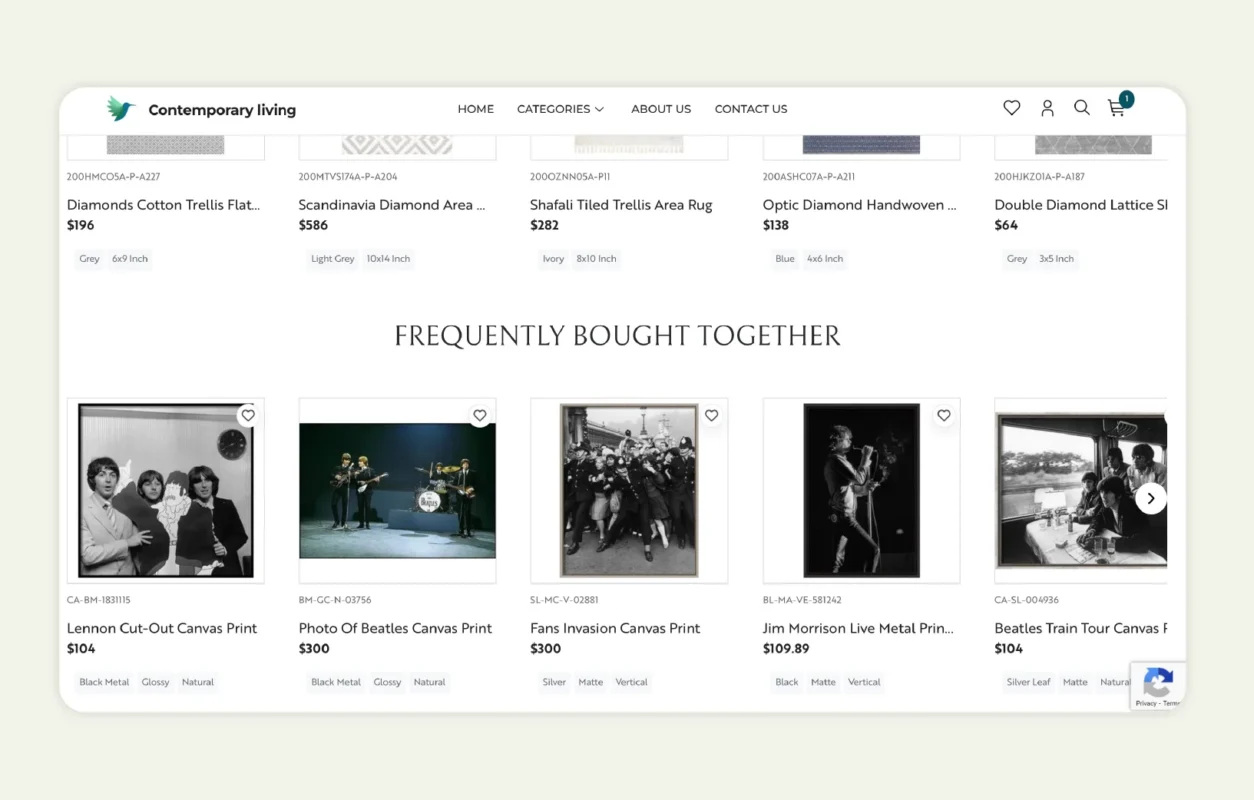
WizCommerce is built to handle large catalogs efficiently. It delivers fast-loading product pages, a highlight responsive search, and an intuitive navigation aptly supported by an AI-powered product recommendation system that uses purchase history and buyer behavior to deliver hyper-relevant products.
Best practices in B2B ecommerce catalog management
As products and pricing evolve, your catalog needs to stay accurate and easy to buy from. The following best practices can help you keep your catalogs efficient and conversion-ready:
Segment your catalog strategically
Using the same catalog for every buyer is not possible in the B2B setting owing to variations in wholesale pricing, contracts, buying authority, and negotiated terms. So, always segment catalogs based on customer type, industry, geography, purchase history, or contract terms. Strategic segmentation simplifies the buying experience and ensures buyers only interact with products and prices that are relevant to them.
Automate whenever possible
Manual catalog management does not scale with your business. So, make sure that product updates, pricing syncs, inventory refreshes, and availability rules are automatically updated through ERP and backend integrations. Automation reduces errors and ensures your catalog always reflects the latest product data without constant manual intervention.
Audit your catalog regularly
Over time, catalogs accumulate outdated SKUs and unused price lists. Regular audits help identify inconsistencies, inactive products, pricing mismatches, and broken workflows. This keeps your catalog clean and reliable.
Add professional-quality images
Visual clarity plays a major role in B2B buyer confidence. High-quality product images in your catalog help buyers quickly understand what they’re ordering and reduce ambiguity. Tools like WizStudio make it easier to generate professional-grade product visuals at scale without the cost and effort of traditional photoshoots.
Bringing it all together: Why WizCommerce is built for modern B2B ecommerce catalogs
A B2B ecommerce catalog is more than a dynamic product list. It plays a key role in driving wholesale growth by shaping buyer experience and enabling faster sales cycles. Unlike B2C, B2B commerce requires customer-specific pricing, curated product visibility, and alignment with negotiated contracts and buying workflows.
WizCommerce was built B2B-first to address these realities and not adapted from a generic ecommerce model. WizCommerce’s catalog management is designed to reflect how wholesale selling actually works, across regions, customer tiers, and sales teams.
Want to experience the power of WizCommerce first-hand? Book a free demo now.
Frequently Asked Questions
1. What is an ecommerce catalog?
An electronic catalog in ecommerce or simply an ecommerce catalog is a structured digital collection of products displayed online. It shows detailed information about products dynamically, including names, images, product descriptions, pricing, availability, and variants(if any). It is often considered the backbone of online selling as it allows buyers to browse and select products easily while helping businesses drive conversions.
2. What is the difference between a catalog and a website?
An online catalog in ecommerce focuses specifically on product information. This involves organizing SKUs, pricing, variants, and specifications for discovery and ordering. A website or an ecommerce site is a broader asset that covers brand content, pages, blogs, support, and marketing. In ecommerce, the catalog is a critical component of a website.
3. What are the three types of catalogs?
The three common catalog types are print catalogs (physical brochures or books), digital product catalogs (PDFs or interactive online catalogs), and ecommerce catalogs (dynamic, database-driven catalogs). Each serves different buyer behaviors and offers various levels of interactivity.
4. What is a B2B catalog?
A B2B catalog is a specialized ecommerce catalog designed for business buyers. Digital catalogs in B2B ecommerce typically support complex requirements like customer-specific pricing, the ability to place bulk orders, easy access to MOQ rules, contract products, tiered discounts, and ERP software integration.
5. What is the role of an ecommerce catalog manager?
An ecommerce catalog manager is responsible for maintaining accurate and detailed product information across the catalog. This includes managing product details like SKUs, categories, pricing rules, images, descriptions, and updates. Their role ensures data consistency and a smooth buyer experience that drives conversion rates.
6. What is the purpose of a catalog?
The primary purpose of a catalog is to present a list of items in a clear and accessible way. It helps potential buyers discover offerings, understand specifications, and proceed with the purchasing process. For businesses, a catalog standardizes product listings, streamlines the supply chain, and supports the sales process.
7. What software is best for digital catalogs?
The best digital catalog software depends on business needs. For ecommerce and B2B selling, an ecommerce platform like WizCommerce, that offers catalog management as part of its solution, is ideal. Such platforms offer a variety of other capabilities that go beyond catalog management and help with day-to-day B2B operations.
8. Does Shopify have a catalog?
Yes. Shopify includes a built-in product catalog that allows businesses to add products, manage variants, pricing, and collections. However, for complex B2B needs like customer-specific pricing or large SKU catalogs, many businesses prefer a B2B-first platform like WizCommerce for catalog management.
9. What is an example of a catalog in business?
A wholesale distributor’s online product catalog showing hundreds or thousands of SKUs with specifications, detailed descriptions, bulk pricing, and minimum order quantities is one of the best B2B catalog examples. Sales reps and potential customers use the same catalog to browse products and place repeat orders efficiently.
10. How do I create a catalog for my business?
Start by organizing your product data, including SKUs, categories, descriptions, images, and pricing. Use an ecommerce software that supports digital B2B catalogs to structure and publish them. Ensure regular updates and consistency to keep your ecommerce product catalog accurate and effective.