Skip to content




B2B sellers in the US have long depended on retail marketplaces like Overstock to reach end consumers and bulk buyers. The appeal was simple: instant visibility and a low-effort entry into online selling without investing heavily in their own ecommerce infrastructure. But today, Overstock has become intensely competitive. Rising pressure on margins and growing reliance on a single marketplace have made many B2B businesses realize that what once felt like a growth shortcut is now a strategic risk. This blog is for sellers ready to diversify. It’s a listicle covering the best Overstock alternatives that can help broaden your ecommerce reach and reduce platform dependency.

Top 9 best Overstock alternatives B2B businesses should try in 2026
Sellers today have access to more specialized and cost-effective platforms than Overstock to reach buyers. Here is a list of 9 such Overstock competitors:
| Overstock alternative | Benefits offered to the seller | Categories you can sell |
| Wish | No upfront costs Access to a global audienceMobile-first marketplace | FashionBaby productsGadgetsHome decor items |
| Wayfair | Powerful insightsDedicated supply chain solutions Specialized support teams | Indoor furnitureRugsOutdoor furniture |
| Chairish | Lower entry barrier to sellingFree listingChairish manages payment and shipping | AntiqueJewelryHome decorArt |
| 1stDibs | Fraud and chargeback protection for risk-free transactionsSeller tools to manage listingsExpert coaching and resources | FurnitureFine artJewelryCollectibles |
| Faire | A strong buyer protection programFlexible payment terms for buyers0 commission on all orders from existing accounts | ApparelJewelryKids itemsHome decor |
| Target Plus | Only one seller per SKUA wide range of partner services is provided to streamline operationsLess competition, as it is an invite-only program | Apparel Home decorBeauty Baby gearHome essentials |
| Bonanza | Google Shopping integrationProduct sync with other sales platformsAbility to sell on both the webstore and the marketplace | Home decorBeautyCollectiblesApparelJewelry |
| Ruby Lane | Advanced inventory management and marketing toolsEasy setupLow competition | CollectiblesArtFashionJewelry |
| eBay | Powerful ads network for visibilityStrong seller protection programAccess to a global audience | ElectronicsHome decorFashionBeauty |
1. Wish
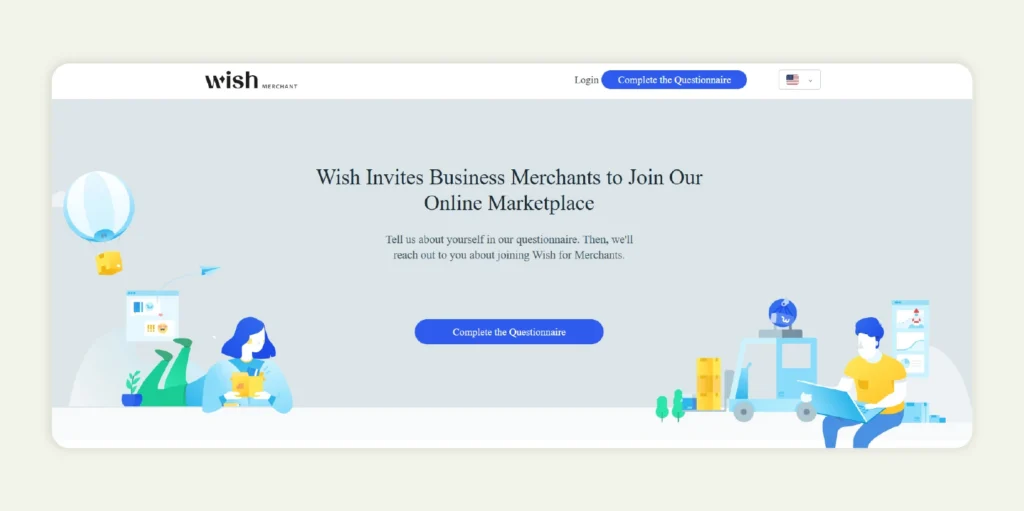
Wish.com is a mobile-first ecommerce platform that was originally launched as a wishlist app. The company evolved into a full-fledged ecommerce marketplace after noticing strong demand for low-priced products. It connects value-focused shoppers with merchants offering affordable goods. The platform aims to offer a convenient and budget-friendly shopping ecosystem for its users and a convenient selling space for its merchants through a mobile-optimized platform. You can sell a wide range of product categories, including gadgets, home improvement, pet supplies, cosmetics, fashion, and hardware, through this popular marketplace.
2. Wayfair
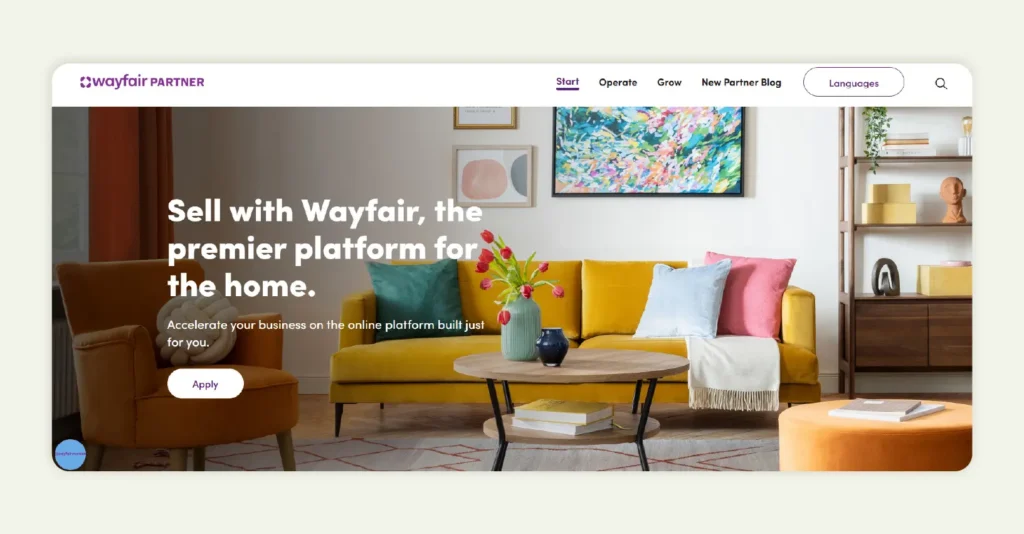
Wayfair is an online retailer based in the United States and focused primarily on home goods and modern furniture. When you list your products on their marketplace platform, you will be connected with millions of customers shopping for home-related items. You can manage your catalog, pricing, inventory, and orders through their dedicated Partner Home portal. You also get logistics options such as CastleGate, which allows you to use Wayfair’s fulfillment network, if needed. The platform even provides advertising programs and access to international storefronts in the US, Canada, and the UK, depending on your eligibility and onboarding requirements.
3. Chairish
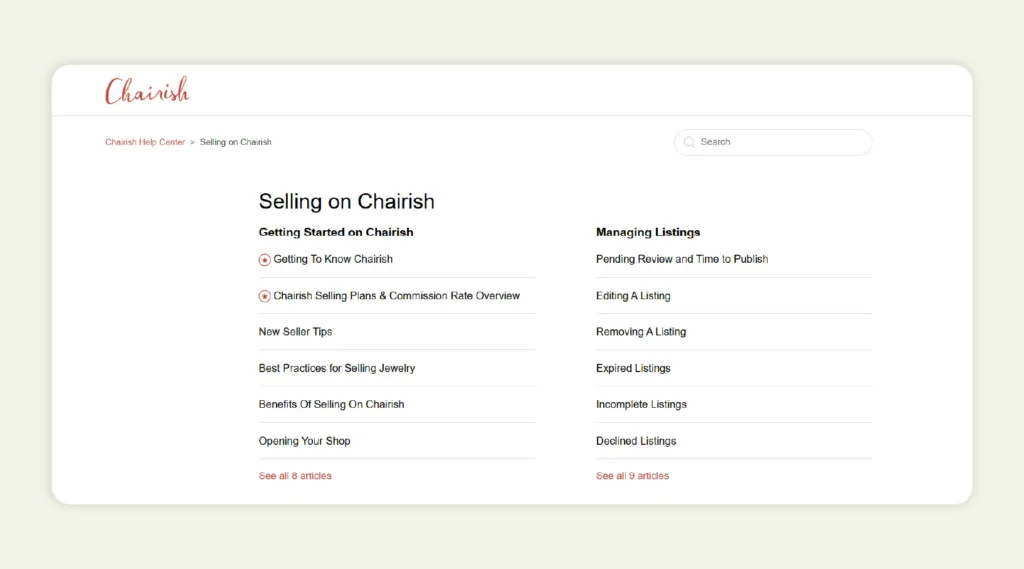
Chairish is a website like Overstock, but focused on special subcategories like vintage, antique, and contemporary home furnishings, home decor, and art. Chairish connects you with a design-oriented audience, like interior designers, dealers, galleries, artisans, and individual sellers. Depending on the selected seller plan, you receive anywhere between 60% and 80% of the final selling price. The platform reviews and edits your listings before they go live. It also offers optional shipping coordination through third-party carriers and releases payment after delivery and the return window period. While a business license is not required to sell on this platform, compliance with applicable laws is expected.
4. 1stDibs
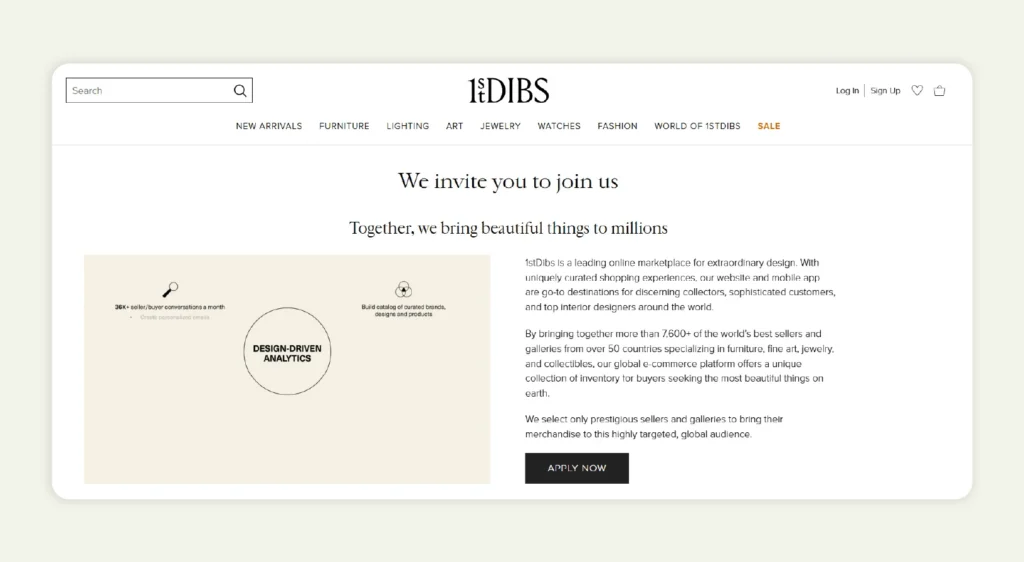
1stDibs is an Overstock alternative specializing in high-end furniture, fine art, jewelry, and collectibles. When you sell on 1stDibs, you get access to a global base of registered users, including collectors and verified trade professionals. The platform provides tools for inventory management, marketing exposure, logistics support, fraud protection, and transaction handling, along with account support. You also get business guidance to sell efficiently on the platform.
5. Faire
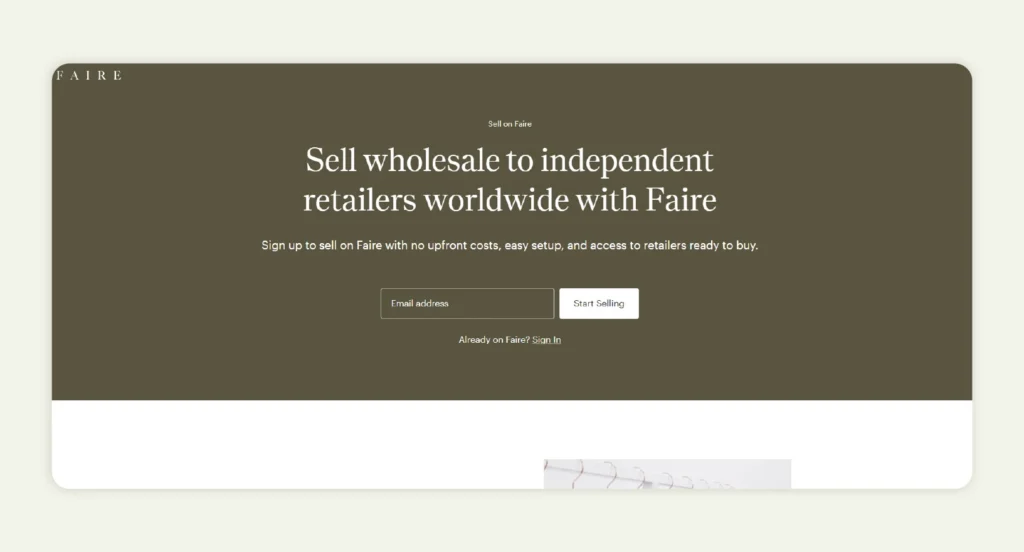
Faire is a global B2B marketplace that connects you with independent retailers across multiple product categories, including apparel, home decor, beauty, food and drink, and more. There are no upfront costs to join. The company charges commission only on new customers acquired through its marketplace. This typically ranges around 25% for first orders and 15% on reorders. Faire manages payment processing and guarantees payouts (generally 30 days after shipment, or sooner for a fee), and provides shipping options through pre-negotiated carrier rates or brand-managed fulfillment with reimbursement.
6. Target Plus
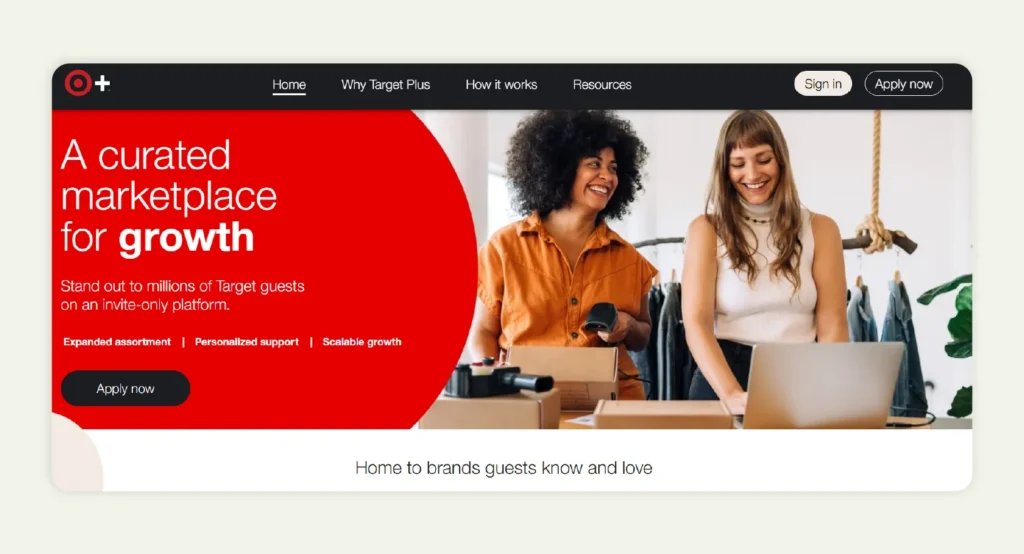
Target Plus is an invite-only third-party marketplace operated by Target. It allows selected sellers to sell products on Target.com. You need to submit an application for review, after which approved partners are onboarded and guided through catalog setup and launch. The platform provides access to Target’s large US customer base, along with merchandising support, performance insights, and promotional opportunities.
7. Bonanza
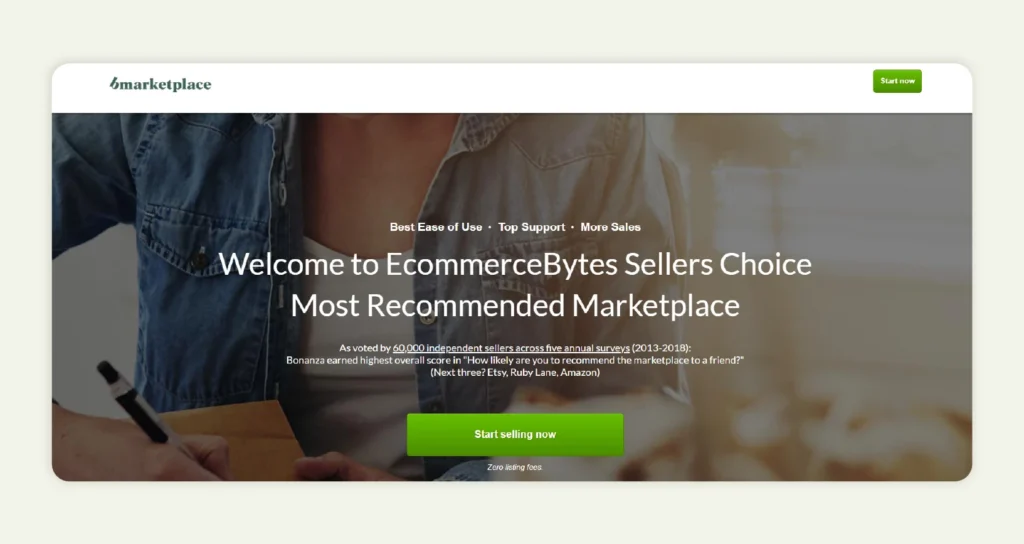
Bonanza is an Overstock alternative that allows you to list and sell products online with no upfront listing fees. The platform offers integrations such as Google Shopping exposure, product syncing with other sales channels, shipping label tools, and customizable webstore options. You can operate through the marketplace, a standalone webstore, or both, depending on your preferred selling structure.
8. Ruby Lane
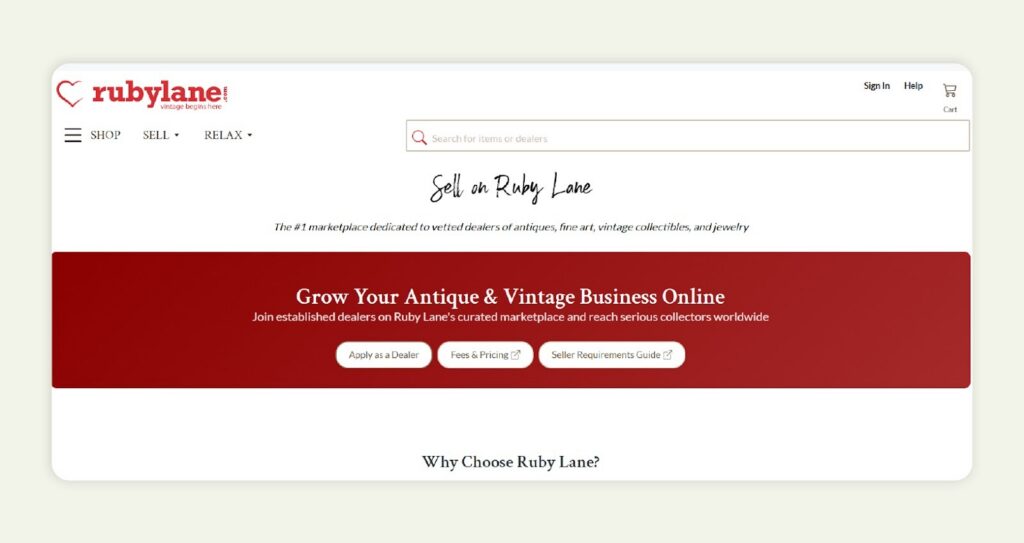
Ruby Lane is an online marketplace dedicated to antiques, fine art, vintage collectibles, and jewelry. To sell on Ruby Lane, you need to apply as a dealer, with approval based on experience, an established online presence, and compliance with platform standards. The marketplace requires authentic vintage or antique items, detailed listings, and transparent condition reporting, while prohibiting fakes or misrepresented goods. You need to manage your own inventory and storefront. You can use a PayPal Business account for transactions.
9. eBay
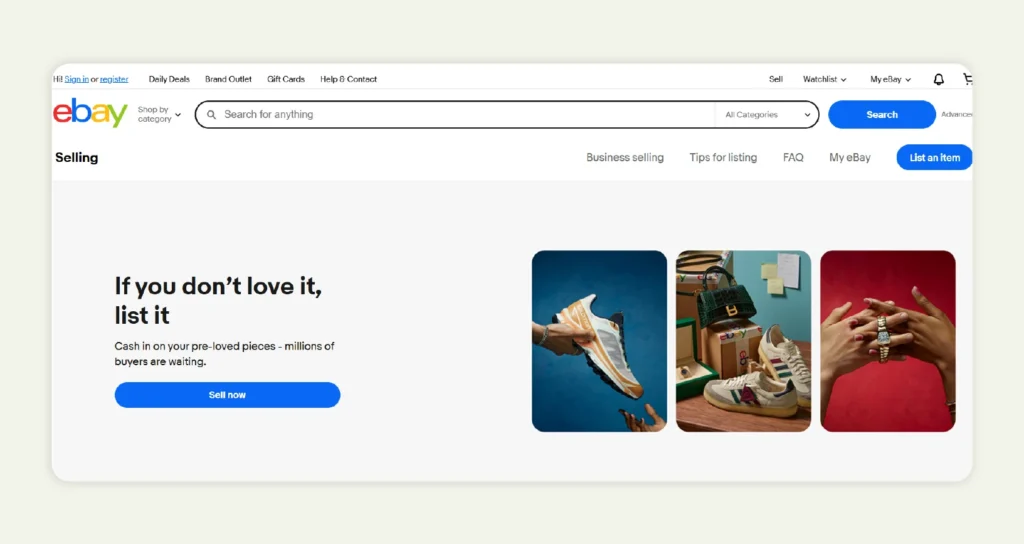
eBay is a global online marketplace where individuals and businesses can list and sell a wide range of new and used items. Selling on eBay begins with creating a seller account and listing products using either auction or fixed-price formats. You get tools to help create listings, manage inventory, and handle orders through the Seller Hub. The platform charges fees such as insertion fees for listings and final value fees when an item sells, and it also supports streamlined payout and shipping options.
Factors to consider while choosing an Overstock alternative
Before shifting to an Overstock competitor, you need to evaluate more than just traffic potential. The right marketplace will improve your profitability and support long-term growth. It won’t just replace one dependency with another. Here are some factors you need to carefully assess while picking an Overstock alternative for your B2B business:
- Seller commission and platform fees: Compare referral fees, transaction charges, subscription costs, and advertising expenses to understand true profit margins.
- Pricing flexibility and discount controls: Check whether you can maintain wholesale pricing tiers and bulk discounts without being forced into constant promotions.
- Order volume and minimum selling requirements: Some platforms demand consistent listing activity or sales thresholds. Ensure they match your operational capacity and inventory cycles.
- Shipping and logistics support: Evaluate whether the marketplace offers integrated logistics or requires complete self-management.
- Return handling and dispute management: Clear policies and seller protection mechanisms prevent losses from fraudulent returns or unfair buyer claims.
- Seller dashboards and reporting tools: Strong reporting helps track buyer behavior and demand trends. These are critical for B2B forecasting.
- Customer communication and account management support: The ability to interact with buyers and build long-term relationships is essential for wholesale growth.
- Seller support: Responsive onboarding and account assistance can significantly reduce operational friction and downtime.

Why are many B2B sellers moving away to better Overstock alternatives?
Overstock and sites similar to Overstock can certainly provide quick access to buyers and operational convenience. In fact, for many B2B sellers, they serve as a useful starting point. However, over time, heavy dependence on marketplaces often introduces structural limitations that affect long-term growth. Here are some challenges that are triggering many B2B businesses to look beyond websites like Overstock:
- Rising commission structures and associated fees: As marketplaces adjust their pricing models, you may find your margins gradually shrinking. When acquisition, advertising, logistics, and platform fees are combined, your profitability can become increasingly difficult to predict or control.
- Limited control over branding and customer relationships: Marketplace environments typically standardize listings and restrict design flexibility. They also prevent direct ownership of customer data. This limits your ability to build brand recall or create differentiated experiences outside the platform.
- Price competition: You are often placed side by side with competitors offering similar products. This can drive price-based competition that can erode margins. Algorithm-driven visibility further adds uncertainty, as changes in ranking systems or promotional requirements can directly impact sales performance.
- Over-reliance on marketplace policies: Changes in terms, fee structures, compliance requirements, or account suspensions can significantly affect revenue streams. If you want stability and predictable growth, this dependence can make long-term planning difficult.
For these reasons, many sellers are shifting toward building their own selling infrastructure. They are investing in B2B commerce platforms that provide greater control over pricing, data, branding, and overall business resilience.
Building your own infrastructure using WizCommerce: The smarter Overstock alternative
When you invest in owned infrastructure, you move from platform dependency to operational independence. You strengthen brand identity and build business stability. Now, when we ask you to build your own infrastructure, it doesn’t mean abandoning marketplaces entirely. Many sellers continue to use them for visibility and diversification. However, the core revenue engine is shifting toward owned platforms that remove commission pressure and allow complete branding flexibility.
WizCommerce is a B2B ecommerce platform designed specifically to support this transition. It is your centralized wholesale operating system that brings together pricing control, storefront, catalog management, order processing, customer management, and analytics into one unified environment. Here are some of the key B2B ecommerce features offered by WizCommerce:
- Customizable checkouts: Flexible payment terms and delivery preferences tailored to your buyers.
- Multiple price lists: Set up unique price lists for different personas, regions, etc.
- Offline order management: Use our sales rep app for uninterrupted selling at trade shows or in low-connectivity environments.
- ERP integration: Connect with your preferred ERP to create a single source of truth for all your data
- Kai: Our in-house AI sales assistant, offering valuable account-related insights for your reps to make informed decisions in real time.
- Advanced analytics: Gain visibility into buyer behavior and sales trends.
- Multicart management: Your reps can handle parallel deals efficiently.
Want to get started with WizCommerce? Book a free demo now.
Frequently Asked Questions
What is similar to Overstock?
Similar websites to Overstock include Wayfair, Wish, Bonanza, eBay, etc. Like Overstock, they operate primarily online and provide access to large customer bases, competitive pricing, and marketplace-style selling opportunities for brands and third-party sellers.
Which is better, Wayfair or Overstock?
Whether Wayfair or Overstock is better depends on your goals. Wayfair focuses exclusively on offering a wide variety of affordable furniture items related to living spaces and home offices. Overstock emphasized selling stylish furniture pieces at affordable prices. Differences between the two platforms are mainly seen on their fee structures, branding control, audience positioning, and onboarding requirements, rather than one platform being universally superior.
Who are the competitors to Overstock?
Key competitors to Overstock include Wayfair, Chairish, Target, etc. In the home and functional furniture segment, specialty marketplaces like these compete on pricing and assortment. Competition between them is usually not around who sells the best furniture sets or who offers the most affordable options. It generally centers around who offers better online traffic, fulfillment capabilities, and marketplace membership programs.
Are Overstock and Bed Bath & Beyond the same?
Overstock and Bed Bath & Beyond were historically separate companies. However, Overstock acquired the Bed Bath & Beyond brand assets in 2023 and later rebranded its operations under the Bed Bath & Beyond name. While the legacy retail chain had brick and mortar stores selling a wide variety of products related to bedroom furniture and living room furniture at reasonable prices. The current business primarily operates as an online store.
What is Overstock now called?
Overstock is now called Bed Bath & Beyond online, following its rebrand in 2023. The change followed Overstock’s acquisition of the Bed Bath & Beyond brand assets. In essence, the Overstock website and the BedBathandBeyond.com website are operated by the same company today, and they are great options for selling new furniture and new home decor products to the world market at various price ranges.
What is the problem with Overstock?
The problem with Overstock, while it is generally considered a great place and a reliable choice to sell your products at a variety of price points, involves several challenges. Overstock is typically associated with issues like margin pressure from discount positioning and intense price competition. Like many marketplaces, you may also face limited branding control and frequent policy changes that affect visibility and profitability. These structural factors can create unpredictability in revenue and long-term business planning.