Skip to content



Getting quality product images used to mean booking a photographer, renting studio space, and waiting days for edited shots. For ecommerce brands and wholesalers managing hundreds of SKUs, that process was slow, expensive, and nearly impossible to scale.
These artificial intelligence tools changed that entirely. Generative AI has made it possible to produce professional-looking product photos in minutes, without a camera or a studio.
But here is the thing. Not every AI image generation tool is built for the same job. The generic vs specialized AI image generation tool debate comes down to one core question, are you looking for creative flexibility, or are you looking for consistent, commerce-ready product images at scale?
Generic AI image generation tools (like ChatGPT and Nanobanana) are built for broad creative use. Specialized AI product photography tools (like WizStudio) are built specifically for ecommerce product visuals.
Picking the wrong type of AI picture generator for your use case means wasted time, inconsistent outputs, and images that simply do not work for your catalog. This post breaks down the real differences so you can make the right call.
Why is AI product photography becoming popular?
Ecommerce brands, wholesalers, and retailers are moving to AI-generated images because the business case is hard to ignore:
- Faster turnaround. Days of studio work compressed into minutes.
- Lower costs. No studio rentals, equipment, or photographer fees.
- Easier to scale. Generate images across hundreds of SKUs without proportional cost increases.
- More flexibility. Same product, different backgrounds and scenes, done in seconds.
As product catalogs grow and buyer expectations rise, teams still relying on traditional photography are finding it harder to keep up. The question is not whether to use AI image generation. It is which type of AI technology actually fits your workflow.
What is a generic AI image generation tool?
A generic AI image generation tool is a broad-purpose platform capable of creating a wide range of visual content from text prompts. ChatGPT, developed by OpenAI, supports image generation via its built-in model. Google’s Gemini (Nano banana) also falls into this category. Midjourney, Stable Diffusion (open source), and Adobe Firefly (from Adobe Creative Cloud) are other well-known examples.
These tools are designed for creative flexibility. You describe what you want, the AI generates it. Use cases range from illustrations and social media posts to concept art for creators and marketing visuals. It is a good option for beginners.
How they handle product images:
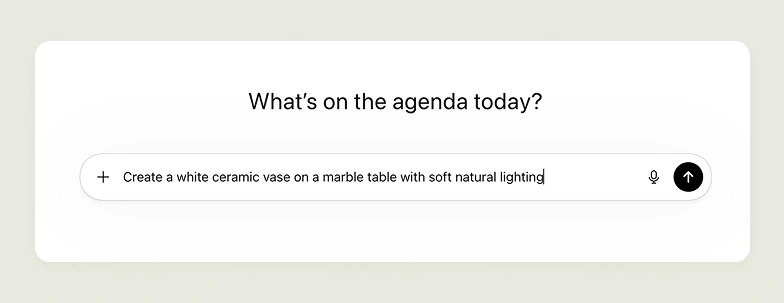
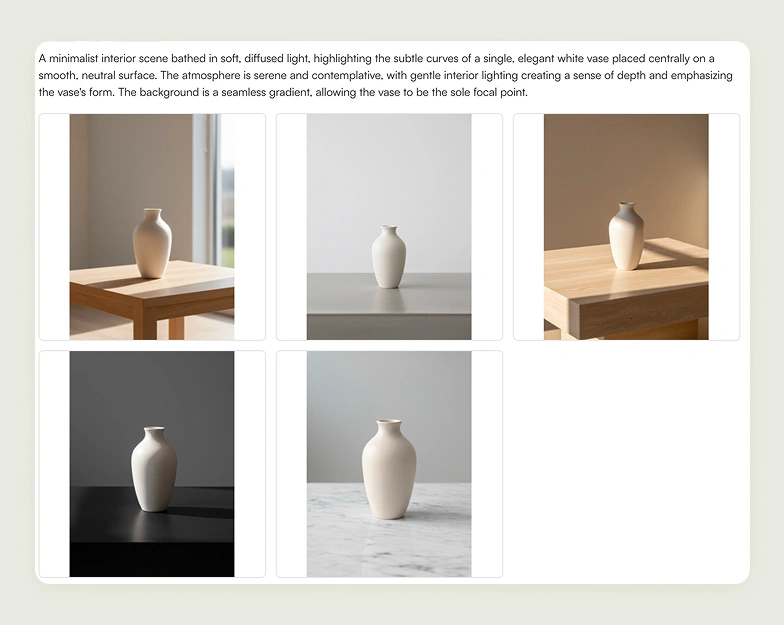
You write an image prompt describing the product and scene (for example: “a white ceramic vase on a marble table with soft natural lighting”), and the tool generates an image based on that text description. Results can look polished across different styles, especially for creative or one-off use cases.
Prompt
Output

Where they fall short for ecommerce:
- Output quality depends heavily on prompt quality. Getting consistent results takes significant trial and error.
- While many generic tools offer a free plan, the outputs are often limited in quality or resolution.
- These tools generate entirely new images rather than placing your actual product in a scene. Your product’s real colors, textures, and details may not be accurately represented.
- There is no structured workflow for producing images at catalog scale.
- Outputs vary significantly from one generation to the next, making visual consistency across a product catalog very difficult to maintain.
- Generic tools are also prone to hallucinations, generating product details that do not exist or altering key visual attributes.
- They also struggle with complex designs where product accuracy is critical.
Generic AI image generation is well suited for brainstorming, creative experimentation, or one-off visuals. For ecommerce product photography at scale, it requires too much iteration to be practical.
What is a specialized AI product photography tool?
A specialized AI product photography tool is built for one specific job: turning your actual product photo into a professional, commerce-ready image.
WizStudio is a strong example of what this category looks like.
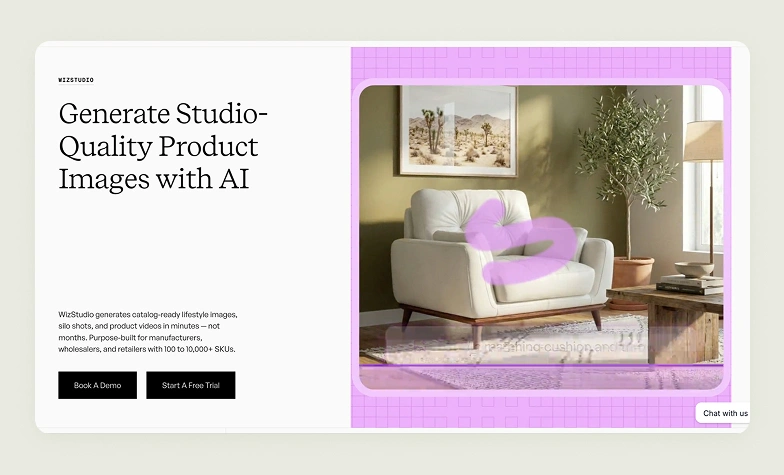
Instead of functioning as a traditional AI image generation tool that generates visuals from scratch using prompts, it uses your real product photograph as the foundation. The AI generates a realistic scene, lifestyle environment, or studio backdrop around your product, keeping the product itself accurate throughout.
Here’s a quick list of the 10 best AI product photo generators you can try today!
How WizStudio works:
You upload a raw photo of your product on a plain background. WizStudio automatically removes the background, enhances colors, adjusts angles, and prepares the image for scene generation.
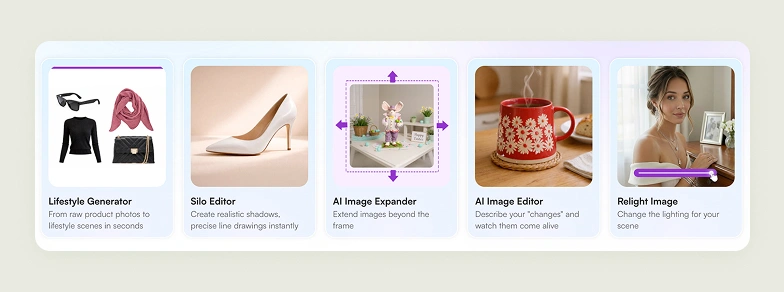
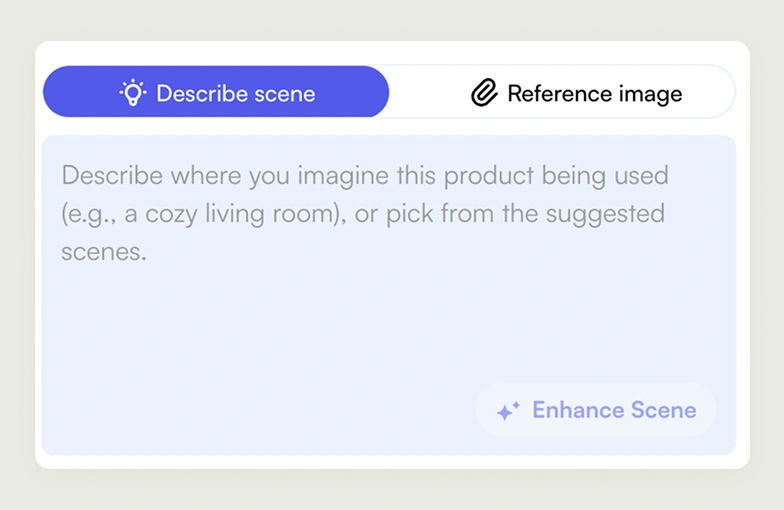
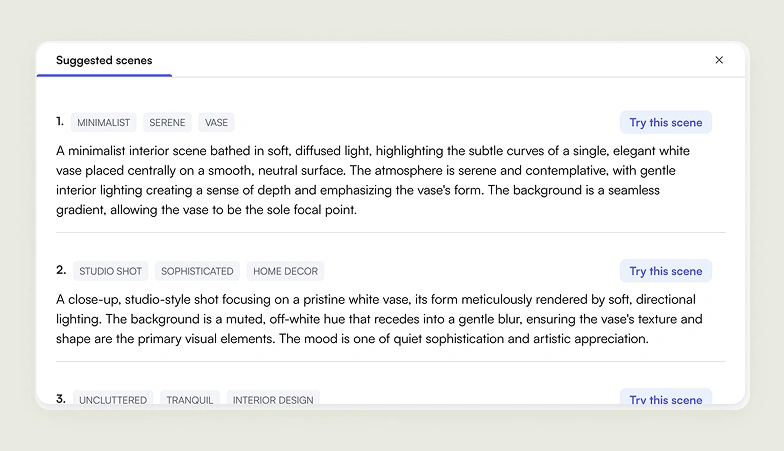
From there, you describe the scene you want (for example: “a vase in a cozy bedroom” or “a plate on an ivory table”), and the tool generates a hyper-realistic lifestyle image that looks like it came out of a professional studio shoot.
The built-in editor lets you fine-tune outputs by adjusting shadows, lighting, and tones. For teams that want an added layer of quality assurance, WizStudio also offers a Done-for-You service where every image goes through human review before delivery.
What sets specialized tools apart:
- They work with your actual product, so the output accurately reflects what you are selling.
- The AI is trained specifically on product photography, giving it greater precision and a better understanding of lighting, angles, shadows, and realistic product placement.
- They are built for bulk image generation and catalog-scale workflows.
- Outputs are consistent across products because the tool follows structured workflows rather than open-ended prompting.
Understanding what each tool is built for makes the choice much clearer. Here is how they compare across what matters most.
Generic vs specialized AI image generation tool: A detailed comparison
Side by side, the gap between a generic and a specialized AI image generator tool becomes hard to ignore.
| Factor | Generic tools (e.g., ChatGPT, Nanobanana) | Specialized tools (e.g., WizStudio) |
| Primary use case | Broad creative content generation | Ecommerce product photography |
| Works from your actual product | Limited; supports reference images but not product-accurate workflows | Yes, builds scenes around real product images |
| Ease of use | Moderate; requires prompting and iteration | Structured workflow with minimal trial and error |
| Image consistency across catalog | Difficult at scale without manual controls | Typically built-in |
| Product accuracy | Can vary; risk of altering product details | Designed for higher accuracy |
| Bulk image generation | Possible, but not optimized | Core capability |
| Industry-specific training | General-purpose | Optimized for product categories |
| Human review option | Not built-in | Often available (e.g., managed services) |
| Best for | Creative work, mood boards, one-off visuals | Product listings, B2B catalogs, ecommerce storefronts |
| Pricing model | Subscription or per generation | Often usage-based (e.g., credits on output/downloads) |
For ecommerce and wholesale teams, the table tells a clear story. A generic AI image generation tool was simply not built for this job. It lacks the product accuracy, catalog-scale workflows, and industry-specific training that professional product photography demands.
A traditional AI image generation tool might get you somewhere close, but “close” is not good enough when your product images are directly tied to buyer trust and conversion. Specialized tools exist precisely because generic ones fall short. The generic vs specialized AI image generation tool gap is widest exactly where it matters most: at scale, under production conditions, with real products.
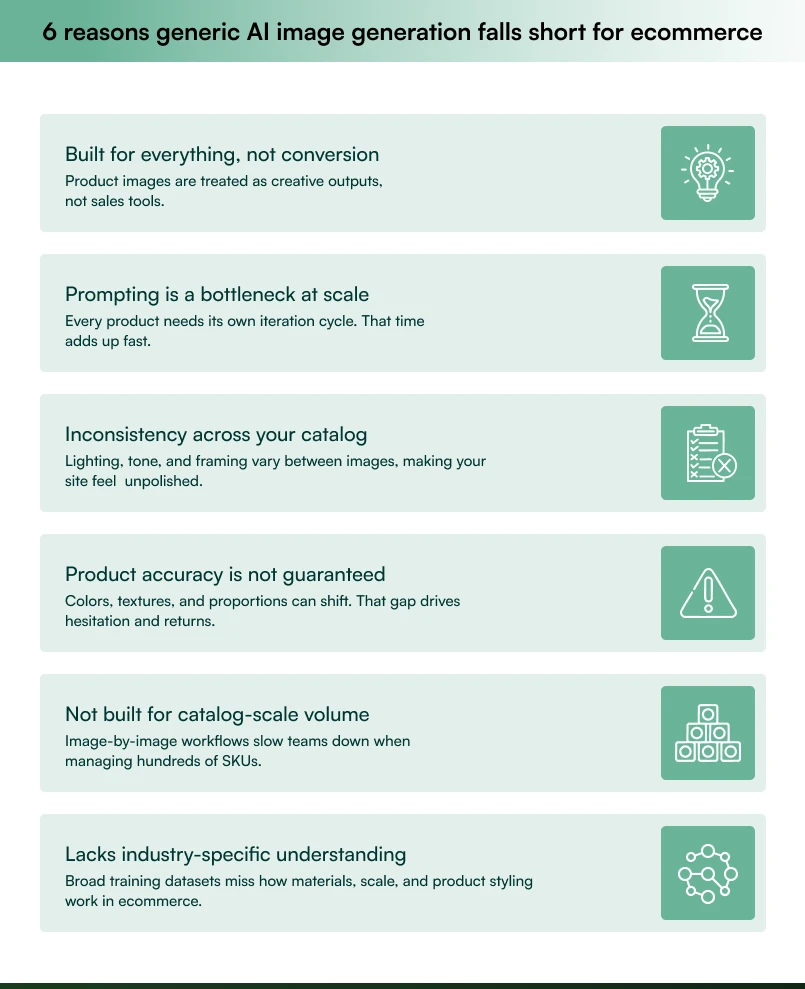
Why generic AI image generation falls short for ecommerce product photography
The table shows the differences. What it does not show is how those differences play out when you are managing a real product catalog.
Purpose: Built for everything vs built for one thing
Generic AI image generation tools are designed to handle many tasks. Image generation is only one of them.
That flexibility comes at a cost. Product images are treated like creative outputs instead of decision-making tools. The result is content that may look appealing but is not optimized to help a customer evaluate and compare products.
Specialized tools are built around a single goal. They produce images that help products sell. Every output is aligned to that purpose, which makes the difference visible immediately.
Ease of use: Prompt experimentation vs structured workflows
A traditional AI image generation tool depends on prompting and iteration. You can get a good result, but it often takes multiple attempts. Each new product requires the same effort again.
For a few images, this is manageable. For a catalog, it becomes a bottleneck. Time spent refining prompts and reviewing outputs adds up quickly.
Specialized tools replace this with structured workflows. You define the inputs once and apply them across products. The result is faster execution and far less manual effort.
Image consistency: A real problem at catalog scale
Generic AI image generation tools generate each image independently. Even with similar inputs, lighting, tone, and framing can vary slightly from one image to the next.
Across a large catalog, these small differences accumulate. The result is visual drift that makes the site feel inconsistent and less professional.
Specialized tools are designed for repeatability. They apply the same visual logic across outputs, which keeps the catalog cohesive without constant manual correction.
Image quality and product accuracy: Close is not good enough
A traditional AI image generation tool generates the full image from scratch. The product itself is an approximation based on the input.
In many cases, it looks close. But small differences in color, texture, or proportion can mislead customers. That gap between expectation and reality leads to hesitation, returns, and lower trust.
Specialized tools use the real product image as the base. The product stays accurate while the surrounding scene is generated. This keeps the visual true to what the customer will actually receive.
Scalability: Where generic tools hit a wall
Generic image generation tools work one image at a time. Each output requires input, review, and adjustment.
At catalog scale, this process slows down. Managing hundreds of products means repeating the same steps again and again, with inconsistent results.
Specialized tools are built for volume. They support bulk generation and standardized workflows, which allows teams to move quickly without losing control over quality.
Industry-specific training: The difference in output quality
Generic AI image generator tools are trained on a wide range of images. They can produce visually appealing outputs, but they do not consistently reflect how products should be presented in a commercial setting.
They may miss details such as how materials behave, how scale is communicated, or how products are typically styled for buyers.
Specialized tools are designed around product categories. They account for these nuances and produce images that align with how customers expect to see and evaluate products. This is where the traditional vs specialized tool gap becomes most visible: one produces images that look good, the other produces images that convert.
So, which AI image generation tool should you use?
The generic vs specialized AI image generation tool decision comes down to what you are actually trying to produce.
Go with a generic AI image generation tool if:
- You need creative visuals for ads, presentations, or mood boards
- You are experimenting with visual concepts and do not need catalog-ready output
- The actual product does not need to appear in the image
- You want broad creative flexibility for one-off projects
Go with a specialized AI product photography tool if:
- You need product images for ecommerce listings or B2B catalogs
- You manage a large product catalog and need consistent, scalable output
- Visual accuracy of your real product matters, including colors, textures, and proportions
- You want professional-quality results without spending hours writing and refining prompts
- You sell across specific categories like furniture, textiles, apparel, or lighting
For ecommerce brands and wholesale distributors, the answer is almost always the specialized tool. The goal is not creative exploration; it is professional, accurate product images that are ready to sell.
If you’re still confused, check out our blog post on how to evaluate product photography services for your ecommerce site.
WizStudio: A specialized AI product photography tool built for ecommerce
WizStudio is purpose-built for wholesale and ecommerce brands that need professional product images at scale. It works from your real product photo, covers categories like furniture, rugs, lighting, textiles, apparel, jewelry, and gifting, and gives you the option of human review on every image through its Done-for-You service. Choosing between a generic vs specialized AI image generation tool is a decision that directly impacts your catalog quality, and WizStudio is built to make that choice straightforward.
Unlike generic AI image generation tools, you are only charged when you download a final image, not every time the AI generates one. So your team can experiment freely and move fast without watching costs pile up.
If you are ready to replace expensive photoshoots with something faster and more scalable, get in touch with us today!
Frequently asked questions
What is the difference between general AI and specialized AI?
The difference between general AI and specialized AI lies in their functional scope. General tools handle diverse tasks like coding or writing, while a specialized image model excels at one specific job. In the traditional vs specialized tool debate, specialized AI provides superior accuracy for commerce-ready product images.
Which AI tool is better for image generation?
Deciding which best AI image generator to use depends on your specific goals. For broad creative concepts, mood boards, or one-off visuals, generic AI image generation works well. However, for professional ecommerce catalogs, WizStudio is the best ai image solution because it maintains product accuracy and visual consistency at scale.
What is an example of specialized AI?
A prominent example of specialized AI is WizStudio, which focuses exclusively on high-end product photography. Unlike a traditional AI image generation tool that creates visuals from scratch, it builds realistic lifestyle scenes around your exact image to ensure every detail remains completely accurate to the physical product.
Which type of AI is ChatGPT?
ChatGPT is a general-purpose AI designed for broad tasks like answering questions, coding, and basic visual creation. Analyzing wizstudio vs ChatGPT reveals that while ChatGPT is a powerful creative assistant, it lacks the specialized, catalog-scale workflows and specific training data required for consistent, high-volume ecommerce product photography.
How to create a specialized AI model?
To create a specialized AI model, you must train it on a focused, high-quality dataset tailored to a specific use case. For product photography, this requires training on massive volumes of commercial images to avoid common AI quirks. This depth of data helps prevent copyright infringement by ensuring the model understands professional lighting and textures without relying on unvetted public domain content.
Are there online platforms where I can try both generic and specialized AI image generators?
There are various online platforms where you can try both tool types to compare their outputs. You can use ChatGPT for broad creative experimentation or visit WizStudio to experience specialized product photography features. Testing a generic vs specialized ai image generation tool helps you determine which fits your workflow.