Skip to content



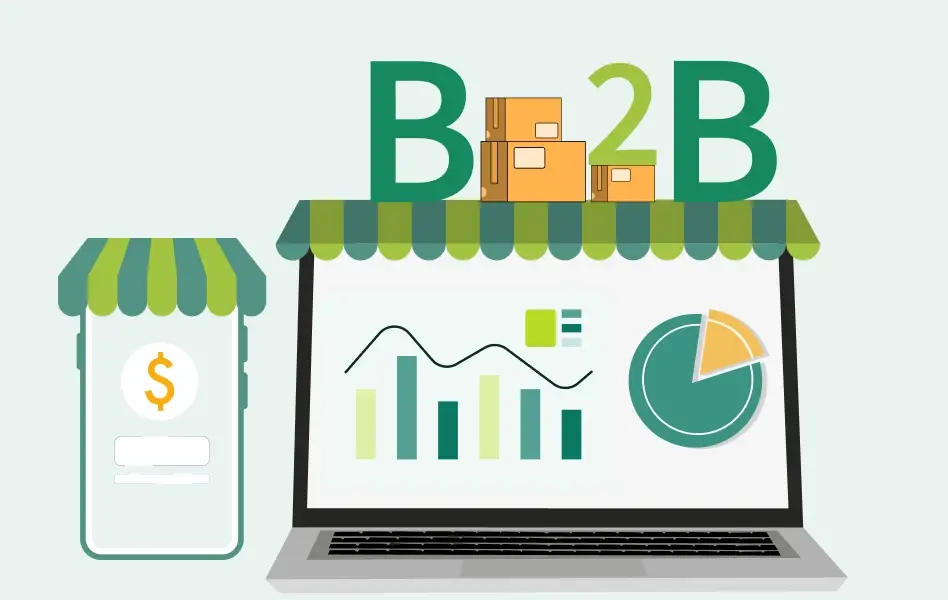
Choosing the right B2B ecommerce platform in 2026 is critical as online transactions now account for 80% of all B2B sales. With 75% of buyers ready to switch suppliers over poor online experiences, businesses need platforms that deliver seamless, personalized, and scalable solutions. Here’s a quick breakdown of what to prioritize:
Platform types
- Cloud-based: Scalable, lower upfront costs, automatic updates.
- On-premise: Full control, but requires higher maintenance.
- Headless architecture: Flexible and ideal for multi-channel expansion.
Quick comparison table
| Platform type | Best for | Pros | Cons |
|---|---|---|---|
| SaaS | Small to mid-sized businesses | Quick setup, minimal upkeep | Limited customization |
| PaaS | Large enterprises | Handles complex operations | Requires technical expertise |
| Licensed | Established companies | Full control | High renewal costs |
| Open Source | Tech-savvy organizations | No licensing fees | Development resources needed |
| Headless | Scaling brands & enterprises | Flexible front-end, API-driven | Requires development resources |
Action steps
- Define your business needs (e.g., bulk ordering, global expansion).
- Evaluate AI, integration, and mobile capabilities.
- Test platforms with demos and trials.
- Assess total costs, including setup and maintenance.
- Verify vendor reliability and security measures.
With B2B ecommerce projected to hit $28.86 trillion by the end of 2025, investing in the right platform can drive growth and improve customer satisfaction.
Define your business requirements
1. Key features for B2B success
Today’s B2B commerce requires more than just a basic online store. 87% of B2B buyers will spend more with suppliers who provide a top-notch ecommerce experience. When choosing a platform, focus on these critical features:
| Feature | Why it matters |
|---|---|
| Bulk ordering | Supports 73% of buyers placing orders over $50,000 |
| Customer-specific pricing | Offers contract-based rates and volume discounts |
| Multi-user accounts | Simplifies approval workflows for large teams |
| Real-time inventory | Avoids stockouts and backorders |
| Self-service options | Cuts customer service costs and boosts satisfaction |
| Mobile optimization | Ensures fast, responsive design for mobile users |
| AI-integration | Offers smart recommendations, 24/7 support, and demand forecasting |
Once you’ve pinpointed these must-haves, evaluate your current system to see where it falls short and what needs to change.
2. Identify current system challenges
Please take a close look at your existing system and note its weaknesses. Common issues include:
- Slow manual order processing
- Trouble integrating with other systems
- Poor mobile accessibility
- Inefficient search tools
- Customer service bottlenecks
3. Plan for growth
Your platform should meet your current needs while also supporting your future goals. For example, AS Colour’s thoughtful platform upgrade led to a 51% increase in visits and a 45% boost in revenue.
1. Handle growing transactions
With online transactions expected to make up 80% of all B2B sales in 2026, your platform needs to scale smoothly as demand increases.
2. Support global expansion
If you’re entering new markets, ensure your platform can handle:
- Multi-currency payments
- Regional tax regulations
- Localized payment options
- Language customizations
3. Embrace digital advancements
As 81% of B2B companies invest in AI, your platform should integrate with tools that enhance efficiency. For instance, Ballard Industrial leveraged digital tools to increase users by 83% and sessions by 79%.

Core B2B ecommerce platform features for 2026
Modern B2B platforms are designed to meet the changing demands of businesses today.
1. AI and smart recommendations
AI plays a major role in providing tailored recommendations that improve cross-selling opportunities and streamline customer support. McKinsey’s 2023 global survey revealed that 50% of companies use AI in at least one business function.
| AI feature | Business impact |
|---|---|
| Smart product recommendations | Drives cross-sell opportunities using behavior-based suggestions |
| 24/7 AI support | Cuts customer service costs and reduces wait times |
| Demand forecasting | Helps manage inventory and minimizes stockouts |
| Personalized search | Improves product discovery and boosts conversion rates |
For instance, Salesforce’s Agentforce handles 83% of customer queries without human involvement, significantly reducing support tickets and response times. Integrating these AI tools with your existing systems is crucial for maximizing their potential.
2. Software connections
Disconnected systems can waste up to 21% of a sales team’s time.
A great example is the Agricultural Blending Company. By integrating Salesforce Commerce Cloud with NetSuite ERP, they automated order processing and achieved real-time inventory updates. This led to faster order fulfillment and fewer errors. Solid integrations like these are also essential for delivering a smooth mobile experience.
3. Mobile device support
Mobile optimization is no longer optional. With 61% of searches happening on mobile devices and mobile commerce driving over 40% of revenue for leading B2B companies, your platform must perform well on mobile.
Key mobile features to prioritize:
- Responsive design for all devices
- Fast loading times (under 2 seconds)
- Streamlined checkout process
- In-app search functionality
- Secure mobile payment options
A well-optimized mobile platform enhances overall performance and user satisfaction.
4. Platform growth capacity
Your platform should be able to grow alongside your business. United Aqua Group’s move to a scalable platform resulted in impressive outcomes: a 284% increase in customers and a 336% boost in revenue.
Critical scalability factors include:
- Handling higher-order volumes
- Supporting more user accounts
- Expanding product catalog size
- Maintaining fast transaction speeds
- Managing storage and bandwidth needs
5. Data protection standards
| Security requirement | Benefit |
|---|---|
| Data encryption | Safeguards sensitive information during transmission |
| Access controls | Manages user permissions and ensures secure authentication |
| Compliance tools | Helps meet industry regulations |
| Audit trails | Tracks system changes and user activities |
| Backup systems | Prevents data loss and ensures business continuity |
Choose platforms that regularly update their security protocols and comply with industry standards. This will protect your business and customer data and strengthen trust with your partners.
Compare different types of platforms for B2B ecommerce
Now that you’ve outlined your core needs, let’s see how different platform types match up. Understanding these options is important to preparing for growth and digital strategies in 2026.
1. Cloud vs. local software
Deciding between cloud-based and on-premise solutions impacts costs, scalability, and maintenance. For context, public cloud spending increased by 18.4%, reaching $304.9 billion.
| Feature | Cloud-based | On-premise |
|---|---|---|
| Initial Cost | Monthly subscription (OpEx) | Large upfront investment (CapEx) |
| Maintenance | Managed by the vendor | Requires an internal IT team |
| Scalability | Instant resource adjustments | Needs additional hardware |
| Security | Enterprise-grade protection | Full control over data |
| Updates | Automatic vendor updates | Manual implementation |
| Access | Accessible anywhere via Internet | Limited to local network |
These deployment models also set the stage for more advanced setups, like headless architectures.
2. Headless platform benefits
Headless commerce separates the front-end from the back-end, making it easier to innovate. For instance, businesses using headless architecture have seen a 77% increase in multi-channel expansion.
Why consider a headless platform? Here’s what it offers:
- Faster Innovation: Update your front-end without touching the back-end.
- Channel Expansion: Seamlessly add new marketplaces and customer touchpoints.
- Better Performance: Enjoy faster page loads and improved user experience.
- API-First Design: Easily integrate with your existing systems.
Top B2B ecommerce platforms for 2026
After considering business needs and core features, let’s examine how top platforms stand out in terms of performance, integration, and scalability.
1. Market leaders review
In 2024, B2B ecommerce sales surpassed $2 trillion, pushing platforms like Magento Commerce, BigCommerce, and OroCommerce to refine their offerings to meet diverse business needs.
- Magento Commerce (Adobe Commerce): Known for its enterprise-level customization, it uses Adobe Sensei AI to deliver advanced personalization features.
- BigCommerce: Ideal for mid-sized businesses, it offers strong built-in B2B tools, minimizing the need for third-party apps.
- OroCommerce: Designed for manufacturers and distributors, it combines integrated CRM features with a flexible open-source framework.
2. Platform cost and features
When choosing a platform, weighing its upfront costs against long-term value is crucial. Entry-level B2B platforms usually cost between $500 and $2,000 monthly, while enterprise solutions like Magento Commerce can exceed $100,000 annually.
WizCommerce has carved a niche with its tailored B2B-focused innovations.
3. WizCommerce – AI powered B2B ecommerce platform
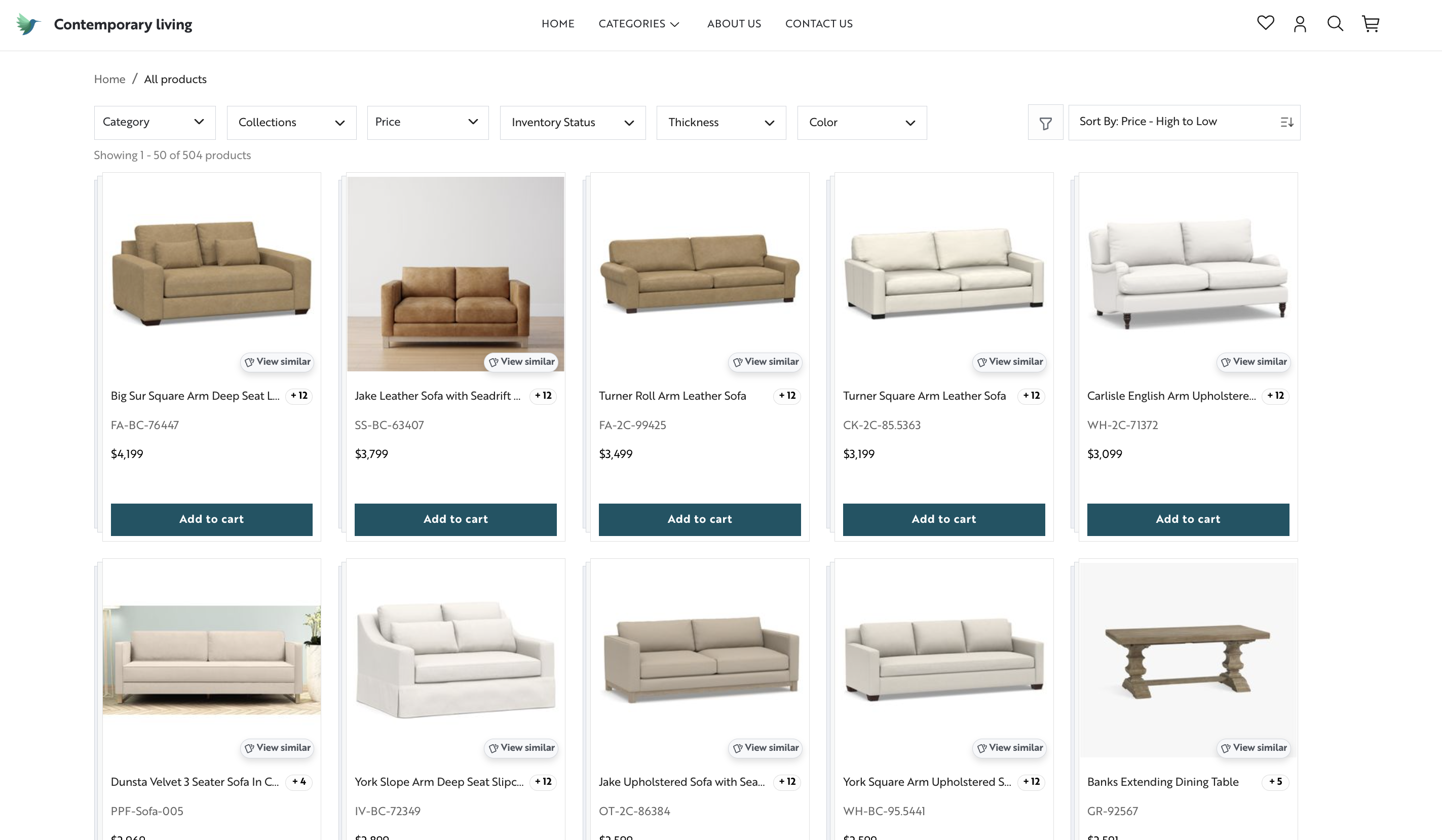
WizCommerce is built for wholesalers, manufacturers, and distributors, offering features that directly address key B2B challenges:
- AI-Powered Tools:
- Typo-tolerant search
- Smart product recommendations
- Lead scoring features
- AI copilot for better customer engagement
- B2B tailored features:
- Custom price lists tailored to client segments
- Multiple billing and shipping options
- Flexible B2B payment methods
- Automated payment reminders
- Bulk ordering discounts
- System Integration:
- Real-time ERP synchronization
- Automated cross-system data flow
- QuickBooks integration
- Seamless CRM connectivity
WizCommerce also prioritizes self-service features, which are in growing demand as over 70% of B2B buyers now prefer online purchases over dealing with sales representatives.
Additionally, 74% of millennial B2B buyers have switched vendors for more user-friendly, consumer-like experiences. Features like one-click reordering and advanced product discovery tools directly address these shifting preferences.
Final steps in choosing your B2B ecommerce platform
Selecting the right B2B ecommerce platform goes beyond features—it requires testing, cost analysis, and vendor evaluation to ensure a seamless, future-proof solution.
1. Test platform options
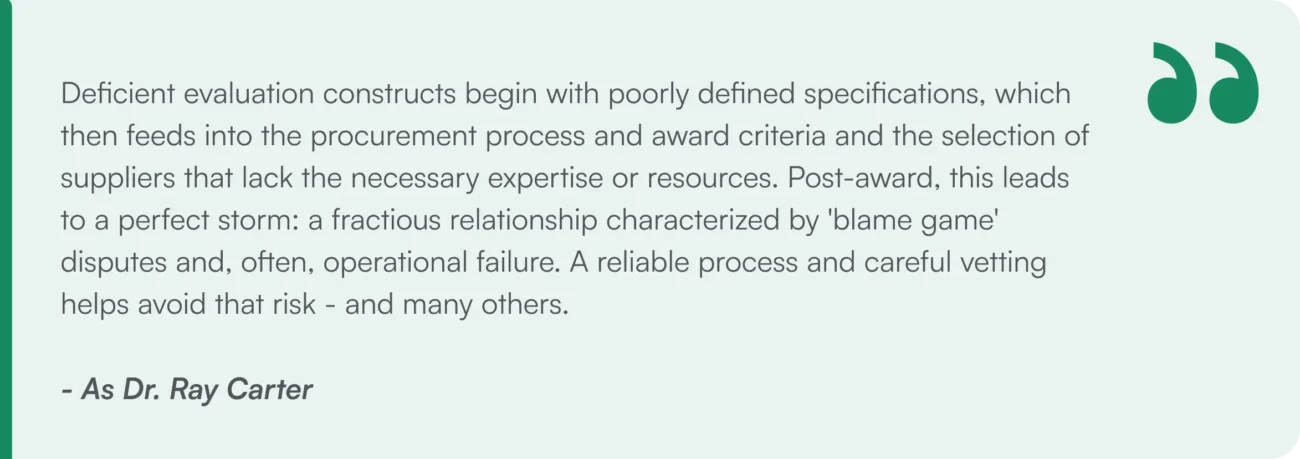
Take advantage of demos and extended trials to thoroughly evaluate key features like AI capabilities, ERP integration, mobile usability, customer portals, and payment workflows. Extended trials can be beneficial for testing how well the platform handles order processing, integrations, and payment automation.
Once you’ve completed testing, examine the overall costs closely to ensure you’re getting good value.
2. Calculate full platform costs
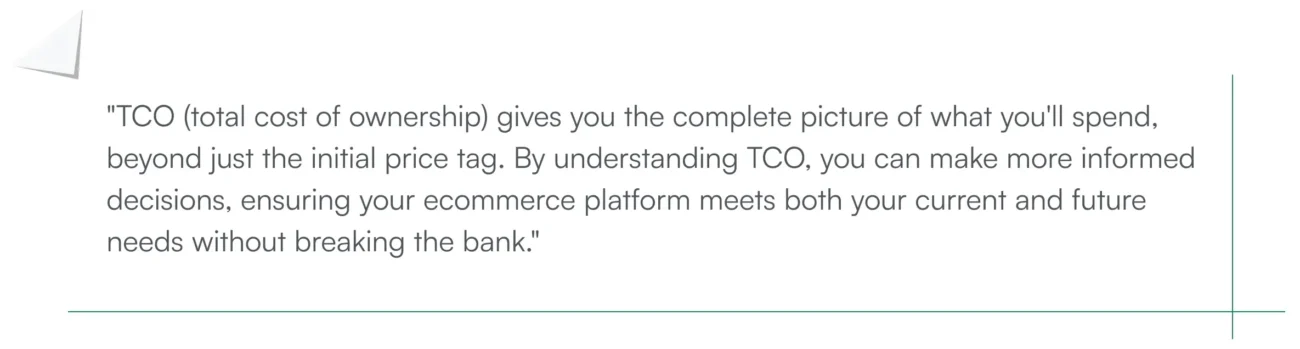
Factor in setup fees, integration expenses, training, maintenance, and ongoing support. Budgeting an additional 20–25% for unexpected costs and performing a three- to five-year total cost analysis is wise. According to recent data, 43% of ecommerce solutions cost more than TCO initially predicted (total cost of ownership) models.
After clarifying costs, it’s time to check the vendor’s reliability and support services.
3. Check vendor background
Once you’ve narrowed down your platform options, closely examine the vendors themselves. Focus on their support services, network reliability, and security measures:
- Assess how responsive their support team is and whether they have a strong partner network.
- Confirm that their security protocols meet high standards and comply with relevant regulations.
Data security should be a top priority. Ensure the vendor uses advanced systems to verify buyer identities and protect sensitive information.
Conclusion: Match platforms to business needs
Choosing the right platform is key to aligning with your business’s current requirements and goals. With the B2B ecommerce market expected to hit $28.86 trillion by the end of 2025, making an informed choice has never been more critical.
Take the United Aqua Group as an example. Their platform transition showcases how smart technology decisions can fuel significant business growth. This kind of success highlights the impact of selecting the right tools.
Did you know that 64% of today’s B2B buyers prefer digital channels, and 80% use mobile devices during their purchasing process? These stats underline the importance of platforms designed for smooth digital experiences.
When evaluating platforms, focus on these five critical areas:
| Dimension | Key considerations |
|---|---|
| Integration | ERP compatibility, real-time inventory, pricing updates |
| Scalability | Handling larger catalogs, traffic surges, and higher transaction volumes |
| Security | Protecting data, ensuring compliance, and verifying buyers |
| Customer experience | Self-service tools, tailored pricing, mobile-friendly features |
| Cost structure | Initial setup costs, ongoing maintenance, and transaction fees |
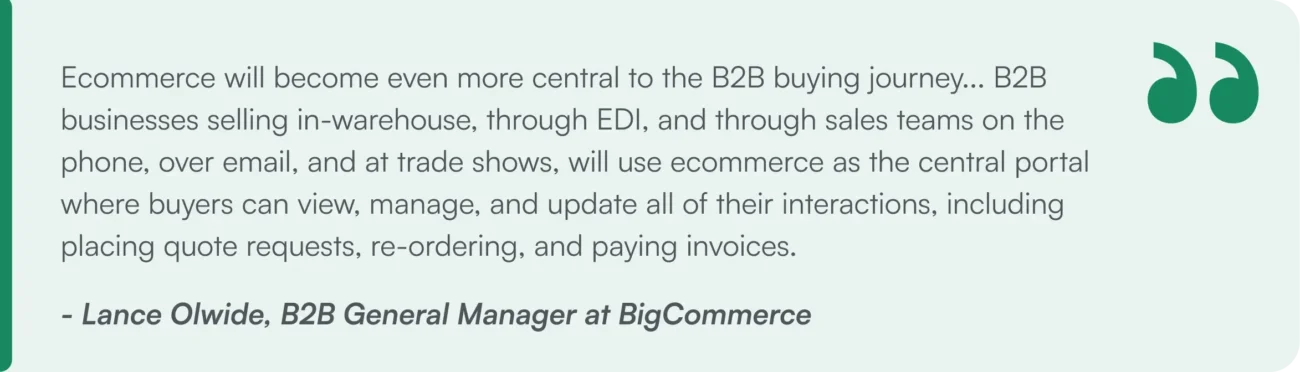
Modern B2B buyers expect purchasing experiences similar to those in the consumer world. Look for platforms that combine advanced B2B capabilities with the ability to grow alongside your business.