Skip to content



The jewelry industry has always evolved, but the pace of change today is unlike anything seen in previous decades. Customer preferences, technological advancement, environmental consciousness, and shifting demographics are all converging to reshape what the jewelry market looks like and where it is headed.
If you are anyone involved in the jewelry business, you are already aware that JCK Las Vegas 2025 is one of the most important global gatherings for the jewelry industry. Whether you are planning to be an exhibitor or an attendee, staying current on jewelry industry trends is essential for staying competitive.
With the new year bringing fresh consumer expectations and new market pressures, this guide breaks down the latest jewelry industry trends every wholesaler, distributor, and manufacturer needs to understand. The future of the jewelry industry belongs to those who adapt early. Let us explore what that looks like.
Also read: JCK Las Vegas 2025: Ideas for Drawing Attention to Your Booth

The state of the jewelry market: A 2026 outlook
The global jewelry market is experiencing significant growth, driven by rising consumer demand across North America, South America, the Middle East, and Saudi Arabia. According to industry analysts, the global market for jewelry is projected to grow at a healthy annual growth rate, with the ring segment and necklace segment both contributing meaningfully to overall market growth.
Gold jewelry continues to command the largest market share across categories, with the World Gold Council reporting resilient demand despite fluctuating gold prices. Yellow gold and rose gold designs have both seen renewed momentum in recent years, appealing to a wide range of price points and demographics across key players, including Tiffany and Co, Malabar Gold, and emerging luxury brands.
Jewelry sales across online sales channels have accelerated sharply, making jewelry ecommerce trends a critical area of focus for wholesalers. The ring market in particular has shown steady growth, with engagement rings and fine jewelry categories leading in average transaction value. Understanding these jewelry market trends is the starting point for any jewelry business looking to grow its competitive advantage through 2026 and beyond.
8 emerging jewelry industry trends
The following jewelry industry trends are reshaping how consumers buy, what they value, and how jewelry brands must position themselves to win. From sustainability to digital innovation, each trend carries specific implications for jewelry wholesalers looking to stay ahead.
1. Personalization and customization
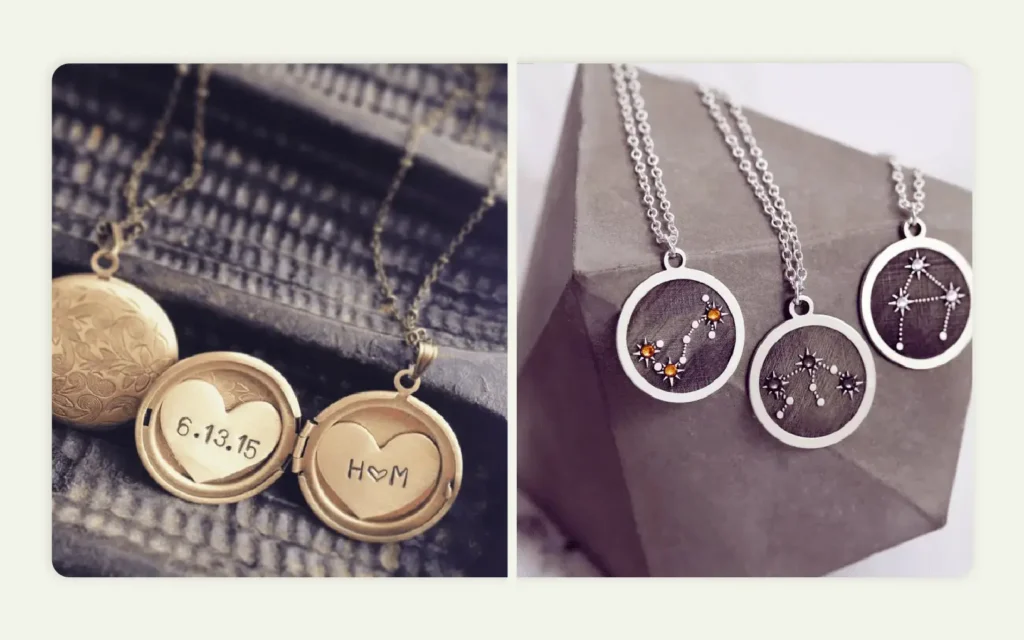
One of the most powerful jewelry industry trends shaping the jewelry market today is hyper-personalization. Increasingly, jewelry is being viewed as a means of reflecting one’s individuality and personal expression. Buyers want to make a statement with what they wear, whether daily wear or fine jewelery. From engraving initials and important dates to fully visualizing and customizing their own designs, buyers are demanding a deeply personalized touch.
Consider this example: A couple wants an 18-karat rose gold necklace to commemorate the birth of their daughter. They want it to be bejeweled with diamonds in the pattern of the stars at the time of her birth. Using computerized tools on a brand’s website, they could visualize this particular design, view realistic photos of the necklace before ordering it, and have it created and dispatched within five days, if not sooner. That is what makes this one of the most transformative latest jewelry industry trends, because the desire to create meaningful, timeless jewelry for memories and personal milestones can now be fulfilled faster than ever.
And it doesn’t stop here! Tanmay Shah, head of innovation at Imaginarium, a fast prototyping and manufacturing hub with a jewelry division based in Mumbai, India, added, “Not just that, but the piece could be embedded with an NFT tag, which, when read by a smartphone, could trigger memories and digital memorabilia of the family, almost like a time capsule.”
But we’re getting ahead. We’ll break down how technology is transforming the landscape of trends in jewelry later in the article.
2. Sustainability and ethical sourcing
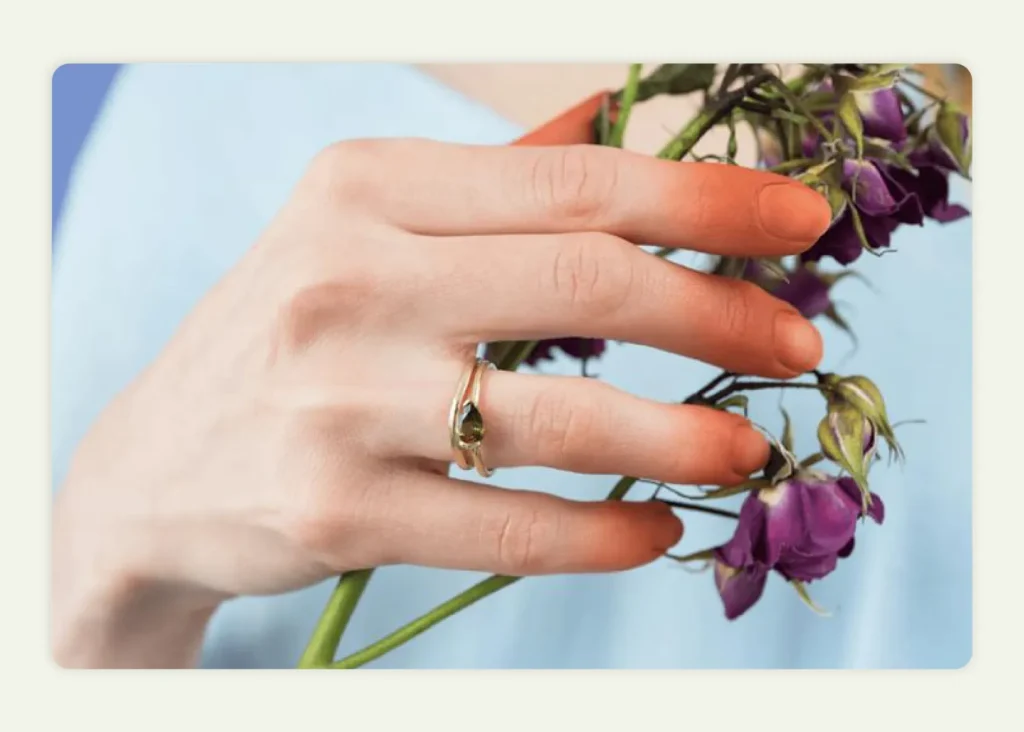
The demand for sustainable practices in jewelry has been on the rise for a while now. By 2025, we expect sustainable purchases will account for 20-30% of all fine jewelry sales. According to a study by the Capgemini Research Institute, 79% of all consumers are changing their product preferences based on social and environmental impacts, and Nielsen’s Sustainability Report found that 73% of millennials are willing to spend more on a product if it comes from a brand that stands for sustainability.
Ethical sourcing is no longer optional for jewelry brands that want to earn the loyalty of younger consumers and younger generations. A piece of jewelry must meet rigorous requirements to be labeled ethically sourced, including fair labor standards, safe working conditions, and responsible mining methods. These sustainable practices now extend across the full supply chains of leading brands.
Another significant jewelry market trend in this space is the rise of natural diamonds and lab-grown gemstones, which offer a sustainable alternative to mined stones by reducing environmental impact and addressing ethical concerns tied to traditional mining. Consumer preferences in this area will only intensify, making sustainability a permanent fixture in jewelry industry trends rather than a passing phase.
Here’s a brand that is a champion in the sustainable jewelry industry.
3. Digital innovation
Technology is the greatest factor for a major overhaul across all major jewelry industry trends. The jewelry industry is no different. While for the longest time, traditional craftsmanship and ways of jewelry production have been held in high regard, technology is making its way into the jewelry industry faster than ever. Let’s look at different types of innovations that will be trends in the jewelry industry shortly.
a) CAD/CAM software
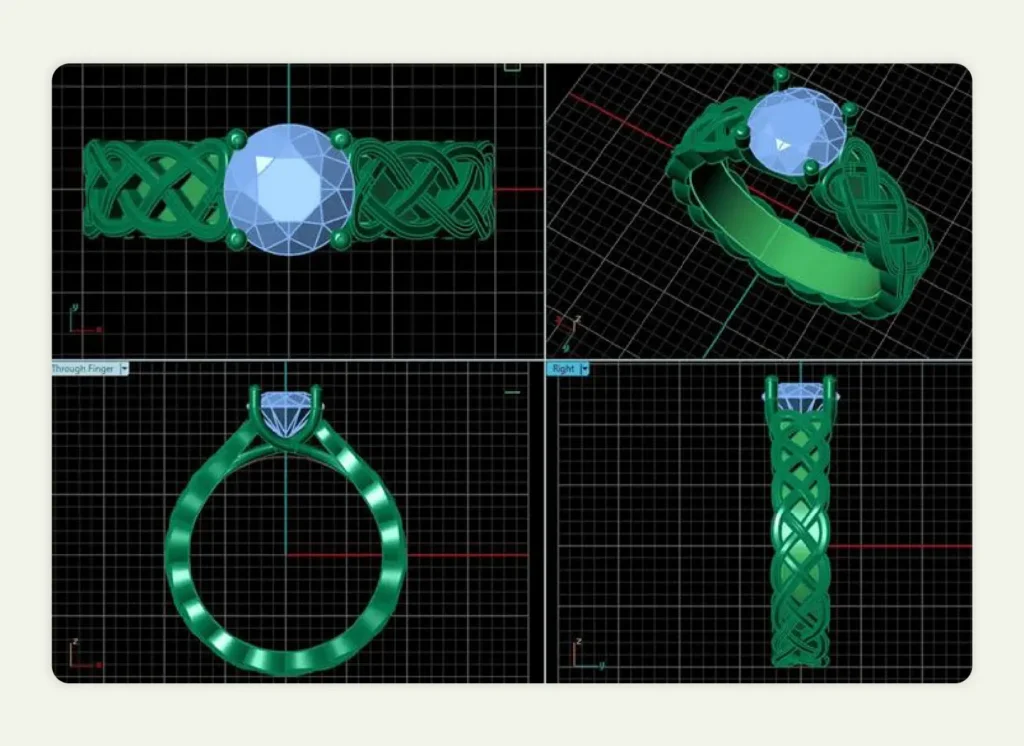
Computer-Aided Design (CAD) and Computer-Aided Manufacturing (CAM) software have revolutionized the jewelry design process. Designers can create intricate, precise designs digitally, enabling rapid prototyping and deep customization. This streamlines design workflows and reduces time-to-market for new jewelry collection launches, making it one of the most operationally significant jewelry industry trends for manufacturers.
b) 3D Printing
Additive manufacturing technologies, such as 3D printing, have gained prominence in jewelry production. This technology enables jewelers to create complex geometries and intricate designs with high precision and efficiency, opening up new creative possibilities.
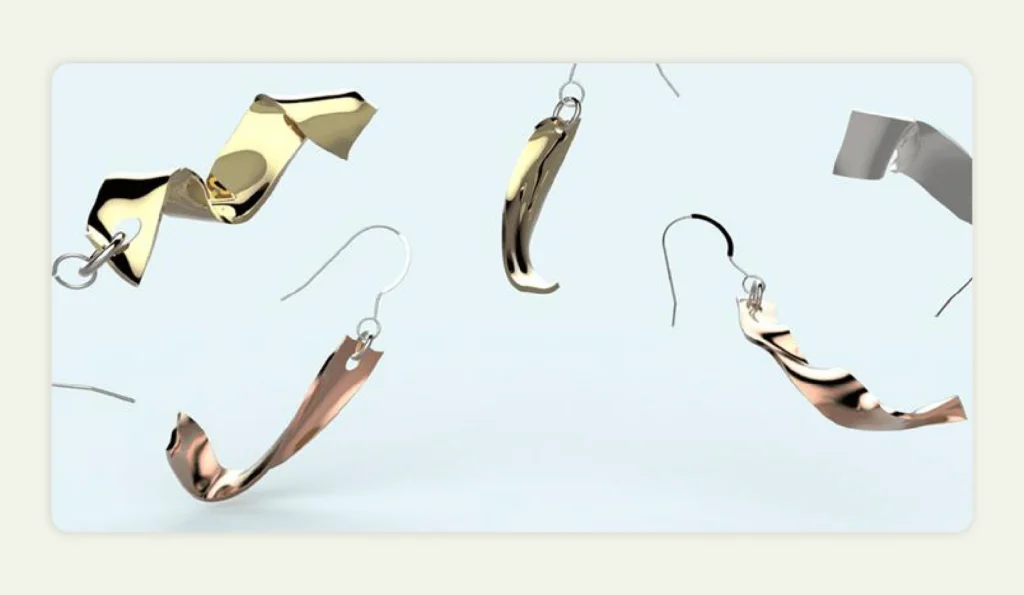
There’s a truly amazing and innovative jewelry trend we found. The Irish design team Love & Robots created jewelry that uses 3D printing to retain the flow of air in every city on any given day.
Their Windswept jewelry resembles fabric folds caught mid-movement, a genuinely new direction for wearable art in the jewelry market.
c) Virtual try-it-on technology
An emerging jewelry industry trend is the rise of virtual try-on experiences, allowing customers to visualize how jewelry collection pieces would look on them before purchasing. Virtual reality (VR) and augmented reality (AR) technologies are being integrated into the jewelry buying experience at a growing rate..
 Another part of this experience is using 3D view tech to let your customers experience your products from all angles.
Immersive experiences like these help your prospective customers truly visualize the look and feel of your products and positively affect their buying decisions.
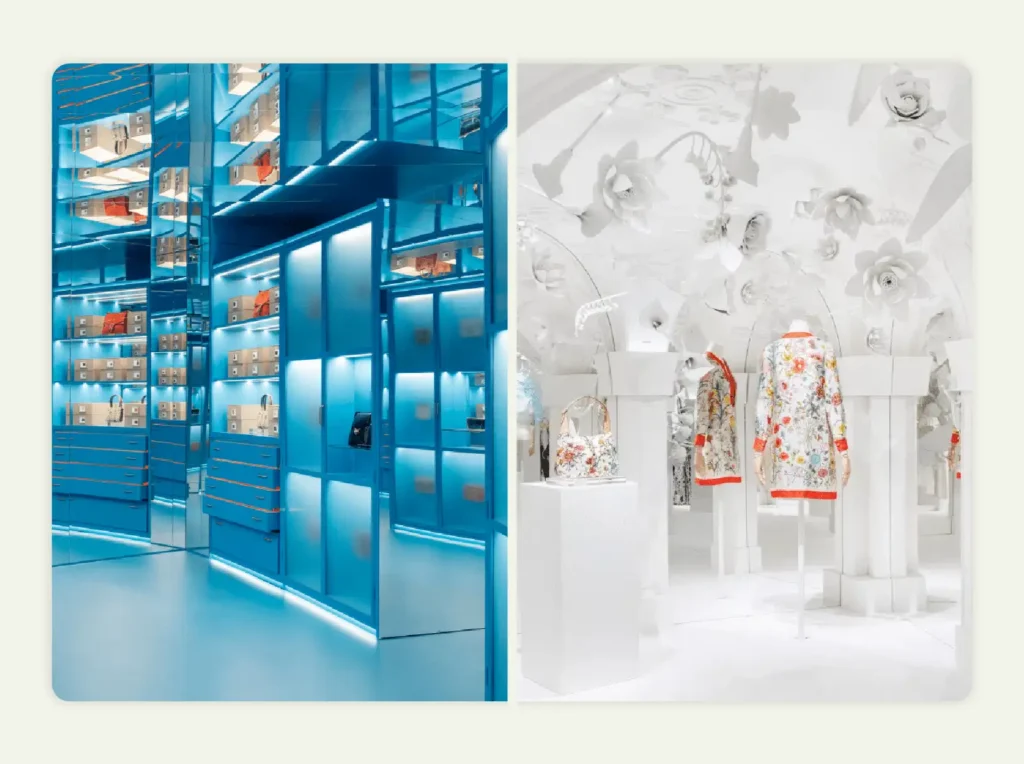
Immersive exhibitions are a trend in the jewelry industry still testing the waters, but being done by a few visionaries. For instance, check out the London chapter of the traveling immersive Gucci exhibition called Gucci Cosmos. It shows how luxury brands are using this trend to deepen emotional value for their audience.
d) Use of AI
Artificial intelligence is being employed to help jewelry designers generate concepts and predict consumer preferences. These tools enable designers to create pieces that resonate with target demographics and optimize product development strategies, playing a growing role in the future of the jewelry industry.
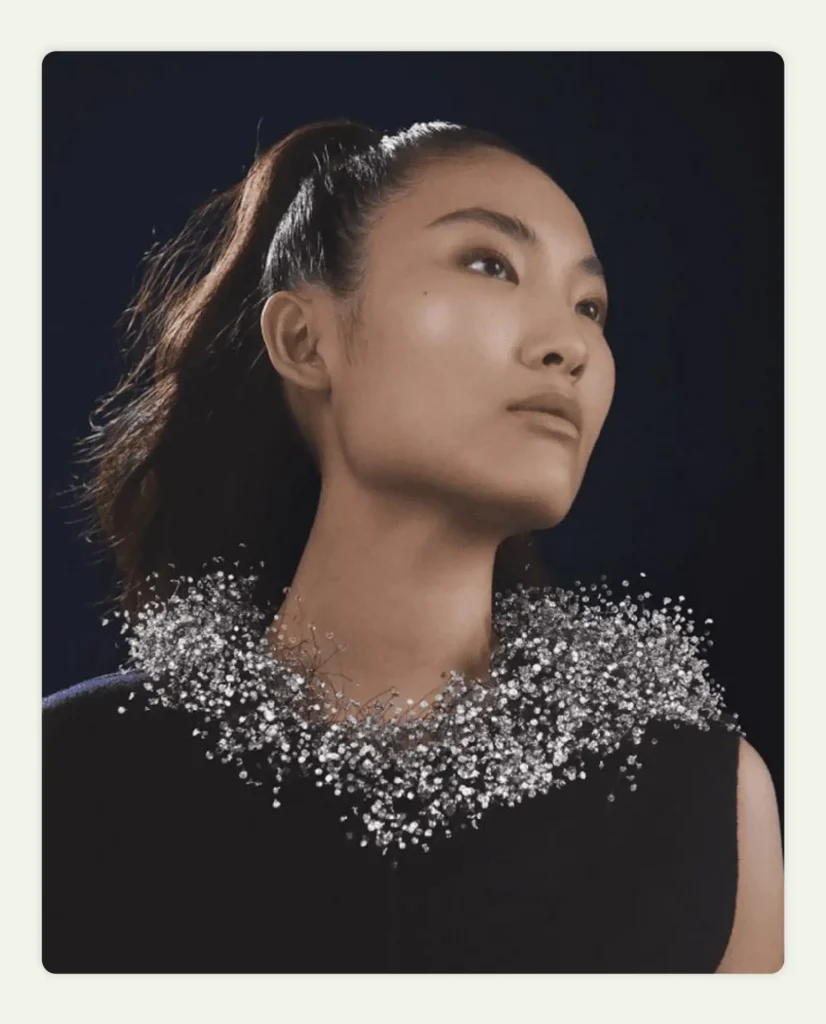
Paris-based jeweler Boucheron, for instance, used 3D scanning of flower petals to create floral rings of exceptional delicacy. Another design from the same house used diamonds, glass beads, and fine wires to simulate the flow and movement of a cloud. AI is making this level of creativity faster, more scalable, and more commercially viable across the jewelry industry.
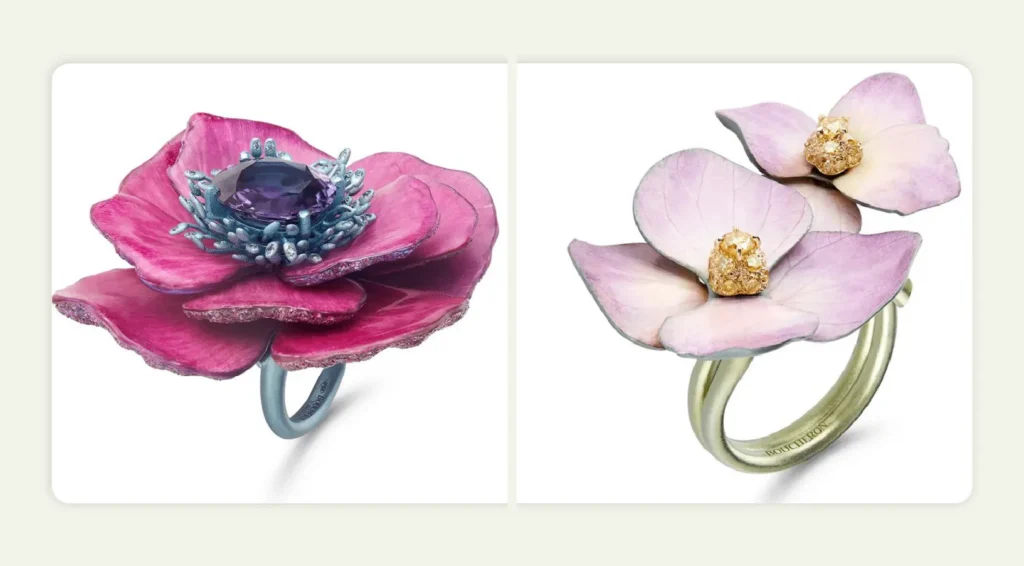
Another exquisite example comes from the same designer who used diamonds, glass beads, and fine wires to simulate the flow and movement of a cloud:
4. Diversity and inclusivity
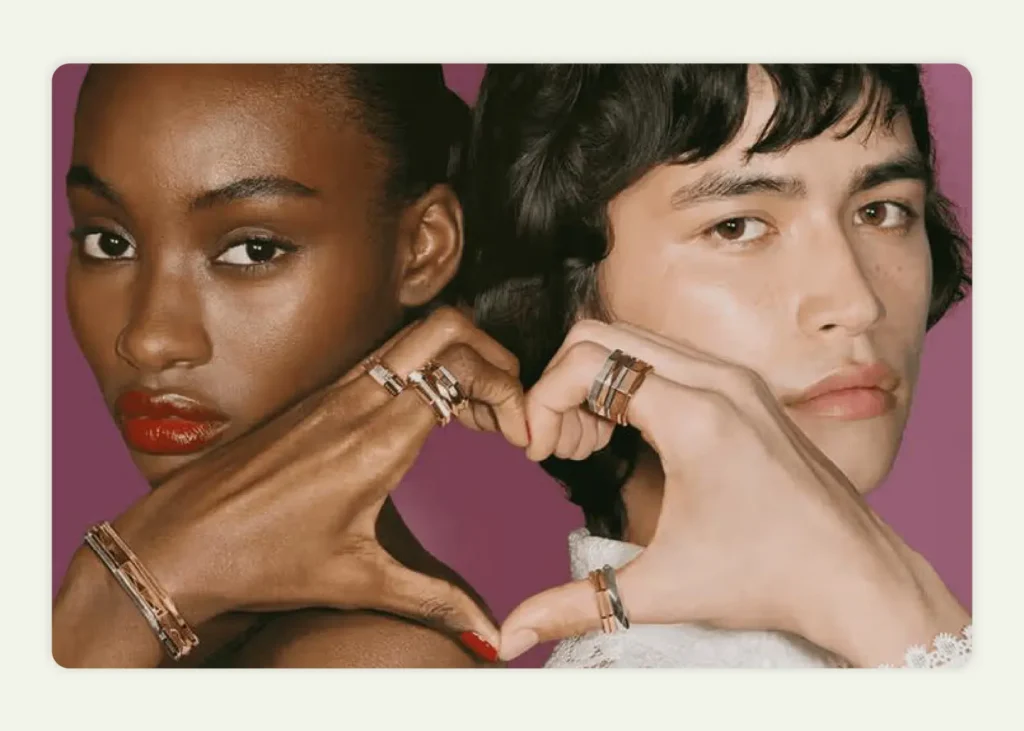
With millennials and Gen Z becoming a substantial part of the jewelry-buying demographic, the jewelry industry is seeing a meaningful rise in inclusive design. These pieces embody a commitment to diversity, catering to various cultural backgrounds, body types, and gender identities. Statement pieces that celebrate representation, body positivity, and gender fluidity are finding strong audiences across North America and beyond.
In addition to design, inclusive jewelry brands are prioritizing inclusive social media marketing strategies, featuring diverse models and promoting acceptance. Expect to see more gender-fluid/gender-neutral jewelry collection launches, designs with size inclusivity, and campaigns that speak to younger consumers across social media platforms in recent years and going forward. Gen Z in particular is reshaping what consumer demand looks like in the jewelry market.
5. Digital integration: E-commerce and social media
The jewelry industry has embraced online sales and social media as primary channels for reaching customers and driving revenue. Online sales of jewelry in the U.S. reached almost $7.6 billion in 2021, and jewelry ecommerce trends have only accelerated since. Traditionally, buyers hesitated to purchase jewelry online because they wanted to examine pieces in person. But with virtual try-on, personalized recommendations, and improved online experience tools, that hesitation is fading fast.
Social media platforms such as Instagram and TikTok are now a primary discovery channel for jewelry trends, especially among Gen Z and younger generations. User-generated content, influencer collaborations, and shoppable posts are driving jewelry sales directly from platforms to purchase. Fashion brands such as Saint Laurent and Michael Kors have used red carpet moments and social media activations to put their jewelry collection pieces at center stage in global conversations.
Jewelry ecommerce trends will continue to accelerate as digital-native consumers grow as a share of the buyer base. For wholesalers looking to build their online sales infrastructure, read the guide on best jewelry ecommerce websites to understand which platforms support the demands of the modern jewelry market.

6. Health and wellness jewelry
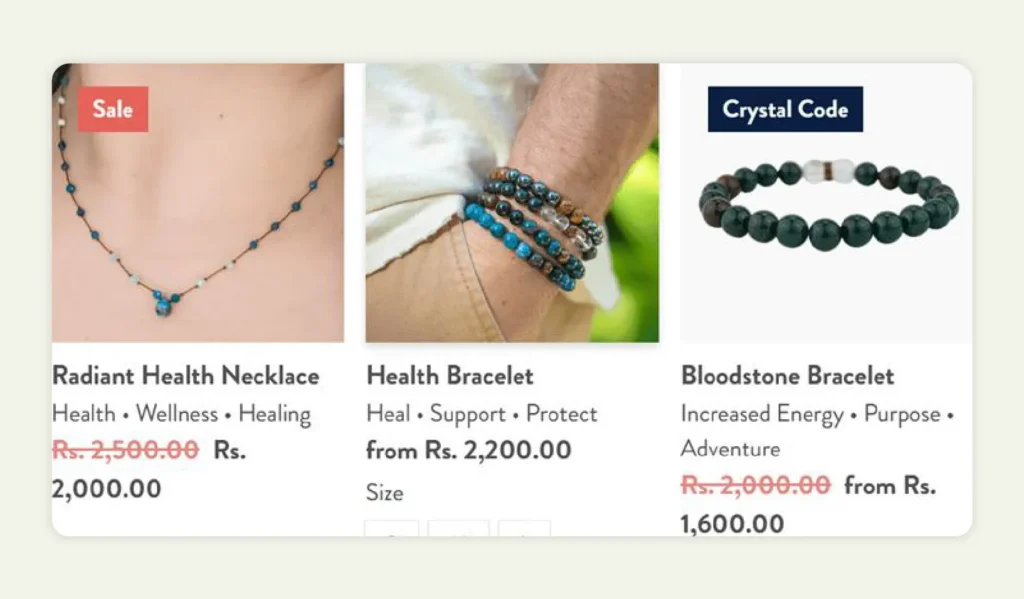
Although the pandemic is largely behind us, it permanently changed consumer priorities in ways that continue to shape jewelry industry trends today. Jewelry focused on health and wellness themes has been a growing category for years, and consumer demand for these pieces is accelerating. These pieces often incorporate healing gemstones, aromatherapy elements, and symbolic motifs associated with mindfulness and balance, creating a category that spans luxury jewelry and accessible price points alike.
Functional design elements ensure wearers experience therapeutic benefits while the jewelry serves as a daily reminder to prioritize self-care. At a time when bold color, organic shapes, and personal expression are all prominent fashion trends, health and wellness jewelry sits at a natural intersection of style and meaning.
7. Storytelling and brand expression
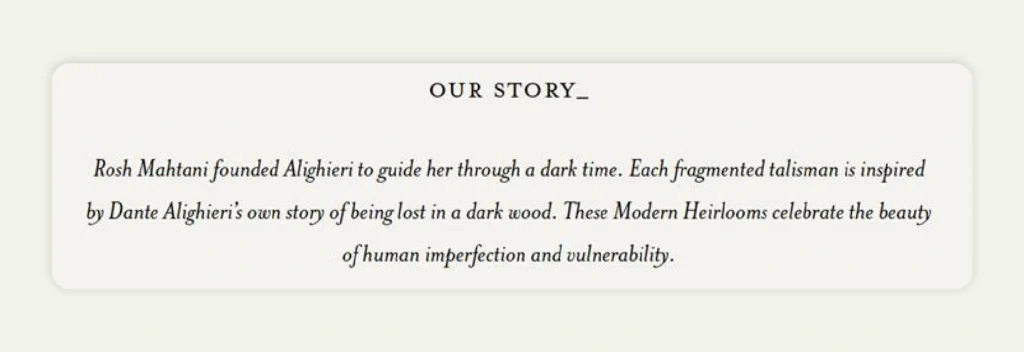
As jewelry industry trends move toward meaning over possession, jewelry brands must adjust their messaging to align with their buyers’ values. Jewelry is increasingly viewed as wearable art and a vehicle for personal expression rather than simply a tangible object. Stories that carry emotional value will always outperform generic product descriptions in building loyalty.
Look at this description from Alighieri:
Or this one from MJJBrilliant about their movement towards lab-grown gemstones:
As a jewelry business, you can communicate your core values directly through your jewelry collection, whether that is a personal connection, sustainable practices, or a mission to promote health and wellness. Luxury jewelry brands like Tiffany and Co have long understood that emotional value is the real product. Increasingly, this is becoming true across all price points in the jewelry market.
8. Resurgence of vintage and antique aesthetics
One of the most compelling jewelry industry trends gaining momentum in 2026 is the revival of vintage and antique-inspired design. Younger consumers and Gen Z buyers are increasingly drawn to pieces that feel distinctive, historical, and resistant to fast fashion cycles. Platinum jewelry, yellow gold, and precious stones set in Art Deco and Victorian-inspired settings are finding renewed popularity both on the red carpet and in everyday wear.
This trend intersects with sustainability, as pre-owned and vintage-inspired fine jewelry reduces demand for newly mined materials. It also aligns with the storytelling trend, as vintage aesthetics carry inherent emotional value and narrative weight. Costume jewelry brands and luxury jewelry houses alike are investing in heritage-inspired jewelry collection drops that appeal to buyers seeking personal expression through pieces that feel unique and considered. For jewelry brands navigating shifting fashion trends, vintage positioning offers a powerful competitive advantage in a crowded global market.
How can jewelry wholesalers turn these jewelry industry trends into a competitive advantage?
These jewelry industry trends represent real commercial opportunity, but only for wholesalers with the operational infrastructure to move quickly and serve buyers well across channels.
- Offer personalized catalog experiences to match each buyer’s style preferences and order history, reducing friction at the point of purchase.
- Invest in digital assets such as high-quality imagery and virtual product views to meet rising jewelry ecommerce trends and online sales expectations.
- Build a clear sustainability narrative around your ethical sourcing and supply chains to meet growing demand from younger generations.
- Expand your presence on social media platforms to reach Gen Z buyers and drive discovery for new jewelry collection launches.
- Use data from online sales and buyer behavior to identify which jewelry trends are driving the most consumer demand in your specific segment.
WizCommerce is purpose-built to help jewelry wholesalers operationalize exactly these capabilities. WizShop, the B2B Ecommerce Platform, enables you to create personalized digital storefronts for each wholesale buyer, with custom catalogs, customer-specific pricing, and real-time inventory visibility. This gives your buyers the seamless online experience that modern jewelry market expectations demand.
WizStudio further supports your move toward digital-first selling by generating professional lifestyle imagery for your jewelry collection at a fraction of traditional photoshoot costs, helping your products stand out across every social media and ecommerce channel.
WizOrder, the B2B Order Taking App for Sales Reps, ensures your team can present your full catalog, apply customer-specific pricing, and close orders on the spot, whether at trade shows, in-person visits, or remote calls, keeping pace with the speed that today’s jewelry ecommerce trends require. For a complete view of the platforms available to jewelry wholesalers, explore the jewelry ecommerce platforms guide.
Ready to align your operations with the latest jewelry industry trends?
Book a demo with WizCommerce and see how we help jewelry wholesalers scale smarter.
FAQs
What jewelry trends will be popular in 2026?
The top jewelry industry trends for 2026 include hyper-personalization, a strong focus on sustainable practices, and the rise of AI-driven design. Expect to see more wearable art and a resurgence of yellow gold and colorful beads.
What type of jewelry sells the most in the fashion jewelry market?
Statement pieces and necklaces currently hold the largest share of the fashion jewelry market. Items that feature organic shapes or bold color are particularly popular among younger consumers and Gen Z buyers.
Which jewelry has high resale value?
Fine jewelery made from natural diamonds, gold jewelry, and platinum jewelry retains the highest value. Luxury brands like Tiffany & Co or Malabar Gold also command high resale prices due to brand heritage and the quality of precious stones.
What jewelry is easy to sell?
Costume jewelry and fast fashion jewelry are easiest to sell due to lower price points and high consumer demand. These items often follow current social media fads, making them quick-turnover products for retailers.
What is fast fashion jewelry?
Fast fashion jewelry refers to trendy, affordable pieces produced rapidly to meet current fashion trends. It is often made from base metals or colorful beads and is driven by social media platforms and influencers rather than long-term investment.
Is the jewelry industry declining?
No, the industry is not declining. It is experiencing steady growth, with a projected healthy annual growth rate. The ring segment and luxury jewelry sectors are actually expanding, driven by online sales and emerging markets like Saudi Arabia.
What is the future of the jewelry industry?
The future of jewelry lies in the fusion of technology and tradition. We expect to see more lab-grown diamonds, virtual try-on experiences, and sustainable practices. The future of the jewelry industry growth will be driven by digital innovation and ethical sourcing.