Skip to content



Wholesalers have traditionally relied on trade shows and in-person networking to reach out to retailers. But that’s not the case anymore. Today, many wholesale marketplaces have mushroomed that make it easy for brands to discover new retail partners and expand to new geographies. Faire is one such prominent marketplace. While it offers significant visibility and access to thousands of potential buyers, many wholesalers are still trying to understand how it actually works in practice. This guide is for them as we provide a practical walkthrough on how to sell on Faire wholesale, including the eligibility criteria and the key steps involved in setting up an account.
What is Faire?
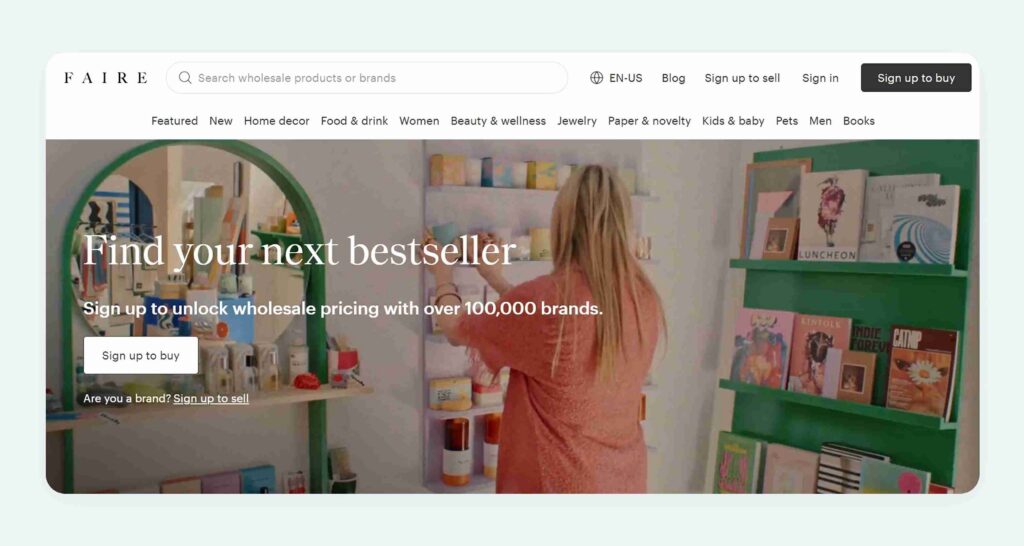
Faire is a digital wholesale marketplace that connects wholesalers and independent brands with retailers and buyers looking to source products for their stores. You can list your products on the platform and make them discoverable to a large network of retail buyers. Retailers, in turn, can browse thousands of products across categories and place wholesale orders.
The platform is particularly popular among small and mid-sized wholesale brands because it lowers many of the barriers traditionally associated with wholesale distribution. You can reach new retailers more quickly and receive orders shortly after launching on the platform, which is something that would have taken weeks or months in a traditional channel.
Key categories you can sell on Faire include home decor, food, beauty, jewelry, kids’ accessories, pet products, and books
How does Faire work?
From an operational standpoint, this B2B marketplace works through a few key steps:
- Brand onboarding and product listing: You create an account and set up your brand profile first. Then you upload product catalogs with wholesale pricing and order requirements.
- Retailer discovery and browsing: Retailers browse categories and search for specific products. They discover your brand through Faire’s marketplace interface.
- Order placement and payments: Retailers place wholesale orders directly through the platform. Faire manages payment processing and facilitates the transaction between you and the retailer.
- Fulfillment and order management: You have the option to ship the orders to retailers on your own or ship via Faire. Retailers manage orders and returns from their accounts.
As you can see, Faire digitizes many aspects of traditional wholesale distribution and handles the entire transaction layer, right from order processing to payments. This allows you to reach new retail buyers without building a large sales infrastructure while giving retailers an easier way to source products from you.
How much does it cost to sell on Faire?
Joining Faire is free. You only pay fees when you receive orders through the platform. The primary cost comes in the form of commission on orders. When a retailer discovers your brand through the Faire marketplace and places their first order, Faire charges a 25% commission. This includes a 15% ongoing commission plus a one-time 10% referral fee for introducing the new buyer. For any future orders from the same retailer, the commission drops to 15%, since the referral fee only applies to the first order.
Faire also provides a program called Faire Direct. It allows you to bring your own retailers to the platform using a personalized link. Orders placed through this link typically incur 0 commission. In other words, you keep the full wholesale revenue from those sales while still benefiting from Faire’s infrastructure, such as payment processing and order management.
Additional cost associated with payout option choice
In Faire, you can choose how quickly you want to receive payouts after shipping an order. With the Net 30 payout option, payment is initiated 30 days after the order ships, and no additional fee is charged. If you choose Next Day payout, the transfer begins the day after shipment, but a 3% payout processing fee applies to the order subtotal and shipping reimbursement. So add this to your final cost of operation with Faire.
Example scenario
Suppose a retailer discovers your brand on the marketplace and places a $1,000 wholesale order.
- First order commission (25%): $250
- You receive: $750 (before any payout fees)
If the same retailer places another $1,000 reorder later:
- Reorder commission (15%): $150
- You receive: $850
How to become a seller on Faire? Eligibility criteria and onboarding steps
Knowing the eligibility requirements and the onboarding steps for Faire is the first step in your journey towards understanding how to sell wholesale on Faire. This key piece of knowledge can help you prepare your business well in advance before applying as a seller.
Eligibility criteria to apply as a seller
Before applying to sell on Faire, you should ensure that your business meets some basic operational and business requirements. These typically include:
- Registered business entity (LLC, corporation, or sole proprietorship)
- Relevant wholesale licenses or permits (depending on local regulations)
- A brand website or online presence
- A defined product category
- Basic business documentation (Tax information, such as an EIN, where applicable).
Steps to create an account as a seller on Faire
Once your brand is ready to apply, the process of becoming a seller on Faire typically involves the following steps:
- Submit the application: Start by filling out the seller application on Faire’s website. This includes providing information such as your brand website, product category, location, number of wholesale products, and existing retail partnerships.
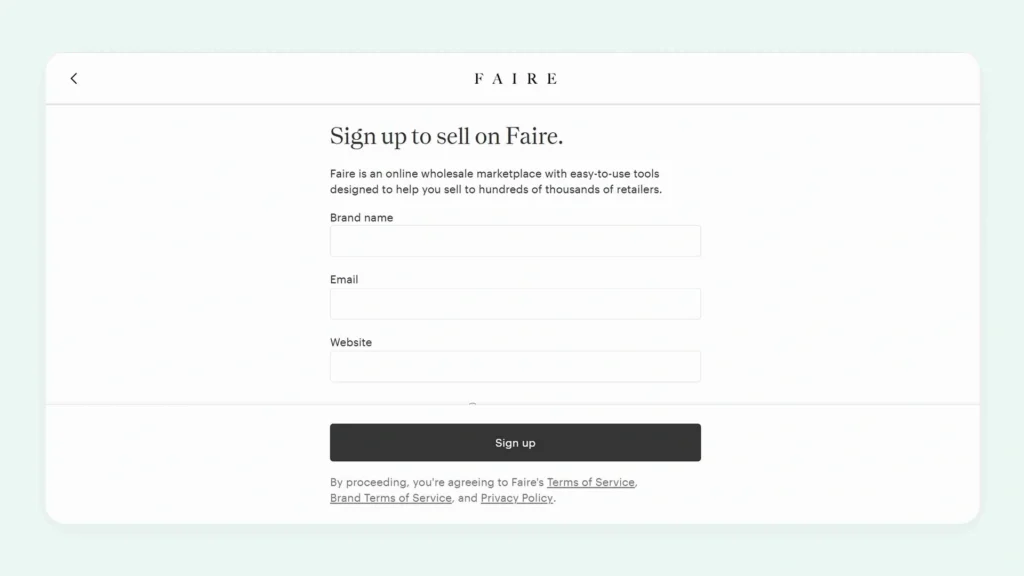
2. Share brand details: You will also be asked to provide additional information such as your Instagram profile, the year your brand was founded, and your key brand values. This will help Faire understand your brand’s positioning and suitability for the marketplace.
3. Wait for approval: After submitting the application, Faire will review your details and typically respond within a few business days. If the application is approved, you will receive instructions to begin the onboarding process.
4. Set up your storefront: During onboarding, you can create your Faire shop by adding your brand story, uploading product images, and listing your wholesale catalog. Products can be uploaded individually or synced from platforms like Shopify, Etsy, WooCommerce, Wix, or PrestaShop.
5. Additional details: Once the storefront is set up, you will also be asked to complete several operational details to prepare for wholesale orders. This includes adding banking and tax information for payouts, defining minimum order quantities, and setting expected order processing and shipping timelines. You will also be asked to choose how to handle fulfillment, either by using Faire’s built-in shipping system or by managing shipping independently.
How to sell products on Faire successfully: Best practices
Selling on Faire is not just about listing products and waiting for retailers to place orders. Brands that perform well on the platform typically follow a few operational and strategic best practices that help them attract retailers and generate repeat wholesale orders. Here are some handy tips:
Invest in a strong product presentation
Retailers often browse hundreds of listings when sourcing products. High-quality images and clear product descriptions make it easier for them to quickly understand your product and how it might fit into their store. Use multiple images and provide details such as materials, sizing, packaging, and display suggestions for all your products.
Build a sustainable wholesale pricing strategy
Your wholesale pricing should account for platform commissions, shipping costs, retailer margins, and any other hidden costs. Pricing that is too low can erode your profitability after fees, while pricing that is too high may make retailers choose competing products. Successful wholesalers on Faire ensure that their price still allows retailers to maintain healthy margins while keeping their own business profitable.
Maintain reliable fulfillment and operations
Retailers depend on consistent shipping timelines to manage their inventory. Delays or fulfillment issues can damage a brand’s reputation and reduce the likelihood of repeat orders. If you are shipping the orders on your own, you need to have a reliable fulfillment process and a consistent inventory to build trust with retailers.
Prioritize retailer communication and relationships
Even though Faire is a marketplace, wholesale still relies heavily on relationships. Responding quickly to retailer inquiries and maintaining professional communication can encourage repeat orders. Brands that actively engage with retailers often build stronger long-term wholesale partnerships.
What are the downsides of selling on Faire?
Selling on Faire can help you reach a wide network of retailers. However, relying heavily on a wholesale marketplace also comes with certain limitations. Understanding these downsides can help you evaluate whether Faire should remain your primary sales channel or just one part of a broader wholesale strategy. Brands weighing their options often look at home-goods marketplaces alongside Faire — our guide on how to sell on Wayfair covers that channel’s commission model and onboarding requirements.
High commission fees
One of the most commonly discussed challenges of selling on Faire is the platform’s commission structure. Faire typically charges a commission on every order, especially when retailers are acquired through the platform. For many brands, these fees can significantly reduce margins, particularly when combined with wholesale pricing and shipping costs.
Limited control over brand experience
On a marketplace, every brand operates within the same standardized interface. This means you have limited control over how your products are presented compared to selling through your own wholesale portal. The inability to fully customize the buying experience can make it harder to communicate brand identity and your unique selling points.
High competition from similar brands
Because Faire hosts thousands of brands across multiple categories, retailers often compare several similar products before placing an order. This level of competition can make it difficult for newer brands to stand out. So if you are a new seller who has not actively optimized their listings or invested in strong product presentation, then your listing will be lost in the crowd.
Dependence on platform visibility and algorithms
Product discovery on Faire often depends on how the platform surfaces your listings to retailers. You may experience fluctuations in visibility depending on platform recommendations or promotional placements. This creates a degree of dependency on the marketplace’s internal systems rather than your own marketing efforts.
Limited ownership of retailer relationships
While you can communicate with retailers through Faire Messenger, the overall relationship is still mediated by Faire. Over time, this can make it harder for you to fully own your retailer network or transition those relationships outside the marketplace. As a result, some brands eventually explore alternative solutions that allow them to build direct wholesale
A better alternative to selling on Faire: Building a branded B2B store using WizCommerce
While wholesale marketplaces like Faire can help you discover new retailers, relying only on them means paying commissions on orders and having limited control over the overall buying experience. This is where B2B ecommerce platforms like WizCommerce come into the picture.
WizCommerce lets you launch and manage a fully branded B2B ecommerce store where buyers can browse your products and interact directly with you. Instead of depending entirely on a marketplace environment, you can create a dedicated digital wholesale channel that reflects your brand identity. Launching a dedicated B2B store through WizCommerce also lets you maintain full control over pricing and customer relationships.
You can also choose a hybrid strategy. Marketplaces like Faire will continue to serve as discovery channels for new retailers, while repeat buyers and long-term retail relationships can be encouraged to order directly through your B2B storefront built on WizCommerce.
Some of the core B2B ecommerce capabilities offered by WizCommerce include:
1. Plug-and-play integrations
WizCommerce connects easily with your existing tech stack, including ERP and payment systems. Integrations with systems like SAP Business One, Oracle NetSuite, QuickBooks, and Xero help ensure that product data, pricing, and order information stay synchronized in real time across the entire tech stack. This seamless connectivity with your existing tech stack is usually unavailable when you sell via marketplaces like Faire.
2. Hyper-personalized checkout
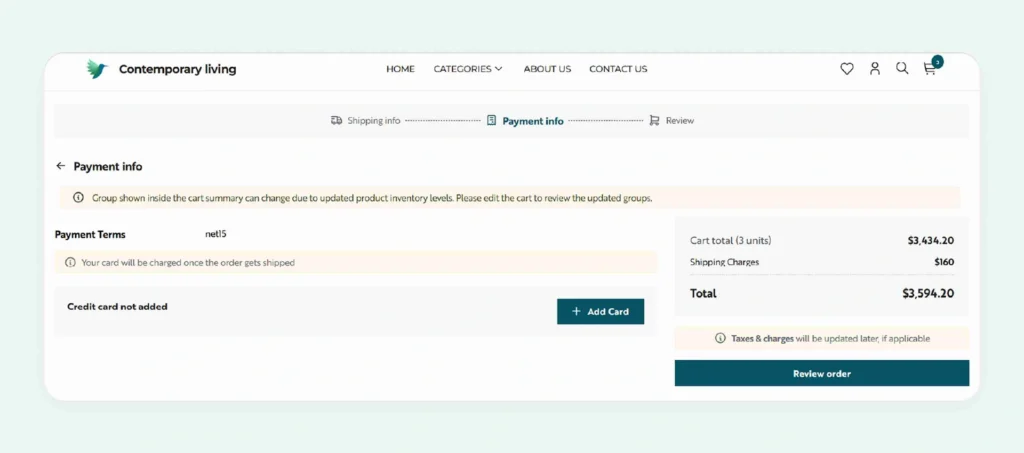
Unlike the rigid checkout flows in Faire, WizCommerce allows you to configure checkout flows according to your needs. You can offer multiple payment options such as card-on-file, credit cards, payment links, or refund credits. Custom payment terms can also be set for different buyers, including upfront payment requirements, deposits, or negotiated net terms. Retailers, on the other hand, can add order notes, request preferred delivery dates, and share special instructions directly during checkout.
3. Custom price lists
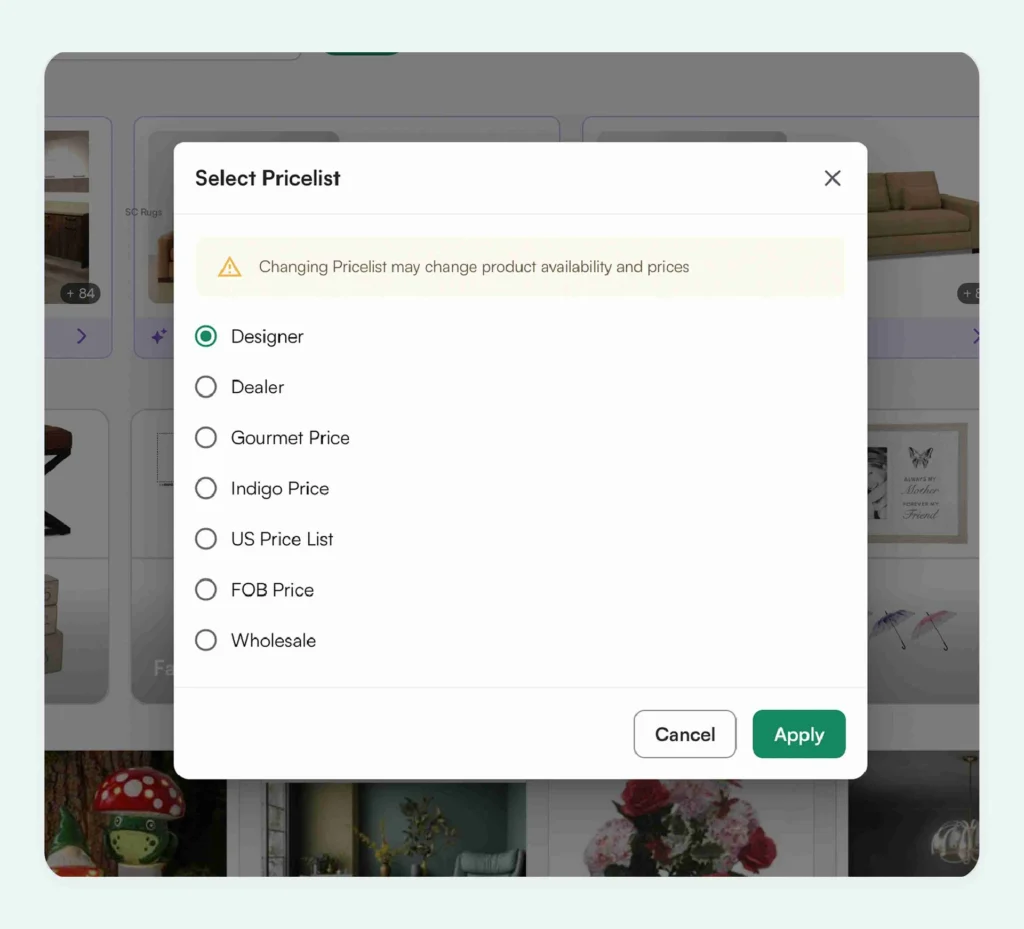
You can create different price lists for retailers, distributors, agents, or regional markets. Your reps can switch between these pricing structures instantly during sales conversations, ensuring accurate quotes without manual price adjustments.
4. Multi-cart management
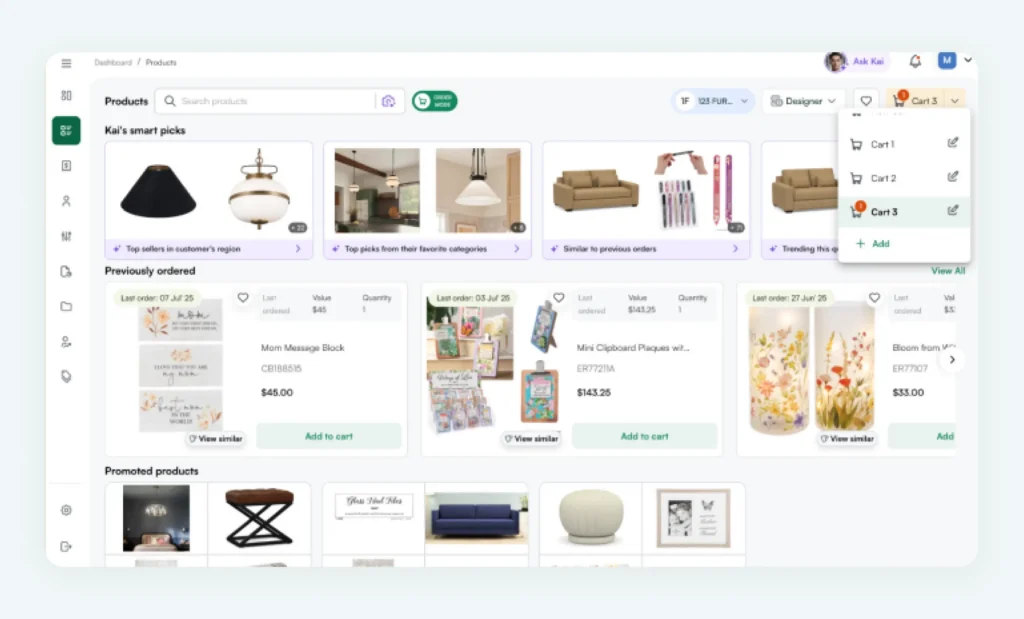
WizCommerce includes a multi-cart capability that allows your reps to manage multiple orders simultaneously. This is particularly useful when handling orders for different divisions of the same retailer or managing orders from multiple buyers at a trade show. Reps can easily switch between carts and submit them individually when ready.
5. Trade show app with offline mode
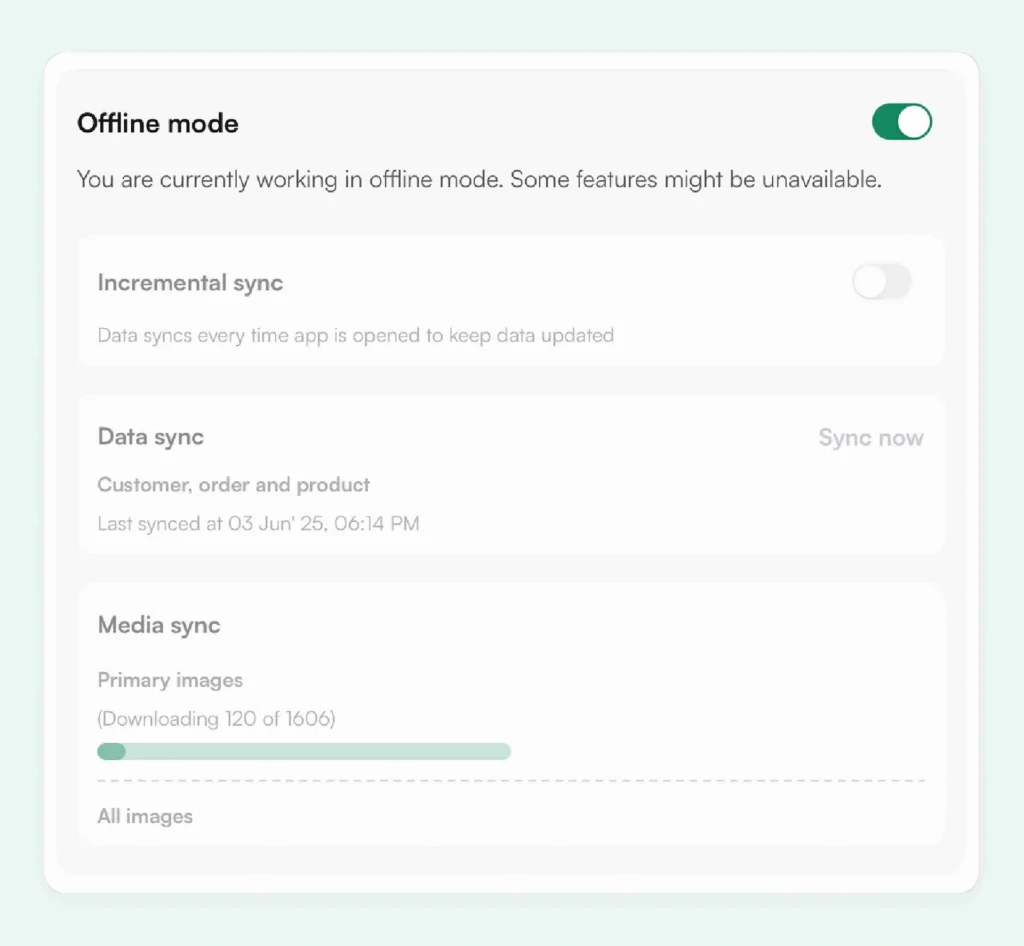
WizCommerce provides a dedicated sales rep application that is tailor-made for trade shows and field sales environments. The app allows your reps to browse your B2B ecommerce catalogs, access custom pricing, create quotes or orders, scan product barcodes, and process payments.
The offline mode ensures that orders can still be captured even in environments with poor connectivity. Once the device reconnects, all data automatically syncs with the central system.
6. Sales intelligence
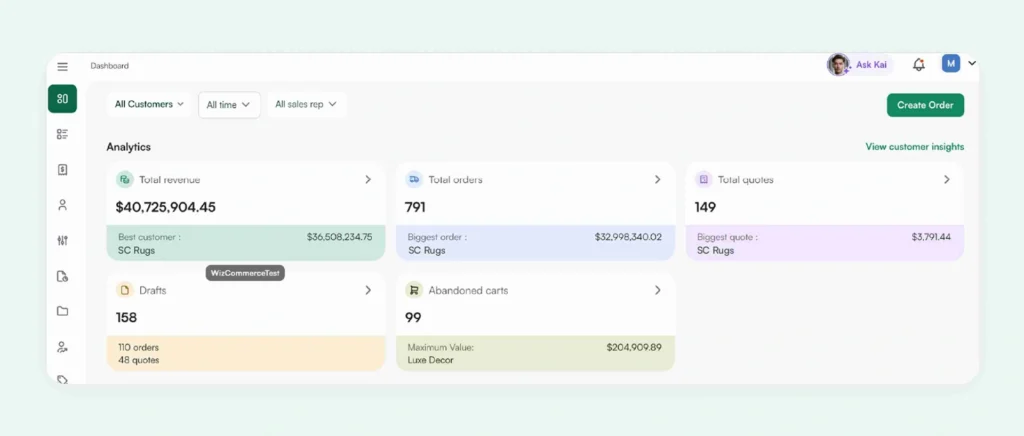
WizCommerce includes built-in analytics tools that provide visibility into your sales performance, product trends, and buyer behavior. You can monitor revenue, order activity, and quotes in real time. Dedicated dashboards also track sales rep performance, enabling you to evaluate engagement levels and identify opportunities for coaching and improvement.
7. AI Sales Copilot
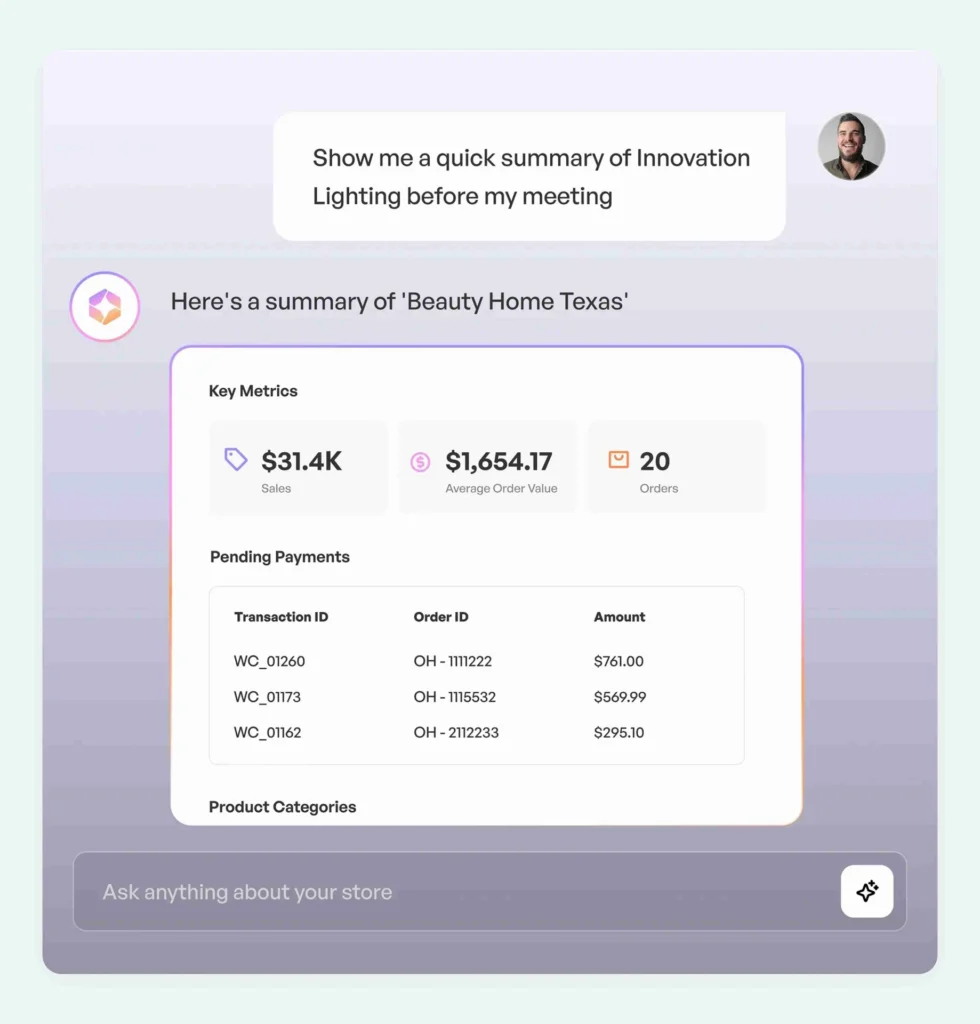
WizCommerce’s AI sales copilot is built to support your sales teams and buyers. It reviews signals such as past purchases, browsing behavior, wishlists, and ordering trends to suggest relevant products to your buyers. It can highlight available substitutes when items are out of stock, recommend complementary products, identify upsell opportunities, and help sales reps steer conversations toward products that better match the buyer’s needs.
8. Inventory intelligence
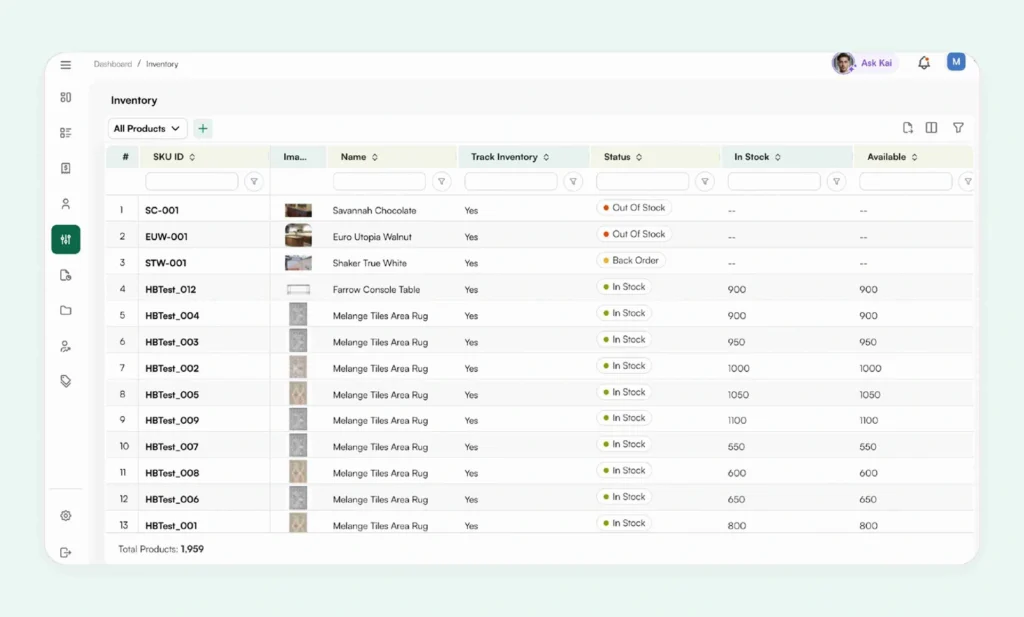
Accurate inventory visibility is critical in B2B selling. WizCommerce provides real-time stock information that includes available inventory, backorders, and in-transit stock. Both retailers and your sales reps can view this data directly on product pages. This helps retailers make informed purchasing decisions and set realistic delivery expectations to their own customers.
If you are exploring ways to build a branded wholesale sales channel beyond Faire, book a free demo with WizCommerce to see how it can support your B2B ecommerce operations.
Frequently Asked Questions
Do I need a business license to sell on Faire?
Yes, you do need a business license to sell new products on Faire, in most cases. This typically includes having a registered business entity and the appropriate licenses or permits required in your region. Faire also requires tax and banking information during onboarding to ensure that brands operating on the platform are legitimate wholesale suppliers.
Can you sell on Faire without a website?
Yes, you can sell on Faire without a website, but having one significantly improves your chances of approval. A website helps demonstrate your credibility and operational readiness. If you do not have a website, providing strong brand information such as social media profiles, email, and product catalogs may help support your application.
How to make money selling on Faire?
To make money selling on Faire, brands sell products at wholesale prices to retailers who then resell them to consumers. Success on the platform typically depends on strong product presentation, competitive wholesale pricing, reliable fulfillment, and maintaining good relationships with retail buyers. Repeat orders from retailers are often a key driver of long-term revenue on the platform.
Do I pay sales tax on Faire?
Whether you pay sales tax on Faire depends on your location, the buyer’s location, and applicable tax regulations. In many cases, retailers purchasing through Faire provide resale certificates, meaning the purchase is tax-exempt at the wholesale level. However, you must still comply with tax reporting requirements in your jurisdiction and ensure accurate tax documentation.
How to get buyers on Faire?
Getting wholesale customers on Faire depends largely on visibility and retailer trust. You can improve your chances by creating high-quality product listings, using clear photography, offering competitive minimum order quantities, and maintaining reliable fulfillment times. Participating in Faire promotions, digital trade shows, and maintaining strong retailer communication can also help attract new buyers.
What are the cons of using Faire?
The cons of using Faire include commission fees on marketplace orders that can affect margins, and limited control over the buyer relationship compared to direct wholesale channels. Additionally, relying heavily on a marketplace can make wholesale businesses dependent on platform policies and algorithm-driven discovery.