Skip to content



Shopify is an ecommerce platform that enables businesses to build online stores and process transactions. While it is a dominant player designed mainly for B2C retail, its native capabilities for wholesale are significantly narrower. So, is Shopify actually good for wholesale? In this blog, we break down the Shopify pricing structure to determine if it is a suitable and cost-effective solution for B2B brands.
Shopify pricing plans in 2026
Unlike many enterprise platforms, Shopify publicly displays its core pricing tiers. However, the advertised monthly fees represent only your baseline investment, not your total cost of ownership. Here are the 5 Shopify pricing plans:
- Shopify Basic costs $39/month
- Shopify Grow costs $105/month
- Shopify Advanced costs $399/month
- Shopify Plus costs $2,500/month
Shopify Basic Plan
Designed for solo entrepreneurs just starting out, this plan costs $39 USD/month. It includes the lowest transaction fee of 2% with third-party payment providers, but not when you use Shopify payments. It offers:
- 10 inventory locations
- 24/7 chat support
- In-person selling via phone or POS device
- Up to 77% shipping discount
Shopify Grow Plan
Targeted at small teams expanding their business, this plan costs $105 USD/month. Third-party payment providers incur a lower transaction fee (1%).
It offers everything covered in the previous plan, plus:
- 5 staff accounts
- Up to 88% shipping discount
- Professional reports
Shopify Advanced Plan
Built for large businesses seeking global reach, this Shopify plan costs $399 USD/month. The third-party payment provider fee drops further to 0.6%.
It offers everything covered in the previous plan, plus:
- 15 staff accounts
- Enhanced 24/7 chat support
- Third-party calculated shipping rates
- Duties and import taxes
- Custom report builder
Shopify Plus Plan
Engineered for complex businesses and high-volume merchants, this plan starts at $2,300 USD/month (on a 3-year term). It offers customizable transaction fees and rates tailored for high volume.
It offers everything covered in the previous plan, plus:
- Unlimited staff accounts
- 200 inventory locations
- 24/7 live chat support
- Fully customizable checkout
- Up to 200 POS Pro locations
- Native wholesale/B2B selling capabilities
| Also read: Pitfalls of a B2B ecommerce site on a B2C platform
Additional Shopify cost components
Shopify Plus for B2B
For B2B brands, standard Shopify pricing plans often lack native wholesale features. To get advanced capabilities like custom pricing tiers, bulk discounts, and wholesale checkout without relying on a patchwork of apps, businesses must upgrade to Shopify Plus. However, this significantly jumps the cost, starting around $2,500 per month, making it a steep investment for growing B2B merchants compared to the basic plans.
Transaction and payment processing fees
The Shopify pricing structure can be opaque regarding transaction costs. Unless you use their proprietary “Shopify Payments” gateway, you are charged a transaction fee (0.5%–2%) on top of your payment gateway’s processing fees (typically 2.9% + $0.30). For example, on a Basic plan using PayPal, a single $100 order could incur over 5% in total fees, hiking your Shopify cost and eating into your profit margins.
Also read: Shopify for Trade Shows: The Ultimate Guide to Wholesale Orders
The cost of the app ecosystem
Shopify’s core platform is intentionally streamlined, forcing most B2B merchants to rely on the Shopify App Store for essential functionality. To add standard wholesale features like minimum order quantities, custom quotes, or bulk pricing, you will likely need 5–10 third-party apps. These subscriptions typically add $100–$500+ per month to your bill, often costing more than the Shopify subscription itself. And this doesn’t even count the B2B-first wholesale apps for Shopify that businesses need to integrate to access its B2B functionality.
Hidden costs of customization and scaling
The advertised base Shopify pricing is rarely what you actually pay. As you scale, you may face a massive pricing gap between the “Advanced” plan ($399/mo) and “Plus” ($2,500/mo), with no middle ground. Additionally, meaningful customization (such as unique B2B workflows) often requires business owners to hire developers to write custom Liquid code or purchase premium themes ($180–$350), further driving up your total cost of ownership.
How Shopify compares to WizCommerce
To help you evaluate your options, here’s how Shopify stacks up against WizCommerce across key capabilities:
| Capability | Shopify | WizCommerce |
| Platform focus | Primarily B2C ecommerce | B2B ecommerce |
| Pricing model | Public tiered plans + apps often add cost | Quote-based, plan-led |
| B2B functionality | Limited – only available with Shopify Plus (~$2,300+/month) or with multiple B2B plug-ins | Built-in, full-featured |
| User limits | Unlimited staff accounts | Unlimited users (plan-dependent) + per seat licensing |
| Apps required | Essential features require apps | Core features included |
| Catalog & ordering | Wholesale ordering often needs advanced tools | Streamlined, modern workflows |
| Implementation | Self-service or agency support (often paid) | Included onboarding support or minimal |
| Scalability | Scales well for B2C | Scales across brand sizes with B2B complexity built in |
| AI capabilities | Third-party apps only | Built-in AI assistants: Kai: AI sales assistant for reps Ella: AI order & quote automation agent |
| Wholesale/quoting | Requires Shopify Plus or Plug-ins | Native functionality |
| Integration | Wide app ecosystem; ERP sync often depends on connectors/apps | Integrates with ERPs + QuickBooks/NetSuite for real-time sync of orders, inventory, and customer data |
| Product image generation | Not native (requires third-party apps/tools) | Native AI product image generator, WizStudio |
The biggest difference is that Shopify is built for B2C brands willing to piece together functionality through apps; whereas, WizCommerce is purpose-built for B2B ecommerce businesses, where wholesale-specific features, like customer-specific catalogs, quote workflows, and sales-assisted ordering, are native to the platform.
Why do B2B brands choose WizCommerce?
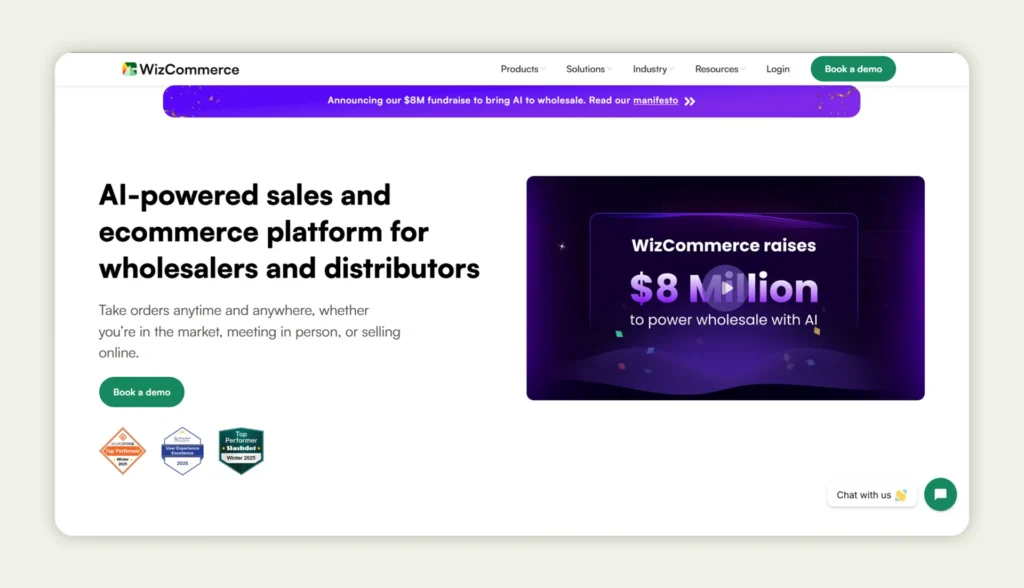
Native B2B ecommerce: Built specifically for wholesale needs with custom pricing tiers, quote management, MOQs, volume discounts, and separate trade portals, all without requiring expensive enterprise upgrades or third-party apps.
Stable, transparent pricing: Eliminates transaction fees on your own sales and avoids the “surprise costs” of essential features, keeping more revenue in your business.
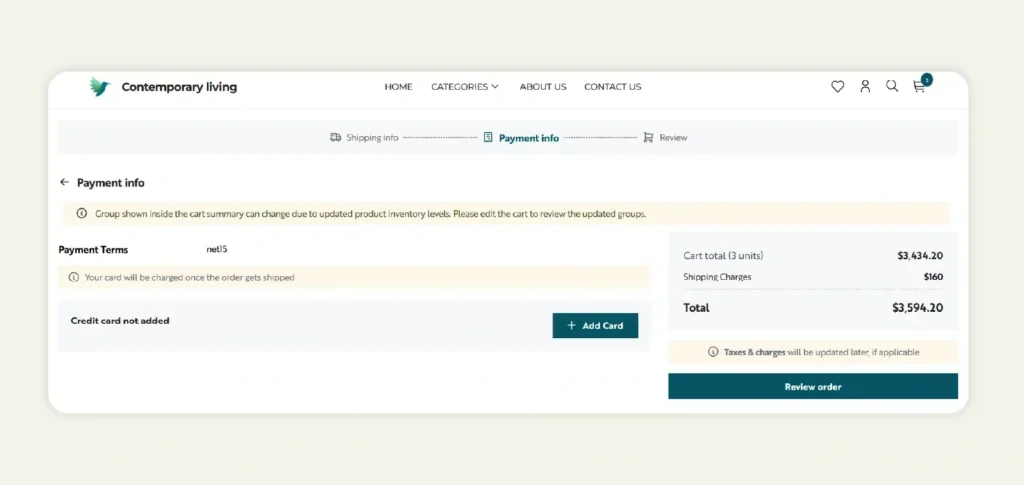
Inclusive implementation: Includes guided setup, data migration assistance, and team training as part of the subscription, allowing brands to launch in weeks rather than months.
Modern AI automation: Features built-in AI assistants Ella (for sales quotes and product lookups) and Kai (for 24/7 customer support and order tracking) to automate routine tasks without extra integrations.
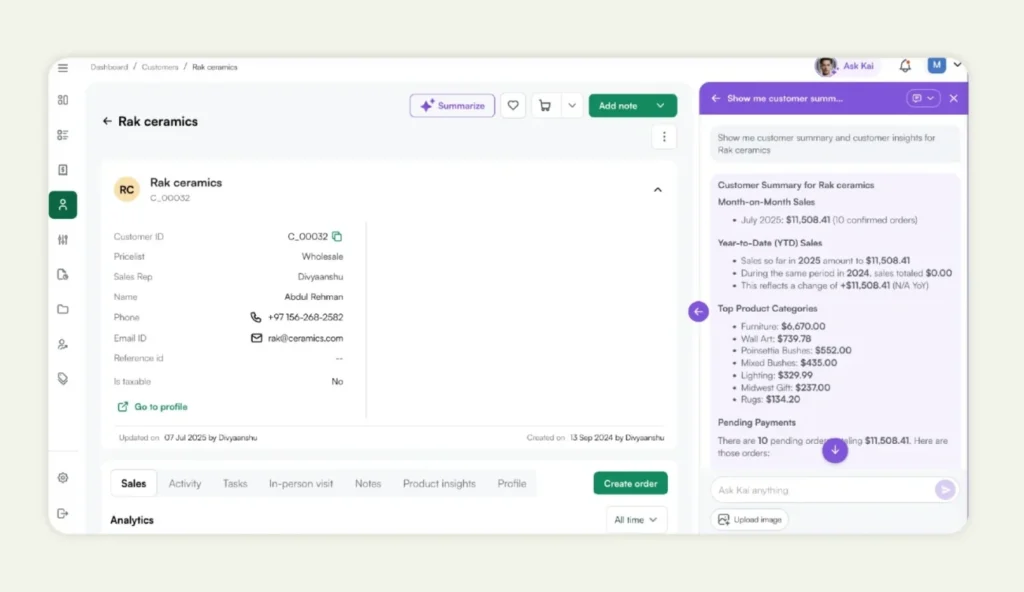
All-in-one functionality: Reduces software costs and tech stack complexity by including advanced multi-warehouse inventory, customer segmentation, flexible payment terms, and detailed analytics directly in the platform.
A customer success story: Howard Elliott
By trading fragmented legacy tools for the unified WizCommerce ecosystem, home decor leader Howard Elliott turned operational friction into a high-velocity growth engine. Through the seamless, intuitive B2B interface of WizShop and the AI-powered creative speed of WizStudio, they drove a 15% surge in web orders and onboarded 600 new customers in just six months. The heavy lifting is now handled by Ella, the AI Order Entry Agent that slashed manual processing time from four hours to mere minutes, while Kai, the AI Sales Assistant, provides reps with the instant, data-driven insights needed to close deals with consultative precision. WizCommerce went beyond modernizing Howard Elliott’s workflow. It fundamentally redefined their “go-to-market” speed, proving that when you automate the mundane with elite AI tools, you unlock exponential scale.
With WizCommerce, your brand can also simplify B2B selling by bringing ecommerce, sales, and operations together by combining the workflows that wholesale brands actually need. Book a demo to see WizCommerce in action.
FAQs
Is there a monthly fee to sell on Shopify?
Yes, Shopify pricing includes a monthly fee. Basic Shopify costs $39/month for a full online store. There’s also Shopify Starter at $5/month, which only supports selling on social media with a buy button, not a complete online store. All plans require ongoing monthly payments; your store becomes inaccessible if payment lapses.
What are the hidden fees on Shopify?
The hidden/additional fees not included in Shopify pricing include transaction fees (0.5%-2% if not using Shopify Payments), credit card processing fees (2.5%-2.9% + $0.30 per transaction), app subscriptions ($100-$400+/month), premium themes ($180-$350), domain costs ($14-$20/year), and potential developer fees for customization. These can triple or quadruple your base monthly subscription cost.
Is it cheaper to sell on Etsy or Shopify?
The cheaper option between selling on Etsy or Shopify depends on your online sales volume and business model. Etsy charges $0.20 per listing plus 6.5% transaction fees, and 3% + $0.25 payment processing fees with no monthly fee. Shopify charges $39+/month plus processing fees but no listing fees (2.5%-2.9% + $0.30). For sales under $500/month, Etsy may be cheaper. Above $1,000-$2,000/month, Shopify pricing typically becomes more cost-effective, though B2B businesses often find WizCommerce offers better total cost of ownership.
How do I avoid fees on Shopify?
You cannot completely avoid Shopify fees, but you can minimize them by: (1) using Shopify Payments to eliminate transaction fees, (2) upgrading to higher-tier plans with lower credit card rates if volume justifies it, (3) negotiating processing rates on Shopify Plus, (4) choosing platforms like WizCommerce with native features to reduce app dependency, and (5) avoiding third-party payment processors that trigger dual fees.
Can I start Shopify with no money?
Technically, no, you cannot start Shopify with no money because Shopify doesn’t offer a free plan. The platform requires a minimum $39/month subscription ($5 for limited Starter plan). While Shopify offers a 3-day free trial followed by a $1/month promotional rate for first three months, you’ll need funds for inventory, payment processing fees, apps, domain registration, and themes to launch successfully.
Is Shopify worth the cost for a small business?
Shopify can be worth the cost for small B2C businesses valuing ease of use and willing to accept app-based functionality. However, small B2B or wholesale businesses often find better value in B2B-specialised platforms like WizCommerce, which provide native wholesale features, eliminate hidden and additional costs, and include capabilities that would require expensive Shopify apps. Calculate your total Shopify cost, including apps, transaction fees, and payment processing, before committing.
Is it worth it to have a Shopify store?
It’s worth having a Shopify store if you’re a B2C brand that values the app ecosystem, needs quick launch capability, and doesn’t require B2B functionality. However, it may not be worth it if you need native wholesale capabilities, stable pricing, or want to minimize app dependency and per-transaction fees. B2B businesses typically find better value in purpose-built platforms like WizCommerce that deliver wholesale features natively.
What are the main differences between Basic Shopify and Shopify Plus?
The Basic Shopify plan is designed for small B2C businesses and lacks native wholesale features, forcing you to rely on third-party apps for things like custom pricing and bulk discounts. In contrast, Shopify Plus is an enterprise-level solution (starting around $2,300/mo) that includes built-in B2B capabilities (a dedicated wholesale portal, net payment terms, and unlimited staff accounts) along with higher API limits and priority support.
Can I change my Shopify pricing plan later if my needs change? ‘
Yes, you can upgrade or downgrade your Shopify plan at any time directly from your admin settings. If you upgrade, the change is typically immediate with a prorated charge, whereas downgrades often take effect at the end of your current billing cycle.