Skip to content



WooCommerce is one of the most effective and convenient ways to transform a standard WordPress website into a fully functional ecommerce store. That much is undisputed. Also, there are no traditional pricing plans because it is a “completely free” tool.
But is it really free? This is a misconception many have. While the plugin itself may cost nothing to install, running a live WooCommerce store involves ongoing expenses. In this post, we will understand what “free” really means, the actual WooCommerce cost, and ultimately help you decide whether it is still a cost-effective solution for your wholesale store in 2026.
What does “free” WooCommerce really mean?
WooCommerce cost is “partially free” in the purest software sense. Here’s what we mean by this:
- The core WooCommerce plugin is open source and can be downloaded at no cost.
- Anyone has the right to install and extend it on a WordPress website.
- There are no mandatory licensing fees for using this free plugin.
- There are no revenue-based commissions charged by WooCommerce itself.
Now, just because the software offers the above cost benefits doesn’t mean it leads to free business operations. Remember: a live ecommerce store is not just a piece of software. It is a full–fledged commercial system that must be hosted, secured, maintained, and optimized. A “truly free” software eliminates or minimizes all these downstream dependencies.
Put simply, WooCommerce provides the foundation. But everything required to make that foundation functional in a real-world selling environment comes at a cost. WooCommerce cost includes an ecosystem of paid services and extensions, which automatically leads to several mandatory, optional, and hidden expenses to run the store at a professional level.
What are the mandatory costs of setting up and running a store in WooCommerce?
Any revenue-generating store in WooCommerce comes with certain non-negotiable costs. These expenses cover the basic infrastructure and operational requirements needed to keep your store accessible and functional. Here they are:
1. Hosting
Hosting is an important (and unavoidable) component of your WooCommerce cost of running a store. To the unversed, hosting serves two purposes. One, to store your website files. Two, to ensure your store is accessible whenever customers visit your URL. Many official WooCommerce hosting providers like Pressable, WordPress VIP, Bluehost, SiteGround, and Hostinger provide a variety of plans to suit your requirements.
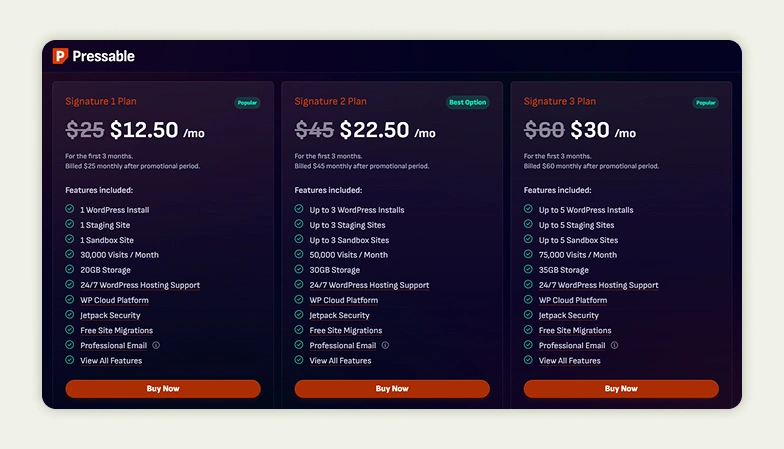
A good hosting plan typically offers infrastructure optimized for high traffic, the ability to scale resources without downtime, 24/7 expert support familiar with the WooCommerce ecosystem, security protections, automated backups, compliance readiness, and access to performance monitoring tools.
Estimated Cost: $200 to $20,000 per year
2. Domain name
A domain name is your store’s digital identity. It is the address customers type into their browser to find your business. While domain registration is one of the smaller line items in the overall cost of running your WooCommerce store, it is still a mandatory requirement.
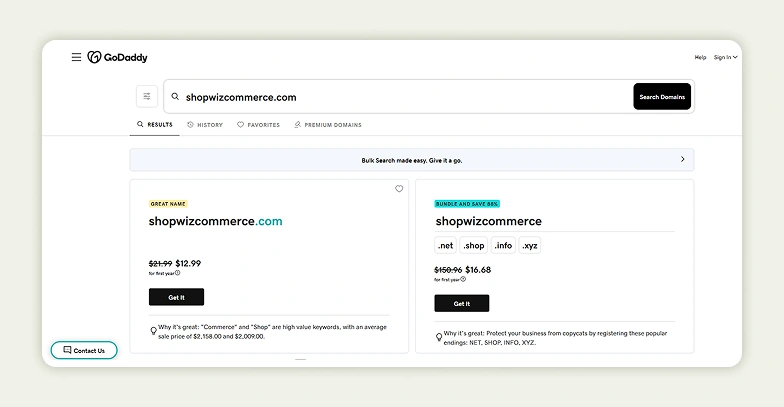
Most standard domain names are purchased annually. You will also find them bundled with hosting plans at a discounted rate. In many cases, the first year may be offered for free. Renewal fees will apply from the second year onward. Pricing also varies based on the domain extension (.com, .store, .co, etc.) and the perceived value of the name itself. While accounting for the domain name, you should factor in renewal pricing and domain privacy protection.
Cost estimate: $10 to $50 per year (premium domains might cost much more)
3. Themes
Themes control the visual design and overall user experience of your WooCommerce store. Technically, WooCommerce can run with a basic free theme. They can also be a viable starting point for early-stage ecommerce businesses with simple design needs.
But free themes come with limitations around customization and built-in features related to B2B ecommerce. As a result, many growing wholesale brands opt for premium themes that offer better design flexibility and conversion-friendly layouts.
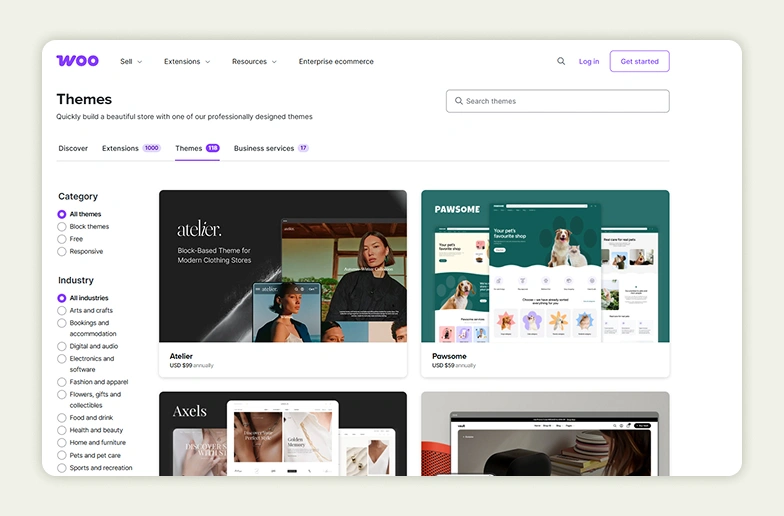
Premium WooCommerce themes are typically priced as annual licenses. Some businesses may also invest in custom theme development to achieve a fully bespoke look and functionality. This can further increase costs.
Cost estimate: $0 to $100 per year
4. Security, compliance, and data security
Security is particularly non-negotiable for wholesale businesses handling customer accounts and payment information. At a minimum, an SSL (Secure Sockets Layer) certificate is required to encrypt data and meet basic trust and compliance standards.
Some hosts include SSL for free. Paid or advanced certificates may still be necessary for higher assurance. Beyond SSL certificates, essential security investments often include firewalls, malware scanning, login protection, and regular backups.
Cost estimate: $300-$400 per year
5. Payment gateways
Payment gateways directly impact your store’s profitability because many gateways charge a per-transaction fee. It is usually a percentage of the order value plus a small fixed amount. Fees can also vary considerably according to your region and the payment methods and currencies you need support for.
For wholesale stores with high order values or frequent transactions, these fees can quickly become one of the highest ongoing costs. As a result, it requires careful consideration when setting pricing and margins.
Cost estimate: approximately 3% per transaction
6. Shipping
Shipping-related WooCommerce costs vary widely depending on your business model and delivery requirements. While the core platform supports basic shipping setups at no cost, many stores today rely on premium shipping plugins for capabilities such as real-time carrier rates, label printing, rule-based shipping logic, etc.
Remember, the cost of these plugins or functions excludes the actual carrier fees charged by logistics providers to deliver your products.
Cost estimate: $100-$200 per year (plus carrier fees)
What are the optional WooCommerce costs for enhancing functionality?
Many WooCommerce stores incur additional costs to extend functionality and support growth. These expenses are technically optional, but in practice, they become necessary as your business grows. Here they are:
1. Custom design and development
Custom design and development become necessary when your WooCommerce store needs functionality or branding that goes beyond standard themes and plugins. This is more common than you think in the B2B ecommerce space because most themes and plugins do not offer the advanced features needed to run wholesale operations smoothly. For instance, features like custom pricing, multiple catalogs, bulk ordering workflows, ERP integrations, etc., typically require custom development.
Costs vary widely depending on the scope of your requirements. Minor theme customizations and UI tweaks might cost less, while full custom builds and ongoing development support can add several thousand dollars per year to the overall WooCommerce cost.
Cost estimate: $500 to $45,000 per year
2. Marketing tools and plugins
Marketing tools and plugins are optional but still critical for scaling your WooCommerce store and driving repeat business. These usually include CRM platforms such as HubSpot, email marketing tools like Mailchimp or Klaviyo, lead nurturing solutions, and personalization platforms like Addify that enable customer-specific offers and targeted promotions for buyers.
While WooCommerce integrates easily with many free third-party tools and plugins, most of them offer useful marketing features only in their paid plans.
Cost estimate: $150 to $750 per year
3. Accounting tools and plugins
Accounting and finance tools help in streamlining processes like invoicing, tax calculations, payment reconciliation, and financial reporting. Many B2B businesses integrate 3rd party accounting platforms and plugins like QuickBooks and Xero with their WooCommerce store to sync orders, manage invoicing terms, handle multi-tax scenarios, and generate accurate financial reports.
While basic features are affordable and available in the lower plans, advanced features such as automated reconciliation, multi-currency support, or compliance-focused reporting can add to your WooCommerce cost.
Cost estimate: $100 to $500+ per year
4. Communication & SEO tools/plugins
These tools support both customer experience and discoverability. They typically include email automation tools for transactional and follow-up emails, SEO plugins for optimizing product and category pages, chat or support tools for handling wholesale inquiries, etc.
While entry-level tools may be free or low-cost, serious wholesale businesses often upgrade to premium versions for advanced automation, analytics, and priority support.
Cost estimate: $100 to $500+ per year
What are some hidden WooCommerce costs to watch out for?
So far, we have seen only the most obvious mandatory and optional costs of running a WooCommerce store. However, many expenses only surface once your store begins to scale or operate long-term. These hidden costs are easy to overlook during initial planning but can materially impact your total cost of ownership over time. Here they are:
- Renewal price increases for hosting, domains, and plugins: Introductory discounted pricing is common across hosting providers and premium plugins. Once the first year ends, renewal rates can increase significantly.
- Performance and optimization needs as the store scales: As your product catalogs grow and traffic increases, additional investments in caching, CDNs, image optimization, database tuning, or upgraded hosting tiers often become necessary to maintain acceptable site speed.
- Multi-currency and international selling fee variations: Selling across regions may introduce extra costs such as premium multi-currency plugins, higher payment gateway fees, exchange rate markups, region-specific tax tools, compliance-related extensions, etc.
- Ongoing maintenance and compatibility fixes: Regular maintenance of WooCommerce core, theme, and plugin updates can introduce conflicts or break existing functionality. Many business owners underestimate the time and cost required to test updates and apply fixes after each release.
- Plugin conflicts: Over time, stacking multiple plugins can lead to incompatibilities. Resolving these problems frequently requires unplanned developer intervention. This can add to ongoing operational and development costs.
Still thinking of using WooCommerce for your wholesale website? Here are some top questions to ask before choosing WooCommerce for a B2B business.
Is the cost of WooCommerce worth it in 2026?
Whether the WooCommerce cost is “worth it” depends less on the sticker price and more on the total cost of ownership (TCO). TCO is the complete cost of running a system over time, including setup, subscriptions, transactions, maintenance, and hidden operational expenses. Here is the breakdown of the TCO calculation for a WooCommerce store in 2026:
| Cost component | What it covers | Low-end cost (USD/year) | High-end cost (USD/year) |
| Hosting | Managed WooCommerce hosting, scalability, backups, performance, support | $200 | $20,000 |
| Domain name | Domain registration, renewals, privacy protection | $10 | $50 |
| Theme | Free or premium WooCommerce theme licensing | $0 | $100 |
| Security, compliance & data protection | SSL, firewalls, malware scanning, and backups | $300 | $400 |
| Shipping tools | Shipping plugins and automation (excluding carrier fees) | $100 | $200 |
| Mandatory costs subtotal | $610 | $20,750 | |
| Custom design & development | B2B custom features, integrations, and ongoing dev support | $500 | $45,000 |
| Marketing tools and plugins | CRM, email/SMS marketing, automation, and retention tools | $150 | $750 |
| Accounting tools and plugins | Invoicing, tax, reconciliation, and reporting integrations | $100 | $500+ |
| Communication & SEO tools/plugins | SEO plugins, email automation, and chat/support tools | $100 | $500+ |
| Optional costs subtotal | $850 | $46,750+ | |
| Estimated annual TCO (Mandatory + optional costs) | ~$1,460 | $67,500+ | |
Note: Payment gateway fees and hidden expenses are excluded from this table, as they scale directly with time, revenue, and order volume rather than being fixed platform costs.
As you can see from the annual TCO, WooCommerce is not particularly cost-effective for small to mid-sized wholesale stores. If you are a business not comfortable managing everything in-house, you will keep pushing the operating costs closer to the higher end of the costs in the table.
When your wholesale business requires extensive customizations related to functionalities, costs can escalate quickly due to developer dependency. In such a scenario, a full-fledged B2B ecommerce platform will offer better long-term value by bundling features, support, security, and scalability into a predictable monthly or annual fee.
WizCommerce: A value-focused WooCommerce alternative for wholesale brands
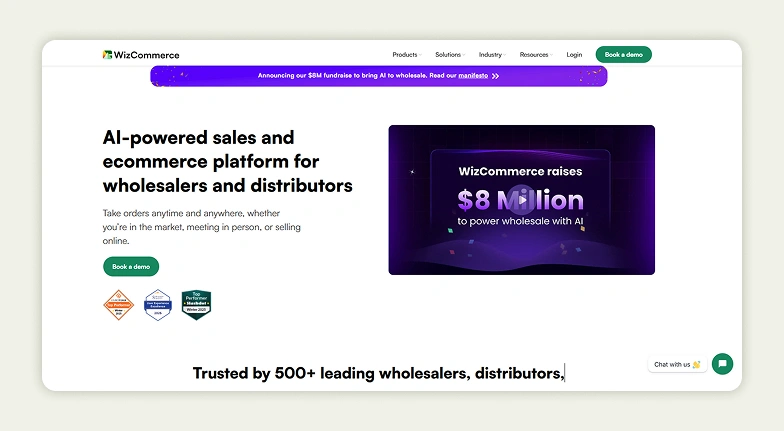
For wholesale and B2B brands that want to keep their TCO low, WizCommerce is a solid WooCommerce alternative. As we have highlighted earlier, with WooCommerce, costs tend to accumulate over time through premium extensions, managed hosting upgrades, recurring plugin renewals, performance optimization work, and ongoing developer involvement to manage updates and compatibility issues.
WizCommerce eliminates all these variables by bundling essential wholesale functionality into the platform itself. There is neither any dependency on paid plugins nor is there any need for premium themes to “unlock” B2B workflows. You also do not have to worry about recurring spend on external development just to keep the store stable and functional.
WizCommerce also reduces your infrastructure overhead. Hosting, security, performance optimization, and platform maintenance are handled as part of the solution. This frees up your teams from the continuous cycle of updates and troubleshooting that typically accompanies WooCommerce-based stores.
So, if your wholesale business is looking for a more predictable and cost-efficient way to run operations in 2026, WizCommerce is worth evaluating. Book a demo to see how WizCommerce can replace plugin-heavy WooCommerce setups now.
Frequently Asked Questions
How much does WooCommerce cost?
WooCommerce cost starts at zero for the core plugin itself, which is free to install. However, running a live store involves additional costs. These include hosting, a domain name, themes, security tools, payment gateway fees, and optional plugins. Depending on your store’s complexity, the final WooCommerce fees can range from a few hundred to thousands of dollars.
Can you sell on WooCommerce for free?
You can technically set up a WooCommerce website at no software cost. But free operations are unrealistic. You still need a hosting service, a domain, and have to manage payment processing fees. All these incur expenses. As your store grows, opting for paid plugins, premium features, and maintenance becomes unavoidable. WizCommerce eliminates these hidden dependencies by managing your wholesale store end-to-end. From infrastructure to B2B-specific functionalities and ongoing maintenance, it handles all.
Is WooCommerce better than Shopify?
Whether WooCommerce is better than Shopify depends on your priorities. WooCommerce offers more flexibility and customization options, while Shopify provides simplicity and managed infrastructure for building your ecommerce website. However, both can become costly for B2B use cases due to dependency on plugins and extensions. Wholesale brands often prefer WizCommerce, which is tailor-made for B2B use cases without relying on third-party plugins.
What are the disadvantages of WooCommerce?
The disadvantages of WooCommerce include ongoing maintenance requirements, frequent updates, plugin management, and technical oversight. WooCommerce cost can become unpredictable in the long term as performance and compatibility needs increase. This can strain your internal teams and your operating budget over time. WizCommerce addresses these issues head-on by offering a managed, wholesale-first platform with lower operational overhead.
Is WooCommerce good for beginners?
WooCommerce is good for beginners at the start, particularly for WordPress users. However, as your requirements grow, managing plugins and maintenance can become complex. WizCommerce offers a more beginner-friendly alternative for wholesale businesses that want fewer technical responsibilities.
What is the difference between WordPress and WooCommerce?
The difference between WordPress and WooCommerce is that WordPress is a content management system used to build websites and blogs, while WooCommerce is a plugin that adds ecommerce functionality to a WordPress site. In simple terms, WordPress powers the website. WooCommerce allows you to manage product listings, shopping carts, payments, and order management.
Can WooCommerce pricing be customized for different types of online stores?
Yes, WooCommerce pricing can be customized for different types of online stores. It supports custom pricing, such as bulk discounts and role-based pricing through plugins or development. However, these customizations increase WooCommerce cost and maintenance effort. WizCommerce includes advanced B2B pricing features out of the box. This reduces complexity and long-term costs.
Are there any dedicated WooCommerce dynamic pricing plugins?
Yes, dedicated WooCommerce dynamic pricing plugins are available. Several third-party plugins are available on the WooCommerce marketplace that let you implement dynamic pricing for your ecommerce store. Popular ones include those from Addify, Element Stark, and YayCommerce.