Skip to content



Running a small business often means juggling multiple responsibilities, such as sales, marketing, customer support, and operations (business processes), all at once. It’s a lot to manage, and staying organized can quickly become overwhelming. That’s where a reliable CRM (Customer Relationship Management) system comes in, especially when you’re evaluating modern crm tools that can also support project management and day-to-day customer service.
However, not every business can justify the cost of enterprise-level CRM platforms, ongoing license fees, or long-term commitments tied to proprietary solutions and proprietary software. That’s why more and more small businesses are turning to open-source CRM software, a flexible, budget-friendly alternative that puts customization and control back in your hands.
Open-source CRMs give you full access to the source code, allowing you to tailor the platform to your exact business needs. Whether you’re tracking leads, automating workflows, or improving customer engagement, you can do it all without being locked into expensive, restrictive software.
In this guide, we’ll explore the best open source CRM systems for small businesses in 2024. You’ll discover how these platforms compare, which features matter most, and why solutions like WizCommerce are setting a new benchmark for flexibility, affordability, and scalability.
What is an open source CRM system?
An open source CRM system is a customer relationship management platform where the source code is publicly available, meaning your business can view it, modify it, and tailor it to fit how you sell, market, and support customers. Unlike a proprietary CRM, an open source CRM system gives you more control over customization, data ownership, and how the tool evolves as your needs grow.
For many teams, that flexibility is the difference between “making do” and building a setup that truly fits. Whether you’re comparing open source CRM solutions for scalability, integrations, or automation, the right platform can help you manage leads, track deals, and improve customer follow-up without paying premium licensing costs.
That’s why small teams often look for the best open source CRM system, one that balances usability with customization. And if you’re evaluating the best open source CRM for small business, you’ll also want to consider how it handles reporting, workflows, and integrations, since those are what separate the top open source CRM software options from basic tools. In the sections ahead, we’ll break down the best open source CRM software picks, including several top open source CRM for small business choices, so you can find the best fit for your goals.
Benefits of open source CRM for small businesses
Open source CRM software has become a go-to option for teams that want flexibility without the long-term cost and lock-in that can come with proprietary tools. With an open source CRM system, you get access to the source code, meaning you can tailor the CRM to match how your business actually sells, supports customers, and manages relationships.
That’s why many teams searching for the best open source CRM system (especially those evaluating the best open source CRM for small business) lean toward open-source options first. Whether you want a lightweight setup or a platform you can expand over time, open source CRM solutions offer the control and customization to grow at your pace.
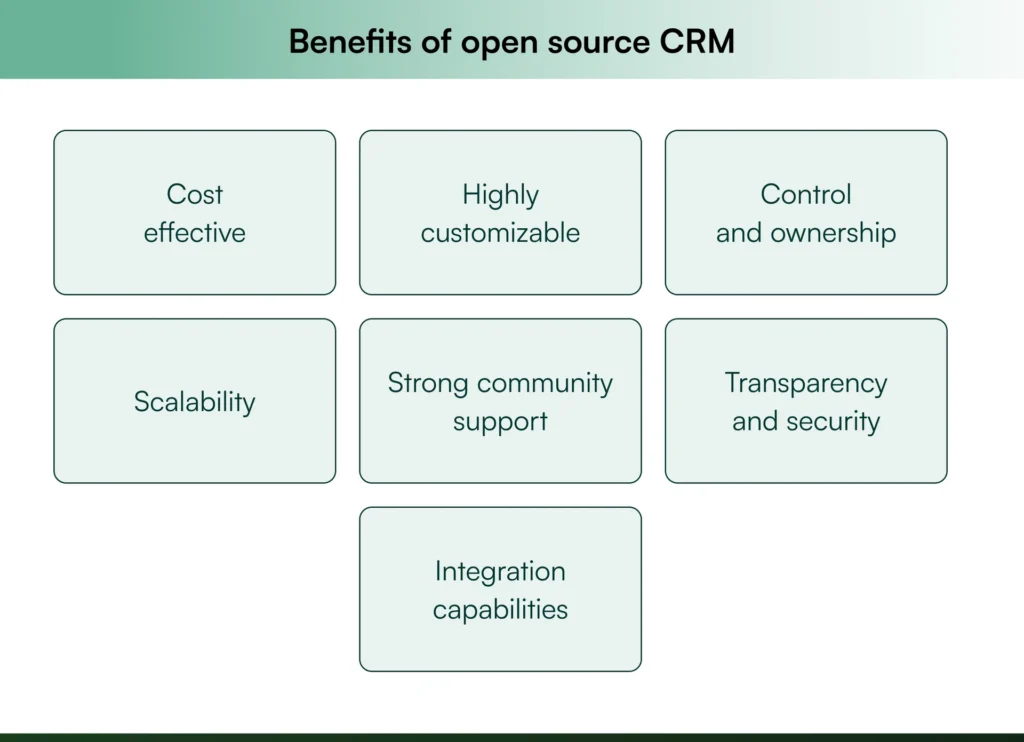
Here’s a closer look at the benefits:
Cost-effective
Many open-source CRMs come with little to no licensing fees, which is a big win for lean teams. You typically invest only in what you need, like hosting, support, or custom development, making it easier to access the best open source CRM software without enterprise pricing.
Highly customizable
One of the biggest reasons businesses choose open source CRM software is the freedom to customize workflows, fields, dashboards, and automations. If you’re comparing top open source CRM software, this ability to shape the system around your process (instead of changing your process around the system) is a major advantage.
Control and ownership
With an open source CRM system, you maintain greater control over both the platform and your customer data. You aren’t locked into a single vendor’s rules or pricing changes, which matters when you’re trying to build a long-term customer management foundation.
Scalability
The right open-source CRM can scale as your business grows—adding users, modules, automations, and integrations over time. This is a key reason many teams looking for the best open source CRM for small business start open-source early, then expand as their pipeline and team grow.
Strong community support
Most popular open source CRM solutions have active communities that contribute updates, extensions, security fixes, and troubleshooting support. If you’re evaluating a top open source CRM for small business, a strong community often means faster improvements and more shared resources.
Transparency and security
Because the code is open, vulnerabilities can be identified and addressed faster by the community. You also have clearer visibility into what the system is doing behind the scenes, something many businesses value when choosing the best open source CRM system.
Integration capabilities
Open-source CRMs are often built to connect with other business systems like email tools, marketing platforms, ecommerce, accounting, and more. This makes it easier to build a connected stack and choose a CRM that fits your workflows, which is essential when comparing top open source CRM software options.
Also read: B2B Wholesale CRM Strategies To Improve Efficiency
6 Best open source CRM software
Open-source platforms are a strong option for teams that want flexibility without being locked into a single vendor. Below are leading open source CRM solutions to consider, starting with WizCommerce as the #1 choice for teams that want modern CRM impact without the heavy lift of maintaining a full open-source stack.
1) Odoo
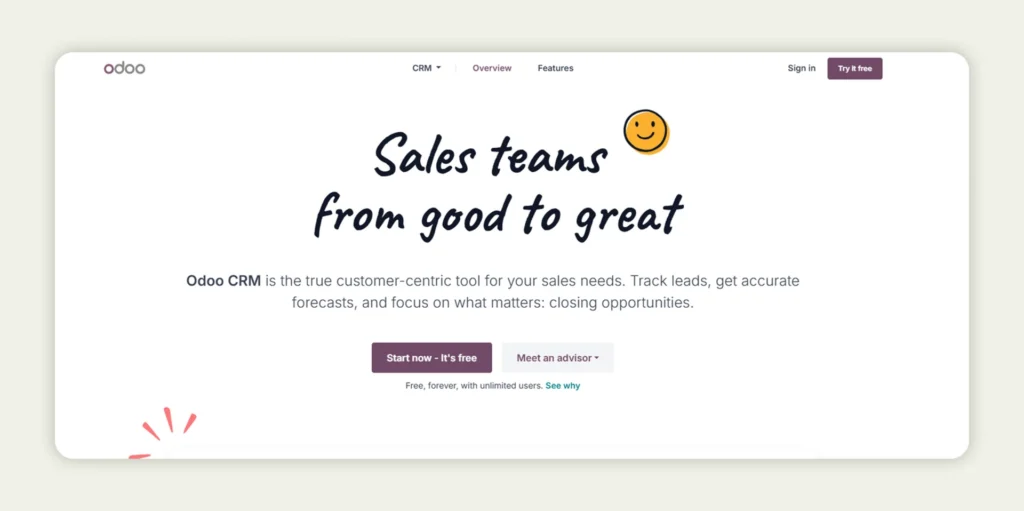
Odoo is a modular platform that includes a capable CRM and can expand into a wider ERP-style suite. It’s often considered top open source CRM software because you can start with the basics, contacts, pipelines, follow-ups, and then add accounting, inventory, and other apps as your needs grow. For teams evaluating an open source CRM system with long-term flexibility, Odoo’s “build as you go” approach is a major draw. It can be a strong open source CRM for small business when you want one ecosystem that grows with your operation, especially if you have technical resources for setup and customization.
Key features:
- Modular CRM that you can expand into ERP apps
Start with CRM and add more functionality as needed (like invoicing, inventory, or accounting) without rebuilding your stack.
- Custom pipelines, stages, and activity tracking
Organize deals your way with flexible stages and built-in tracking of meetings, emails, and tasks tied to each opportunity. - Workflow automation and team task coordination
Automates repetitive steps (like reminders or stage changes) and helps teams stay coordinated through assigned activities. - Integration-friendly ecosystem with many add-ons
Offers a large marketplace of extensions and modules to expand capabilities or connect with third-party tools. - Flexible deployment options depending on your setup
Supports different deployment approaches (cloud or on-premise) depending on your technical needs and control preferences.
Also read: Make Best Use Of CRM In B2B Businesses
2) SuiteCRM
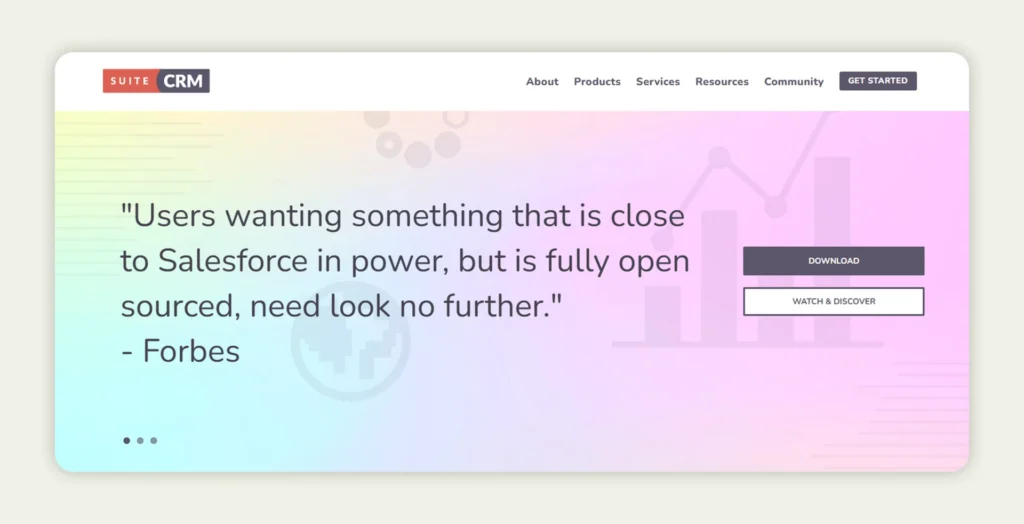
SuiteCRM is one of the most widely adopted open-source CRMs and is often mentioned when people search for the best open source CRM software with a familiar CRM layout. It’s derived from SugarCRM’s open-source roots and is popular with teams that want solid customization without starting from scratch. SuiteCRM also benefits from an active community, which helps drive updates and improvements. If you’re comparing a traditional-style open source CRM system and want a platform that can be shaped to match your workflows, SuiteCRM is a dependable option. It’s commonly shortlisted as an open source CRM for small business when flexibility matters and licensing costs need to stay low.
Key features:
- Customizable modules, fields, and workflows
Lets you tailor the CRM structure (fields, layouts, and workflows) to match how your team actually sells and manages accounts. - Strong community-driven improvements and extensions
Benefits from a community ecosystem that contributes updates, add-ons, and shared improvements over time. - Reporting tools and sales pipeline visibility
Helps teams track pipeline health, performance metrics, and progress with reporting built around deals and activities. - Role-based access controls for teams
Ensures the right people see the right data, which is important for privacy, accountability, and clean internal processes. - Extendable via add-ons and custom development
Supports deeper customization through extensions or development when you need functionality beyond default modules.
3) ERPNext
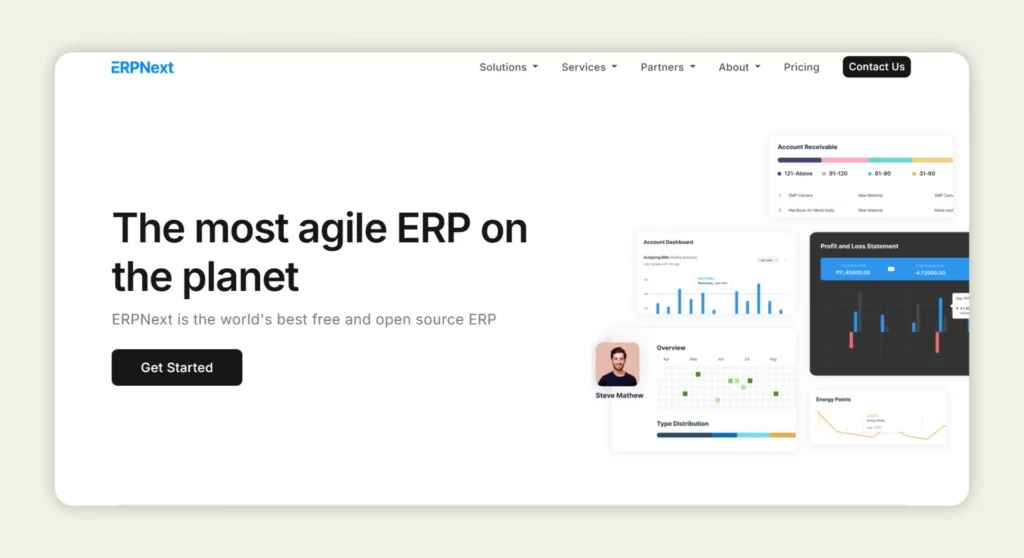
ERPNext is an open-source ERP platform that includes a capable CRM module, making it appealing if you want customer management connected to inventory, invoicing, purchasing, and finance. It’s a practical pick for businesses that need an open source CRM system that’s tightly linked to back-office operations, especially when quoting, stock visibility, and order processing matter. If you want the “connected workflow” outcome without the heavier implementation typical of full ERP suites, WizCommerce delivers a faster path for B2B sales execution.
Key features:
- CRM + ERP in one platform
Keep leads, customers, items, invoices, and operations connected end-to-end. - Quotation-to-invoice workflows
Create quotes, convert to orders, and track billing steps inside one system. - Inventory and item management
Support product catalogs, stock tracking, and operational visibility alongside CRM. - Sales team coordination tools
Assign tasks, manage activities, and track performance across reps and accounts. - Reporting across sales and operations
Monitor pipeline, revenue, and fulfillment indicators from unified dashboards.
4) Dolibarr
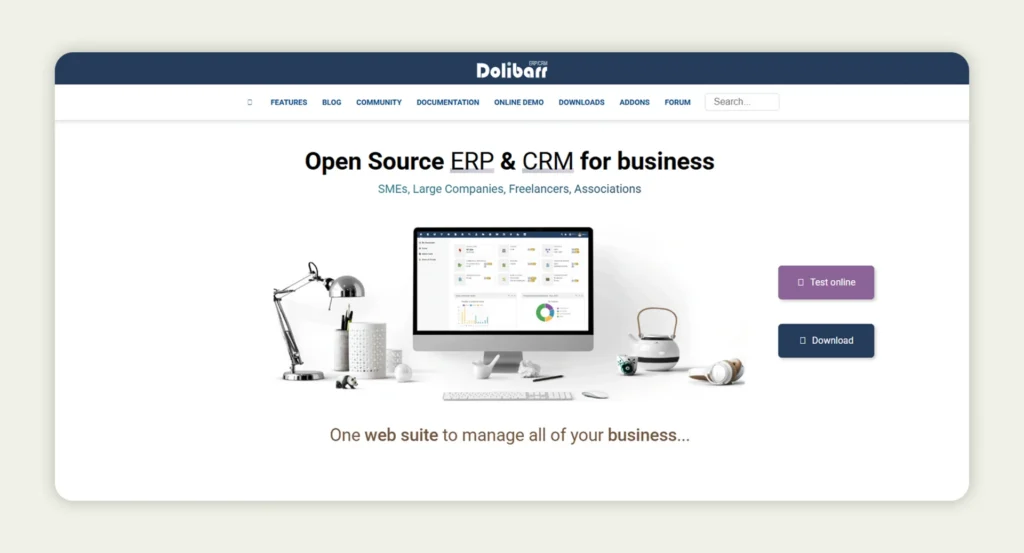
Dolibarr is a modular open source CRM software and business suite that works well for small teams wanting a simple, self-hosted system for contacts, customer tracking, invoicing, and basic operations. It’s often considered a good open source CRM for small businesses because you can start small and add modules as needed, without forcing a complex setup. If your priority is modern B2B workflows (especially quoting + ordering) with minimal maintenance and faster rollout, WizCommerce is typically the more execution-focused choice.
Key features:
- Modular add-on approach
Enable only what you need (CRM, invoicing, products, projects) and grow from there. - Customer and contact management
Organize accounts, contacts, and interaction history for ongoing relationship tracking. - Invoicing and basic billing support
Create invoices, manage payments, and keep customer financial records in one place. - Product and service catalog
Maintain items, pricing, and product details that connect to customer activity. - Simple admin and deployment options
Designed to be approachable for smaller teams managing their own setup.
5) OroCRM
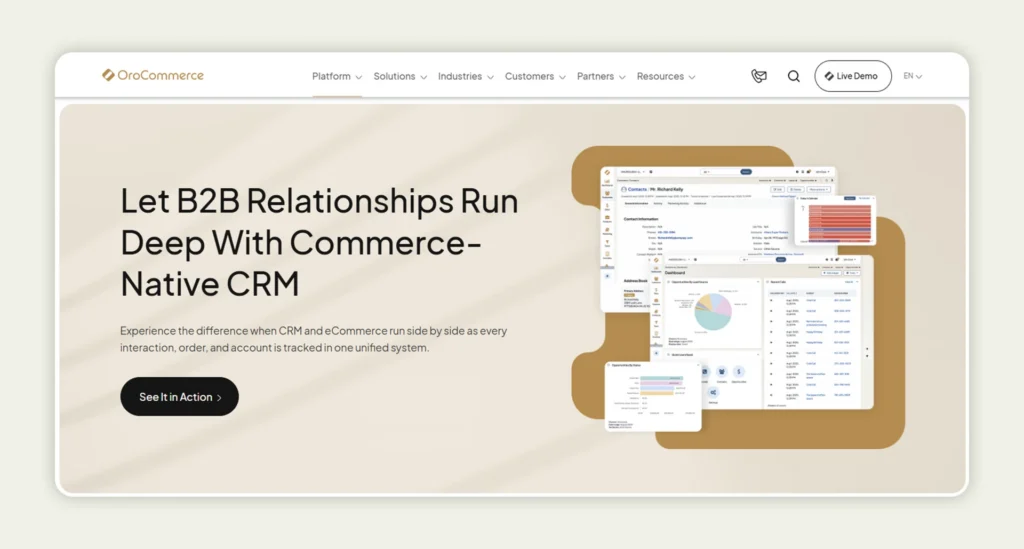
OroCRM is designed for organizations that need advanced customization, scalable architecture, and deep control over data structure, making it a frequent pick among more technical teams. It’s especially relevant for B2B companies managing complex customer records, account hierarchies, and multi-step processes. If your shortlist includes open source CRM solutions built for customization at scale, OroCRM tends to stand out because it’s built to handle complexity without forcing rigid workflows. For teams searching for a top open source CRM for small business that anticipates growth and customization needs, OroCRM can be a solid fit, provided you’re ready for a more involved implementation.
Key features:
- Flexible data models for complex customer structures
Useful when customer records aren’t “one-size-fits-all”, like managing multiple locations, divisions, or layered account hierarchies. - Configurable workflows and role-based access
Lets you define how processes run and control who can view/edit specific data based on roles and responsibilities. - Modular architecture for scalable customization
Makes it easier to add, remove, or modify functionality without breaking the core system as your requirements grow. - Multi-channel support for sales and engagement
Supports engagement across different channels so teams can manage customer touchpoints in a more unified way. - Built for B2B environments with advanced needs
Designed for teams that need deeper configuration, governance, and structure than a lightweight CRM typically offers.
Also read: Your Complete Guide to Implementing B2B Sales CRM Software
6) EspoCR
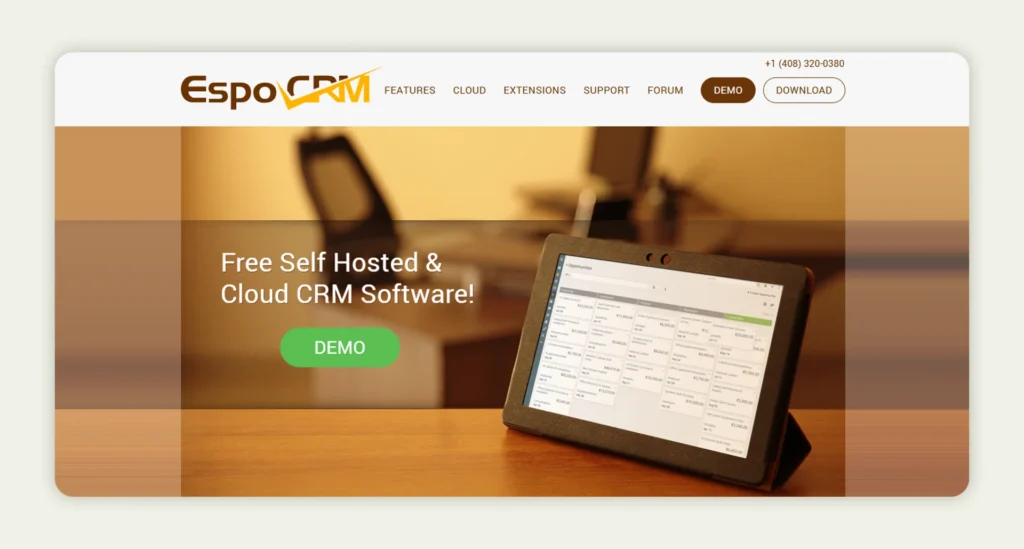
EspoCRM is a lightweight, web-based open source CRM system that focuses on clean pipeline management, contact/account organization, and fast day-to-day usability. It’s often shortlisted as a best open source CRM software option for teams that want a straightforward CRM without the overhead of a full ERP suite. If you like EspoCRM’s simplicity but want a more modern, B2B-ready workflow for quoting + ordering with less setup burden, WizCommerce is a strong alternative for teams looking for top-notch CRM solutions.
Key features:
- Clean pipeline + deal tracking
Manage stages, opportunities, and next steps with a simple, readable sales flow. - Custom entities, fields, and layouts
Adapt data structures and screens to match how your team sells and supports customers. - Activity history and follow-ups
Log calls, emails, tasks, and meetings so nothing slips through the cracks. - Role-based access and permissions
Control what users can see and edit across teams and departments. - Extensions and API support
Expand functionality and connect other tools through integrations and developer options.
Is an open source CRM actually right for you?
While the flexibility of the best open source CRM systems is a major draw, it’s important to recognize that the “freedom” of open source comes with significant operational responsibility. For many small businesses, the transition from evaluating open source CRM software to realizing they need a Proprietary CRM (PCRM) happens when they consider the “Total Cost of Ownership.”
Unlike an open source CRM system, which requires you to handle your own hosting, security patching, and manual updates, a proprietary CRM is built for momentum. The primary disadvantage of open-source tools is the “Customization Trap”: while you can modify everything, doing so often requires a dedicated developer and can make future software updates nearly impossible without breaking your setup.
A proprietary CRM works better for teams that don’t have deep technical resources and want to focus on selling rather than software maintenance. By choosing a managed platform, you trade the burden of data ownership and server management for high-level security, “out-of-the-box” integrations, and a polished user interface that your sales team will actually enjoy using. If your goal is to go live in days rather than months, and you want built-in AI tools that a community-driven project might lack, a proprietary system is almost always the smarter path for long-term growth.
Also read: Best B2B CRM for Wholesalers 2026 | Top 15 Solutions
WizCommerce, a modern CRM built for real selling
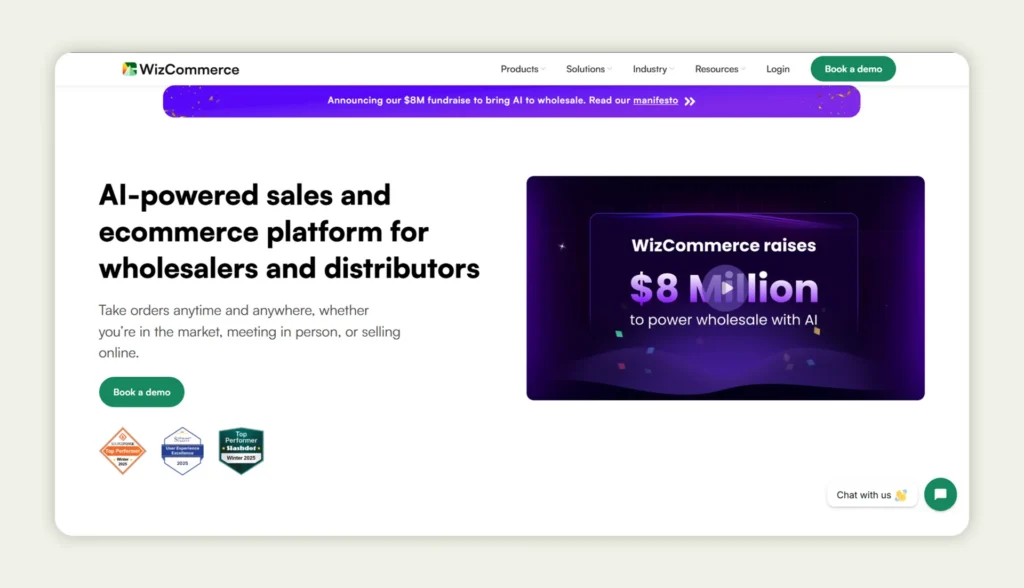
Choosing the best open source CRM system is often about control, flexibility, and momentum, especially if you’re evaluating the best open source CRM for small business growth. But if your priority is faster adoption, smoother workflows, and results your team can feel immediately, WizCommerce is the smarter path forward.
WizCommerce isn’t an open-source tool, it’s a modern CRM platform designed to help small and growing businesses manage customers, quotes, orders, and follow-ups in one connected workflow. Instead of spending weeks configuring modules or maintaining code, your team gets a system that’s ready to use, easy to scale, and built around how B2B sales actually happen.
Here’s what makes WizCommerce stand out:
- Customer data management: Centralized repository for storing and managing customer profiles, including contact information, purchase history, and interaction logs.
- AI-driven sales assistant (Kai): Helps sales teams with personalized customer recommendations, insights, and next-best actions, based on real-time data analysis.
- Automated order & quote processing (Ella): AI-powered system that automates order processing, generates quotes from incoming emails, and syncs data with the crm system.
- Omni-channel integration: Enables seamless communication and data flow across multiple channels (e.g., email, website, chat) to manage customer relationships.
- Lead scoring & segmentation: AI-driven analysis to score leads, categorize customers based on behavior, and segment them for targeted marketing or follow-ups.
- Customer journey tracking: Tracks and visualizes the customer’s journey across multiple touchpoints, helping teams manage retention and upselling opportunities.
- Personalized recommendations: Utilizes AI to provide personalized product recommendations based on customer preferences, purchase history, and behavior.
- Integrated analytics: Offers real-time customer insights and performance metrics to monitor CRM effectiveness, helping sales teams optimize their approach.
If you’re comparing open source CRM software and want a modern platform that helps you sell, follow up, and manage accounts without extra complexity, WizCommerce is the clear choice.
Ready to see why WizCommerce outperforms many top open source CRM software options in real-world execution? Book a demo with WizCommerce today.
FAQ
How does SuiteCRM compare to other popular open source CRMs?
SuiteCRM compares well as a “fuller,” enterprise-leaning open-source CRM (classic modules for sales, marketing-ish workflows, cases, etc.), with a very active codebase and a published roadmap/ESR approach. Compared to lighter options like EspoCRM, it can feel heavier to customize/maintain, but it’s often picked for breadth.
Which open source CRMs have the most active development communities?
If “active community” is your priority, look at commit frequency, releases, and ecosystem: Odoo has a very large global developer community, and SuiteCRM shows steady public repo activity and ongoing roadmap planning. Twenty is also visibly active in GitHub discussions/development for a newer project category.
Where can I find reviews of the top open source CRM systems for 2026?
For reviews of top open source CRMs in 2025, you can use a mix of editorial roundups and verified-review platforms like TechRadar, G2, Capterra, and SourceForge. For a more “hands-on” comparison angle, there are also benchmark-style writeups (e.g., comparing multiple OSS CRMs in one framework).
Can I customize open source CRM systems for my specific business needs?
Yes, customizing open source CRM systems is usually the main advantage: you can add fields/modules, automate workflows, and integrate with your stack via APIs (and in some projects, customize objects deeply). If you’d rather get custom-fit workflows without managing code, a proprietary option like WizCommerce can be a practical alternative for teams that want customization plus vendor-managed delivery.
What are the pros and cons of using an open source CRM versus a paid one?
The pros of open source CRMs are control, flexibility, and potentially lower licensing costs; the cons are that hosting, security patching, upgrades, and deep customizations become your responsibility (or a partner’s). Editorial roundups regularly call out those hidden operational costs and the need for technical ownership. A paid CRM (including proprietary platforms like WizCommerce) can reduce ops burden and speed up rollout, but you trade off some control and accept vendor constraints.
What is the simplest CRM to use?
WizCommerce is known for its user-friendly interface and minimal learning curve. It’s designed for non-tech users, making customer management and reporting refreshingly simple.
What are the drawbacks of open-source CRM?
Some open-source CRMs may need technical expertise for setup or ongoing maintenance. But non-open source CRM platforms like WizCommerce simplify this with easy deployment, seamless updates, and reliable support options.
What is the difference between Zoho and EspoCRM?
Zoho CRM is a proprietary cloud-based tool with subscription costs, while EspoCRM is open source and free to customize.
Is Odoo a good choice for an open source CRM?
Odoo can be a good choice for an open source CRM if you like the “all-in-one” approach (CRM + other business apps) and you’re comfortable being careful about which edition/features are truly open-source vs. enterprise-only. Odoo itself is explicitly split into Community (open-source) and Enterprise (paid).
Are there any open-source CRMs that are easy to self-host?
Yes, EspoCRM is easy to self-host, especially if you use Docker, and it’s positioned as a self-hosted open-source CRM with frequent releases. SuiteCRM is another common self-hosted option with a large install base and active releases.