Skip to content


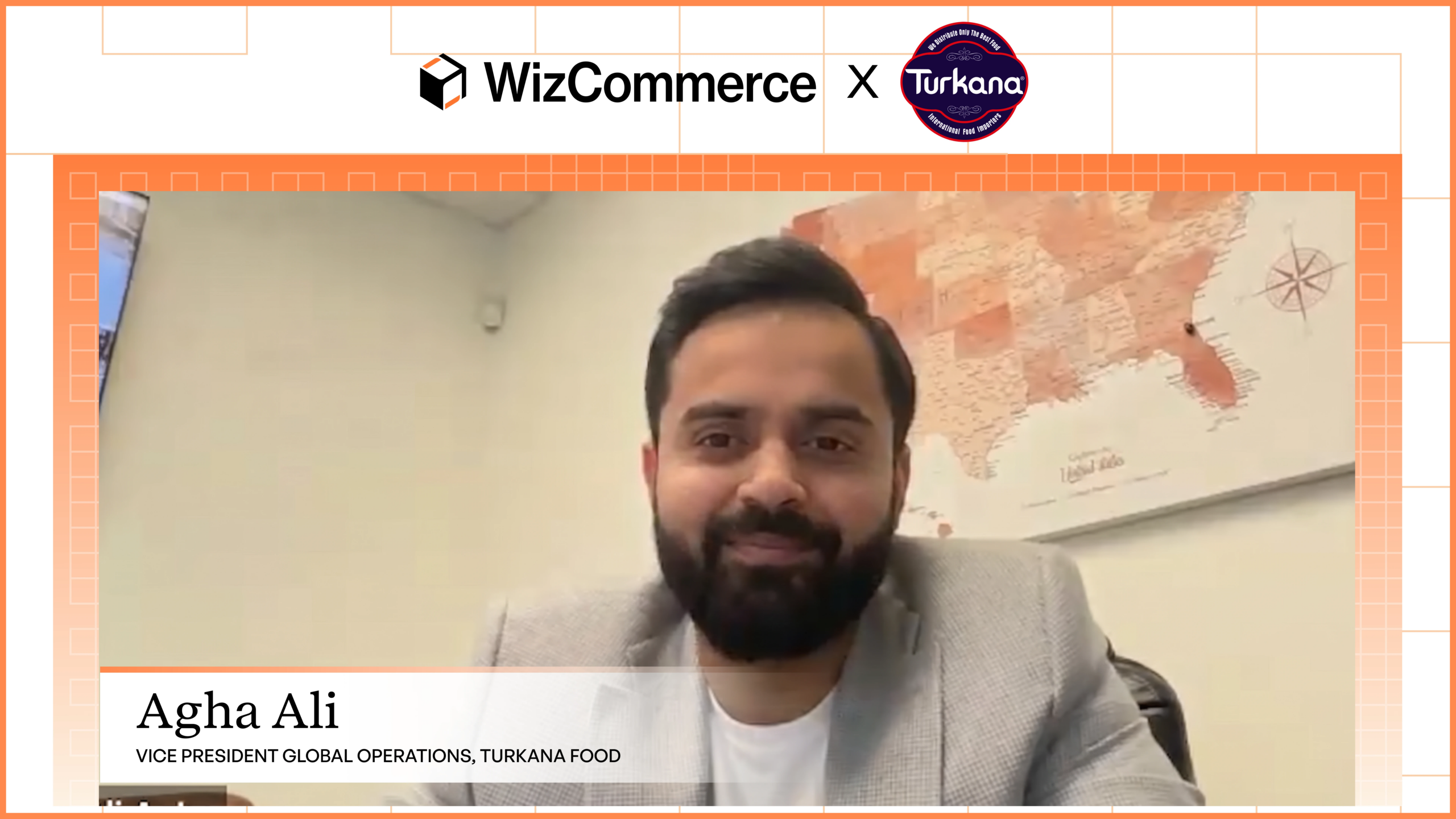

The company represents hundreds of brands across dairy, pantry staples, snacks, beverages, and specialty goods, including well-known names such as Pinar, ETI, Caykur, Efes, Sunar, Sera, Knorr, Dr. Oetker, and Indomie, among many others. Managing a catalog of this depth, with perishable goods, compliance-sensitive product attributes, and volume-based pricing, requires a sales operation built on transparency and precision.
Turkana’s operational philosophy reflects this directly. The company holds itself to a high standard of data visibility across its sales team, believing that a field rep should be able to answer any customer question and close any order without needing to call back to the office. Learn more at turkanafood.com.
“I want to make sure that the salesperson is the last person to contact me in terms of technology. They have to be on their own to make practical decisions.”
The Challenge
Growing Complexity Demanded a More Connected Operation
As Turkana Foods scaled its distribution footprint and deepened its brand portfolio, the demands on its sales and order management workflows grew significantly. The business needed a system that could match the pace of its growth: one that kept inventory data live, gave field reps instant access to product and customer information, and connected cleanly with its ERP without requiring manual intervention at every step.
The previous setup created friction at exactly the wrong moments. Inventory was not available in real time, which meant reps in the field were often working from outdated stock information. Customer history and order data lived in the back office rather than in the hands of the people having conversations with buyers. When a salesperson needed to confirm a price tier, check a product attribute, or look up a customer’s order history, the answer required a call or a delay. For a distributor managing perishable goods with expiration-sensitive inventory and compliance attributes, those gaps had real commercial consequences.
The integration architecture also needed a significant upgrade. Moving data between the sales-facing layer and SAP required a process that was neither fast nor scalable. As the business added companies and accounts, the operational burden of keeping systems in sync grew proportionally.
“With Repzio, we had explored all the options they offered. We knew their limitations. There was a point where we simply couldn't onboard new features with them.”
Turning Point
Integration First, Intelligence Second
When Ali first connected with the WizCommerce team, what stood out was not a feature checklist. It was the product roadmap, particularly the direction the platform was heading with AI capabilities and ERP integration. Both were areas where Turkana needed to move forward, and the approach WizCommerce outlined matched the way the business actually sold.
Before committing to a full rollout, Ali piloted WizCommerce on a smaller company within his portfolio to validate whether the platform could handle Turkana’s operational complexity. Only after that experience confirmed the fit did he move forward with the broader implementation.
The SAP integration was the foundation. Moving to a cloud-based API integration meant that inventory data became live, orders flowed directly into the ERP without manual re-entry, and the sales team gained access to the same data that previously required a back-office call. The integration was completed in three weeks, a timeline that exceeded Ali’s expectations given the complexity of SAP’s architecture.
With the ERP connected, the platform’s configurability became a genuine operational tool. WizCommerce allowed Turkana to surface exactly the information a buyer needs at the moment of purchase: expiration dates, product certifications such as halal and non-GMO, volume pricing tiers, and full order history, all visible to the rep and the customer in a single view. The result was a streamlined selling process Ali had long been working toward: look, place, get your delivery.
“What gave me confidence was how simple the integration was. The API approach meant we were not managing a desktop sync every time something needed to update. It just worked.”
AI in Action
Customer Intelligence at the Field Level
The AI capability that has had the most practical impact at Turkana is Kai, the AI Sales Copilot, specifically its customer summarization feature. For a business with a large account base and a sales team that sees natural turnover, the ability to walk into a customer meeting fully prepared is not a convenience. It is a competitive advantage.
When a new sales rep takes over an existing account, there is traditionally a ramp period during which they learn customer preferences, order patterns, and buying history through trial and error. With Kai’s customer summaries, that period compresses considerably. A rep can pull up a client’s profile before a visit and see what products they order regularly, how long they have been a customer, invoice history, and applicable credit terms, all drawn directly from SAP data and presented in a readable summary.
The AI image-based search has also proven useful in the field. When a buyer points to a competitor’s product or a reference item and asks whether Turkana carries something similar, the rep can scan or photograph the item and surface matching products from the catalog in seconds. For a distributor managing hundreds of SKUs across multiple categories, that kind of instant discovery changes the quality of a customer conversation.
“The summarize feature is a killer move. Because the data is pulled from our ERP, the accuracy is real. A new salesperson can evaluate a customer at a fingertip rather than spending months learning who they are and what they need.”
Results
A Sales Team That Can Close Without Calling Back to the Office
The transformation at Turkana Foods is measured in the elimination of friction across every stage of the selling process.
Before, a field rep arrived at a customer meeting without live inventory, without instant access to customer history, and without the ability to quote volume pricing confidently on the spot. Every gap created a moment where the buyer had to wait or the rep had to follow up. The selling cycle stretched, and the rep’s ability to act as a trusted advisor was limited by what the system could not tell them.
After WizCommerce, the rep arrives with everything in front of them. They can show a full product catalog with real-time stock levels, display expiration dates and compliance certifications at the product level, present volume pricing tiers, surface the customer’s complete order history, and write and submit an order on an iPad without touching a desktop. The platform is configurable enough that Ali can disable features irrelevant to specific roles, keeping each rep’s interface clean and focused. The sales experience is faster, more confident, and far less dependent on back-office support.
The adoption curve was real. Not every rep comes in as a technology-first user, and building consistent behavior across a field sales team takes process and patience. Turkana addressed this with a train-the-trainer approach, getting leadership comfortable first and then building a standardized onboarding path that any rep could follow regardless of technical background. Today the team not only uses the platform but actively contributes feature feedback, a reliable signal of genuine adoption.
The support relationship has also been a differentiating factor. The team holds weekly check-ins with their account manager, and feature requests come back with specific delivery timelines that are consistently met.
“Great support. I love the application performance, the AI capabilities, the integration speed, and the flexibility. That combination is what makes this work.”