Skip to content



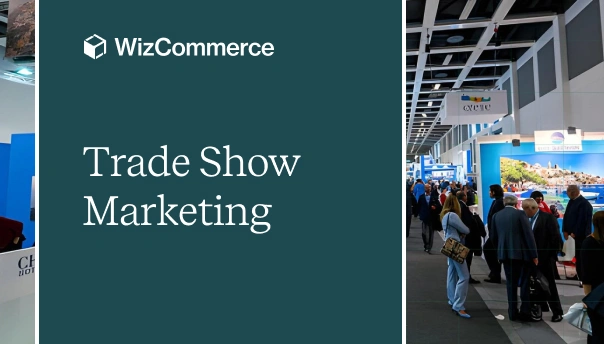
Trade shows have long been the lifeblood of B2B manufacturers and wholesalers. Marked by bustling exhibition halls and in-person negotiations, these events have been instrumental in forging connections and securing new customers. While having a presence at a tradeshow is one task, the right tradeshow marketing strategies ensure good footfall at the kiosk.
B2B businesses spend 5% to 20% of their marketing budget on trade show marketing. Manufacturers and wholesalers often attend several shows annually, bringing in a major chunk of their revenue from these events. In fact, 52% of business leaders believe that trade shows and events provide the greatest ROI compared to other marketing channels, with some companies achieving more than 400% ROI on their trade show marketing budgets.
In this blog, we’ll guide you through the intricacies of modern trade show marketing strategy. We will identify issues and offer insights to ensure you remain at the forefront of your industry.
What is trade show marketing?
B2B trade show marketing involves promoting your products and services at exhibitions to specific potential customers. It is not just about the booth; it is a comprehensive approach. A solid trade show marketing strategy encompasses pre-show outreach, booth activities, and post-show follow-up.
The goal is to increase brand awareness and drive lead generation. Effective marketing efforts at these events help you connect with industry leaders. It ensures your business stays top-of-mind for key decision-makers.
Why does trade show marketing matter in B2B wholesale?
Trade shows offer a unique platform where businesses can directly showcase their products to a target audience. It’s not just about product displays; it’s about building meaningful relationships. By participating, manufacturers can engage in real-time feedback and understand market demands.
In an industry where relationships drive deals, industry events provide face-to-face interactions that digital marketing can’t replicate. Here are key industry stats highlighting what these shows bring to the table:
- The primary reason for 92% of attendees to visit is to explore new products.
- Nearly half (46%) of the trade show attendees are in senior management.
- Most (82%) of the attendees have the authority to make purchasing decisions.
- As many as 77% of executive attendees discover at least one new supplier.
How is modern trade show marketing changing?
The old trade show playbook, print a banner, stack a catalog, hand out business cards, follow up later, is no longer enough. Today’s B2B buyers are more informed, more digitally connected, and more time-pressed than ever. Showing up without a smart, technology-driven trade show marketing strategy means leaving revenue on the table.
Digital-savvy trade show attendee
Today’s trade show attendees, armed with digital devices and an array of online resources, have transformed how they approach these events. Even before setting foot in the exhibition hall, they’re researching exhibitors, engaging with brands on social platforms, and building their agendas based on online interactions.
Yet, many wholesalers still need to catch up with this digital shift. They often lag in leveraging online platforms and social media, missing out on opportunities to connect with attendees before the trade show even begins. This gap in digital integration leaves them a step behind in an increasingly connected world.
The data gap: Failing to bridge offline and online interactions
One of the most damaging gaps in successful trade show marketing strategies is the inability to connect what happens on the trade show floor with the digital systems back at the office. Sales reps collect leads via paper forms or business cards, but that data never cleanly flows into the CRM.
Orders scribbled on notepads get lost or mis-entered. Without real-time lead capture tools that sync offline and online data, even your most engaged booth visitors can fall through the cracks, costing you qualified leads and potential revenue.
Addressing this data gap is a core element of any modern trade show marketing strategy. Smart exhibitors are turning to technology platforms that work offline and sync automatically, ensuring no lead, order, or customer interaction is ever lost.
How to build your winning trade show marketing strategy?
Your customers start their shopping experience long before the event. Your trade show marketing strategy should address all touchpoints. This guide tells you what you should do at each stage.
Pre-trade show
Time is limited at trade shows, so it’s key to line up plenty of appointments before you even get there. And since first impressions usually start online, make sure your digital marketing game is strong well before the show starts. A solid trade show marketing plan built ahead of time directly determines your trade show ROI.
Booth design experience
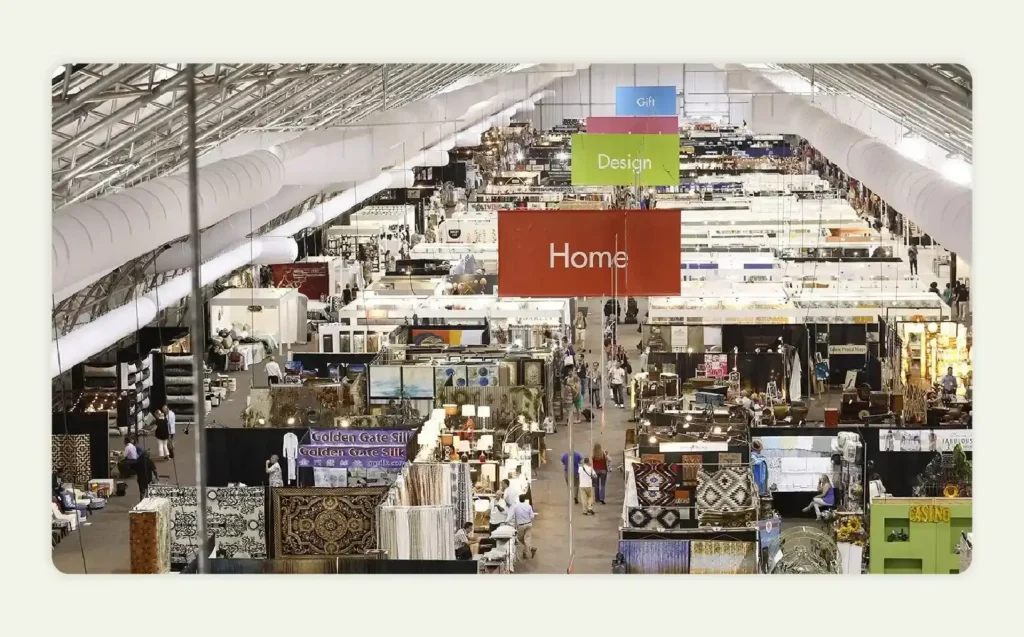
Your trade show booth is your brand’s first impression on the show floor. Invest in a booth design experience that reflects your value proposition clearly and creates an interactive experience. An immersive booth design that is visually consistent and professionally executed draws in more booth visitors and signals credibility before a single word is exchanged. Think beyond backdrops as lighting, product staging, and open layouts all affect booth traffic.
Social media promotion
Dig into what people are talking about on social media; not just for the current year, but also the past year. Look at conversations you can contribute to, and go ahead and join them. For example, if you will attend the Las Vegas Market, search social media using event-specific hashtags.
If you find any leads conversing on the topic, send them a targeted DM: “Hey, we’re ABC company, and we are going to Las Vegas Market. We have some incredible products that might be a great fit for what you’re looking for. [Insert catalog link]. Do visit us at booth XYZ.”
Email outreach
Your leads might receive hundreds of emails. To stand out, start by segmenting your list and then use your preferred email marketing template to prepare messages for attendees from last year or your current customers.
- Based on these segments, write subject lines and emails that compel them to open and read.
- Personalize your emails as much as possible, both the content and the sender.
- Instead of a mass email from sales@company.com, send from the ID of a sales rep they already know.
Bonus tip: Ask your sales reps to capture all relevant customer information in your CRM, including personal details that help build a real connection.
Invest in smart technology
Your trade show marketing strategy is only as strong as the technology behind it. WizOrder, WizCommerce’s B2B Order Taking App for Sales Reps, lets your team walk into any trade show fully prepared with digital catalogs, custom price lists, and the ability to take orders offline.
Before the show, set up product collections, configure pricing, and prepare QR codes and scan-and-pay labels so your reps are ready to close on the floor, not just collect contact information.
During the trade show
We don’t want to bore you with generic advice. Instead, we will tell you how to execute successful trade show marketing strategies on the floor.
Have a theme
Are you a wholesaler selling Turkish rugs? Have a Turkish theme for your trade show booth. Themes that align with your product story create a lasting impression. It doesn’t have to be literal. If your focus is sustainability, use a green theme with live plants and eco-friendly marketing materials. Whatever you do, ditch the generic setups that look like every other booth on the trade show floor.

Make your booth entertaining
There are endless ways to make your trade show booth entertaining. Just make sure it aligns with your overall theme. Interactive displays, live product demos, and unexpected experiences draw booth visitors in and keep them engaged long enough to start a real conversation. Hire talent that fits your theme: a Turkish ice cream trickster, a masseuse for tired feet, a barista, whatever creates a memorable trade show experience for your visitors. For giveaway ideas that complement your booth theme, check out our guide to trade show giveaways for B2B businesses.
Stand out with unique giveaways
While shirts, stress balls, and thumb drives are common swag, truly successful trade show marketing strategies demand more. Choose giveaways that create a story and leave a lasting impression: Turkish fortune-telling coffee cups, mood-altering light glasses, or branded wellness kits. These distinctive items stand out and generate conversations long after the event. For more inspiration, see essential trade show marketing materials for a successful booth.
Update your trade show tech stack
59% of companies still use paper-based lead capture methods and business cards at trade shows. Instead, adopt lead capture apps and digital tools that allow for a quick exchange of contact information.
Use QR codes so attendees can instantly receive product details, pricing, and your catalog. Use badge scanners where available. Pair these lead capture methods with a CRM that logs every interaction so nothing falls through the cracks. For a comprehensive look at the best trade show lead capture software options available, see our dedicated guide.
Use WizOrder during a trade show
WizOrder is purpose-built for the trade show floor. Your sales reps can use badge scanners, browse digital catalogs, create quotes in seconds, and convert them to orders with a single tap, all without an internet connection.
Real-time inventory visibility means your reps will never promise stock you don’t have. Multi-cart support allows orders across multiple warehouses simultaneously, which is ideal at large shows. After the show, all data syncs automatically. Explore how WizCommerce’s trade show app boosts sales on the floor.
Social media engagement during the show
Sharing live updates, interviews, or behind-the-scenes content can engage both attendees and those following from afar. Use event-specific hashtags to increase brand visibility and encourage attendee interaction. Live social media promotion during the show amplifies your reach beyond the show floor and keeps your brand awareness growing even as the event unfolds.
Post-trade show
Not all trade show leads are equal, but it’s essential to follow up with every one of them. Often, sales reps prioritize hot leads and overlook others, but don’t make that assumption. Follow up with everyone, segment them by level of interest, and send tailored outreach for each group.
Nurturing leads and closing them
Not all trade show leads are equal, but you must follow up. Segment leads based on their level of interest. A successful trade show depends on this next step.
Log all interactions into your CRM. Your CRM should be your single source of truth.
How WizCommerce helps post-show
WizCommerce makes the next step after every show seamless. All orders captured offline by your sales reps sync automatically once the internet is restored. No manual re-entry, no errors. Kai, WizCommerce’s AI sales assistant, automatically drafts personalized follow-up emails tied to each buyer’s behavior and cart activity from the show.
It surfaces stalled quotes, sends reorder nudges, and flags high-intent prospects who haven’t yet converted, so no trade show lead goes cold. Combine this with WizShop’s B2B ecommerce platform to give your buyers a seamless online ordering experience between future events.
Key KPIs for your trade show marketing strategy
To measure the success of your marketing strategies at trade shows, you need to track the right metrics.
Cost Per Lead (CPL) vs. Cost Per Acquisition (CPA)
CPL measures the total trade show ROI investment divided by the number of leads generated. CPA goes further; it tracks what it actually costs to convert a trade show lead into a paying customer. Tracking both side by side reveals the true efficiency of your trade show marketing strategy and helps identify where leads are dropping off in the sales pipeline post-show.
Lead quality score
A lead quality score ranks prospects based on your ideal customer profile: company size, buying authority, purchase intent, and product fit. Tracking lead quality helps your sales team prioritize the right people immediately after the event.
Sales pipeline velocity
Pipeline velocity measures how quickly qualified leads from a successful trade show move through your sales process. If leads are stalling between stages, it’s a signal that your post-show marketing efforts need refinement. Faster pipeline velocity means your trade show marketing strategy is generating valuable insights that translate to real revenue.
Booth engagement rate
Booth engagement rate tracks what percentage of booth visitors took a meaningful next step: a product demo, a quote request, a live demo, or signing up for a follow-up. High foot traffic with low engagement signals a disconnect between your booth experience and your value proposition.
Future-proof your B2B trade show presence with WizOrder
The best way to future-proof your trade show marketing strategy is to equip your team with tools that work as hard as they do.
WizOrder was built for exactly this. It gives your reps an offline-ready digital catalog, AI-powered product recommendations, instant quoting, and seamless payment processing, all from a single mobile app on the trade show floor. From pre-show prep to post-show follow-up, WizCommerce connects every touchpoint of your marketing strategies at trade shows so no lead, order, or opportunity falls through the cracks.
Ready to make your next trade show your best one yet? Book a free demo and see how theWizOrder transforms your trade show experience.
FAQs
What makes a trade show successful?
A successful trade show combines high brand visibility, effective lead generation, and a positive ROI for your business. True success comes from executing a strategic pre-show plan, delivering an engaging booth experience, and ensuring timely post-show follow-up with every single prospect.
How to attract customers at a trade show?
You can attract potential clients by designing an interactive trade show exhibit that truly stands out. Use social media to invite people beforehand, host engaging product demo sessions, and offer unique giveaways to significantly increase booth traffic and capture attendees’ attention.
How to get leads at a trade show?
Maximize your lead capture methods by using digital tools instead of paper forms. Train your staff to proactively engage visitors and qualify them quickly. Always offer valuable insights or exclusive content in exchange for their contact details to ensure higher conversion rates.
What are common tradefair mistakes?
Common mistakes often include poor lead capture processes, a lack of timely follow-up, and passive booth staff. Additionally, failing to have a clear call to action or a comprehensive trade show marketing plan before the event will significantly hurt your overall performance.