Skip to content




When people talk about improving ecommerce performance, the conversation usually jumps straight to ads, pricing, or product selection. But the real decision-making moment happens much deeper in the journey, on the product detail page (PDP). This single page is where online shoppers pause, evaluate, compare, and decide if the item in front of them is worth adding to their cart.
Whether you’re a retailer showcasing a single product, a distributor managing large catalogs, or a wholesale business selling in bulk, your PDP becomes the point of truth. It’s where product information, visuals, pricing, and reassurance come together to win the purchase or quietly lose it.
Before we break down the essential elements, let’s clear something up: what a PDP actually means in ecommerce and why it carries more weight than most store owners realize.
What is a PDP in ecommerce?
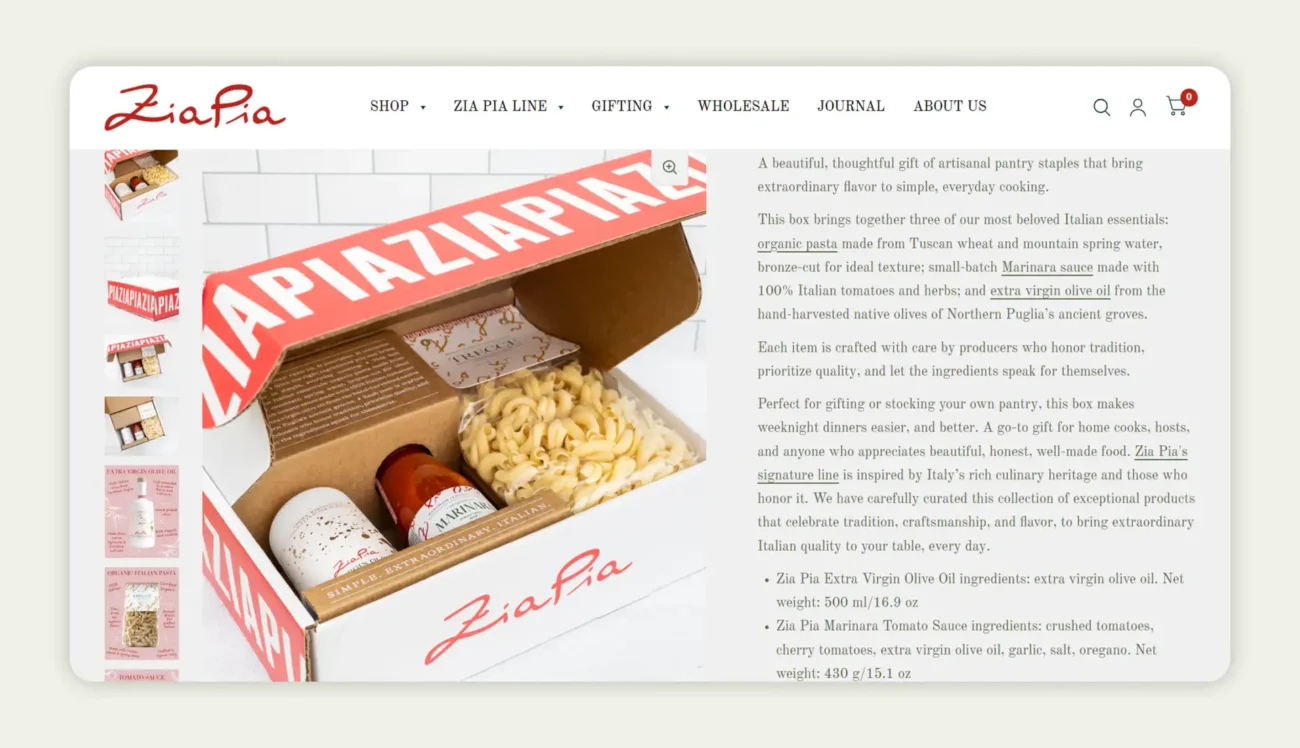
A PDP in ecommerce (short for Product Detail Page) is the web page where shoppers view detailed information about a specific product. Think of it as the digital equivalent of picking an item off a shelf and inspecting it closely, but with far more data than a physical store could ever display.
This page typically includes product images, pricing, product information, availability, shipping costs, customer reviews, product ratings, and any other details that help shoppers decide whether to buy. For wholesale and retail businesses, a strong PDP isn’t just helpful; it directly impacts conversion, average order value, and customer satisfaction.
A good product detail page shows what the product looks like and answers the questions customers might ask a salesperson in-store. When optimized well, the ecommerce product detail page becomes a powerful tool that influences buying decisions, reduces cart abandonment, improves search engine visibility, and attracts organic traffic from search engines.
In simple terms, this is the page that moves a customer from interest to purchase, making it one of the most essential elements of any ecommerce website.
PDP vs PLP: The differences and why it matters
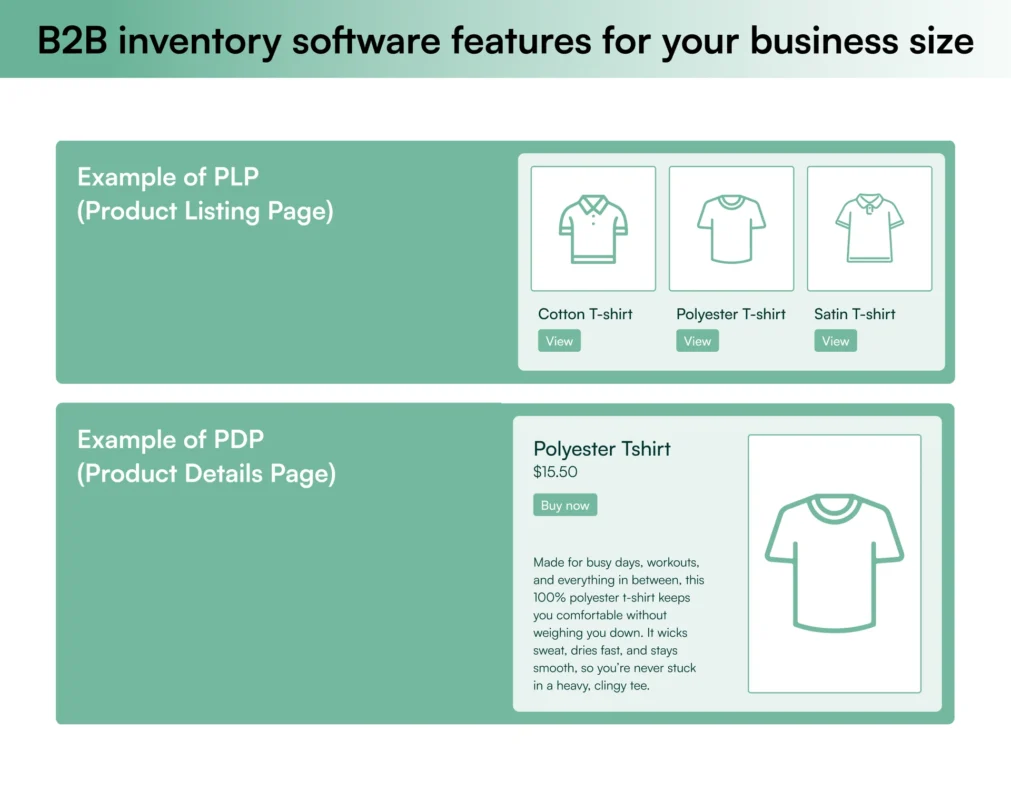 In ecommerce, it’s easy to confuse PDPs (Product Detail Pages) with PLPs (Product Listing Pages), but understanding the difference is crucial for effective online selling.
A PLP is like a store aisle, it shows multiple products at once, often within a category or search results. Its goal is to help shoppers browse options, compare items, and navigate toward something they want. Think of it as the “overview” stage of the buying journey.
A PDP, on the other hand, focuses on a single product. It’s where potential buyers dig into details, see images, read descriptions, check reviews, and decide whether to purchase. For wholesalers, distributors, and retailers, the PDP is where high-value decisions are made: bulk orders, repeat purchases, or premium upsells.
| Aspect | Product Listing Page (PLP) | Product Detail Page (PDP) | Why it matters |
| Purpose | Displays multiple products in a category or search result | Focuses on one product with all relevant information | Helps retailers and wholesalers guide buyers from discovery to decision |
| Content | Product image, title, price, rating summary | Detailed images, full description, features, reviews, shipping info | PLP attracts attention; PDP informs and converts |
| Buyer interaction | Browsing, comparing products, filtering options | Evaluating, making purchase decisions, checking stock, reading reviews | PLPs lead to PDPs, PDPs close the sale |
| Conversion role | Generates clicks to product pages | Drives add-to-cart, quote requests, or bulk orders | PDP is the final step for purchase; PLP supports discovery |
| SEO impact | Targets category and search queries | Targets specific product keywords and long-tail searches | Both contribute to organic traffic and search visibility |
| Bulk / Wholesale considerations | Shows multiple products for quick selection | Displays quantity, tiered pricing, availability | PDP ensures buyers know pricing and stock for larger orders |
| Typical CTA | View product / Learn more | Add to Cart, Request a Quote, Buy Now | Guides the buyer through the journey at the right stage |
Think of PLPs as the map and PDPs as the destination. Both need careful design: PLPs to attract attention and organize choice, PDPs to answer questions, build trust, and close the sale. For wholesalers and distributors, PDPs are especially critical because they provide all the product data and assurances needed for confident bulk purchasing.
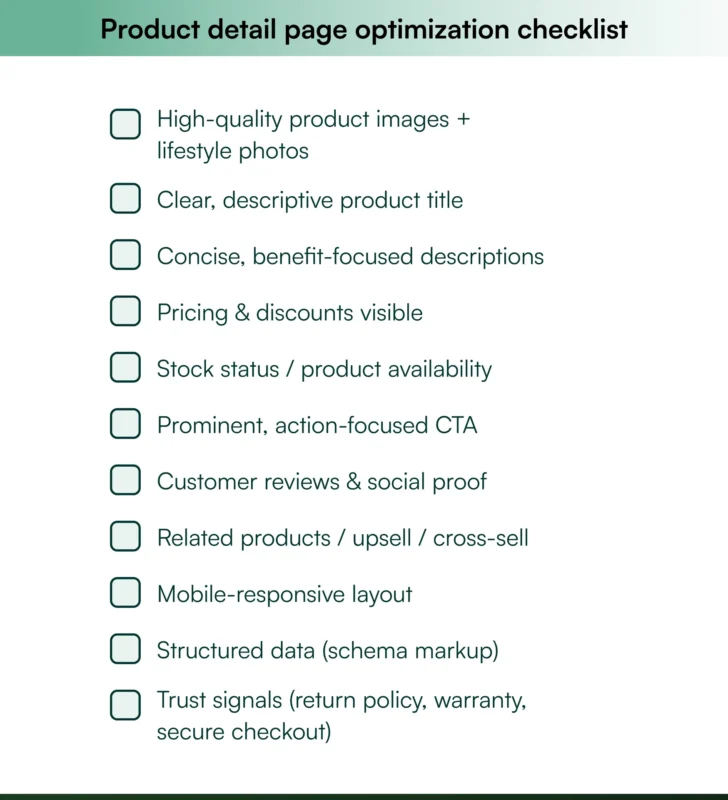
The role of visuals in ecommerce product detail pages
Visuals are often the first element shoppers notice the moment they arrive on a PDP in ecommerce, and they heavily influence purchase decisions. Customers, whether retail buyers or wholesale distributors, want to see the product clearly and from different angles, just as they would during in-person shopping. Lifestyle images, close-up shots, and video demonstrations provide the context online shoppers need to understand how a particular product fits into their world.
A good ecommerce product detail page includes high-quality, fast-loading visuals with zoom capabilities, clean backgrounds, and consistent lighting. Showcase the product in use to help potential customers picture it in real life. For wholesalers and bulk buyers, having images that accurately reflect variations (size, color, packaging type, material) reduces customer complaints, returns, and post-purchase surprises.
Including multiple visuals is more than aesthetics, it’s a trust signal. Social proof images, user-generated content from social media, and customer-shared photos reinforce credibility and expand your product content beyond your own studio images. Strong visuals reduce hesitation, increase time spent on the page, and create a great user experience, especially for new customers who haven’t purchased from your brand before.
Also read: A Beginner’s Guide to Ecommerce Product Photography in 2026

How to write effective descriptions for ecommerce product detail pages
The product description is often the deciding factor between browsing and buying. While images capture attention, shoppers still rely on words to understand the details they can’t see, sizing nuances, material quality, fit, durability, compatibility, and real-life use cases. A strong description bridges the gap between curiosity and certainty.
Effective descriptions do more than list features. They explain what those features mean in practical terms and why they matter. For example: “100% organic cotton” is a feature. “Soft, breathable fabric that keeps you comfortable in warm weather” is the benefit. When content connects these dots, shoppers instantly understand value.
Descriptions also serve as a trust booster. When customers feel informed, they feel safer buying, especially when purchasing online, where there’s no physical interaction with the product. Transparency around dimensions, care instructions, warranties, return policies, and user expectations reduces friction and prevents post-purchase disappointment.
A strong description should:
- Clearly explain what the product is and who it’s for
- Highlight key features in simple language
- Connect features to real-life benefits
- Clarify sizing, dimensions, and materials
- Set expectations (care, durability, usage scenarios)
- Support quick scanning with structured formatting
How to write effective descriptions
- Lead with the most important value or outcome, what the customer gains.
- Translate features into benefits that customers care about.
- Use short paragraphs, bullets, and bolding to improve readability.
- Add real-life context (“perfect for travel,” “built for daily use”).
- Avoid unrealistic claims; credibility beats hype.
- Use phrases customers actually search for to support SEO organically.
| Weak PDP description | Optimized PDP description |
| This is a high-quality backpack made from durable materials. It is stylish, convenient, and perfect for everyday use. Comes in different colors and is suitable for everyone. | Built for commuters and students who move fast. This water-resistant laptop backpack fits a 15-inch screen, keeps essentials organized with six internal pockets, and balances weight for all-day comfort. The reinforced base handles crowded buses and rainy mornings, while the USB port lets you charge on the go. |
How social proof influences purchase decisions on ecommerce PDPs?
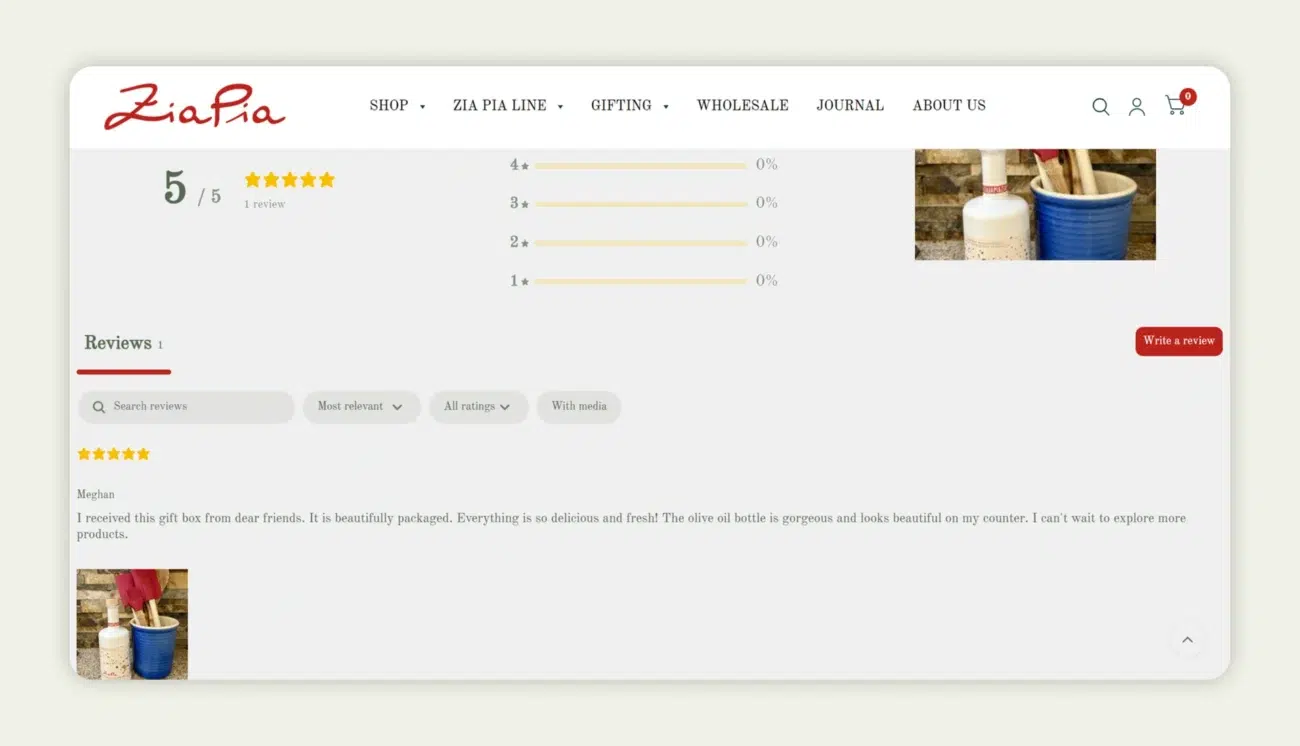
Customer reviews play a deciding role in online shopping and are often the final push that convinces buyers to proceed, especially when buyers cannot touch or test a product. On ecommerce product detail pages (PDPs), reviews act as social proof, helping potential customers validate quality, performance, sizing, durability, and overall satisfaction from real buyers. For wholesalers and distributors, reviews help reduce hesitation around bulk ordering, where risk feels greater than a single retail purchase.
When reviews appear directly on the product page, they provide credible, user-generated context that supports better purchase decisions and decreases the likelihood of cart abandonment caused by uncertainties. Research from the Baymard Institute consistently highlights unanswered questions as a leading cause of checkout drop-off. Reviews help answer those concerns while keeping the buyer engaged.
Why product reviews matter on PDPs
- They influence purchase decisions at the most critical moment: Buyers are more likely to convert when they see others satisfied with the same product. Positive reviews, especially those mentioning quality, fit, or functionality, create confidence that the product meets expectations. Wholesale buyers often want proof that a particular product performs well over time or that customer complaints are minimal reviews provide that clarity.
- They serve as trust signals for new and returning customers: When a customer sees ratings, detailed comments, and visual proofs such as images or short clips, they interpret the PDP as transparent. This increases customer satisfaction and encourages brand loyalty, particularly for ecommerce sites selling higher-value or specialized items.
- They improve search engine visibility and engagement: Reviews often include natural phrases people use in search engines. This supports search engine optimization by adding relevant information and increasing time spent on the page, which are indicators that benefit organic traffic and search engine results. Google also displays review count and ratings on search results, making it easier to attract clicks before a buyer reaches the product page.
A few smart ways wholesale and retail sellers use reviews
- Feature reviews that speak to product availability, durability, and sizing
- Create review snippets for the product listing page
- Use highlighted quotes in product recommendations or email sequences
- Display FAQs generated from customer feedback, a responsive design move that answers concerns before they become objections
Best practices for leveraging customer reviews on PDPs
- Include a product ratings summary (e.g., 4.7/5 ) near the product title
- Display filters, most recent, highest rating, lowest rating
- Add verified buyer labels for trust signals
- Show customer photos or videos when possible, a great way to add real-life context
- Address negative reviews with simple copy that clarifies steps taken
Pricing and availability on ecommerce product detail pages
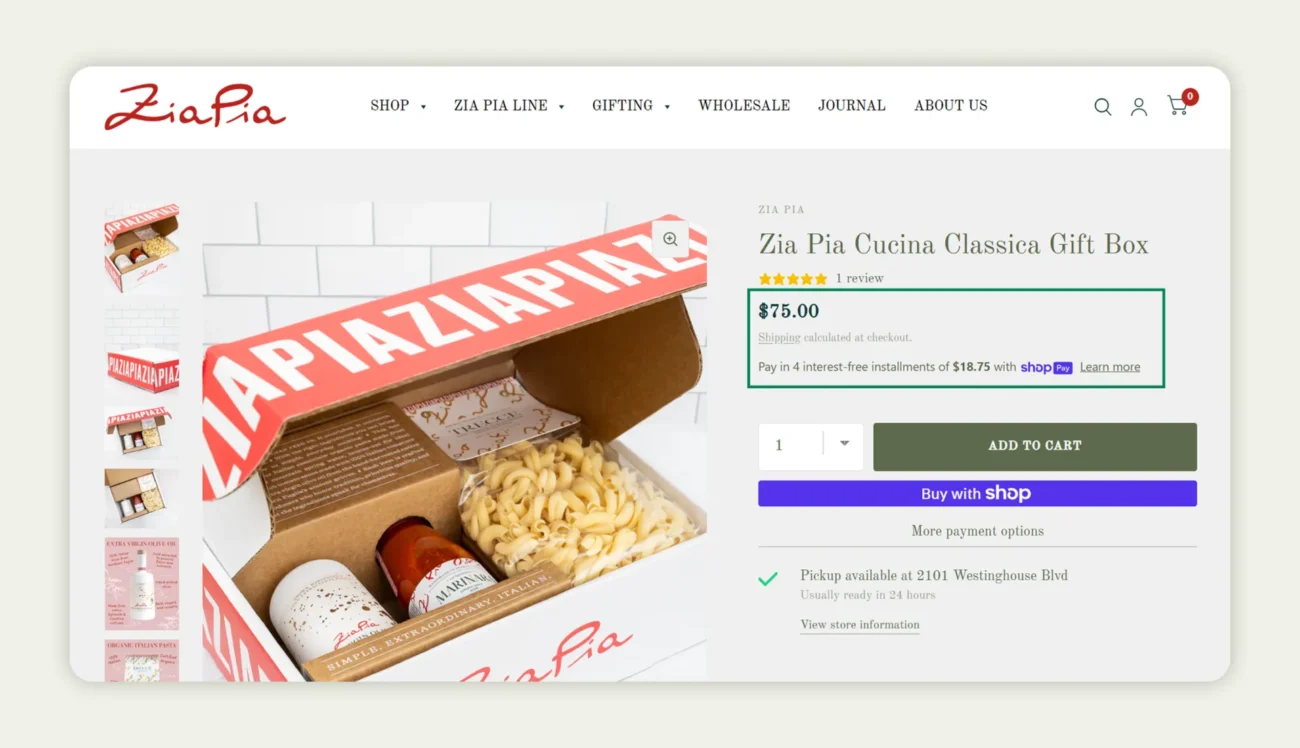
Pricing and availability are two of the first pieces of product information customers scan when they land on an ecommerce product detail page. If a buyer has to dig through the page, or worse, navigate away, to find the total price or stock status, it interrupts the buying momentum and increases the risk of cart abandonment.
For wholesalers and retailers purchasing in bulk, clarity matters even more. They want to know whether a specific product is available in the quantities they need, what the price per unit or pack is, whether volume discounts apply, and if free shipping thresholds exist. Transparent pricing builds confidence; hidden pricing erodes trust.
Why pricing transparency matters on an ecommerce PDP
Helps buyers make quicker purchase decisions: When pricing is clear including taxes, shipping costs, and bulk pricing buyers stay engaged. Displaying price breakdowns directly on the product page is a great way to support both new customers and long-term buyers managing repeat orders.
Reduces customer complaints and support inquiries: If buyers frequently contact support asking “How much is shipping?” or “When is this back in stock?” it’s often a sign the PDP isn’t displaying relevant information prominently enough.
Improves search engine visibility: Search engines favor pages that provide structured product data, including pricing and product availability. Clear information benefits search engine optimization and can help PDPs appear in enhanced search engine results like Google Shopping.
Best practices for presenting pricing and availability on PDPs
- Show all costs upfront: If shipping varies by region or order size, provide calculators or preset tables to help customers estimate costs. Buyers don’t want surprises at checkout.
- Display tiered or discounted prices for wholesale buyers: Bulk purchase decisions are easier when the price per unit is visible at a glance.
- Include back-in-stock notifications for unavailable items: Offering “Notify me” reduces the friction of losing a prospect completely, and keeps the product in the buyer’s consideration loop.
- Communicate delivery timelines clearly: If buyers know a delivery window, even a range, they’re less likely to hesitate or abandon their shopping carts.
Call-to-action on ecommerce product detail pages
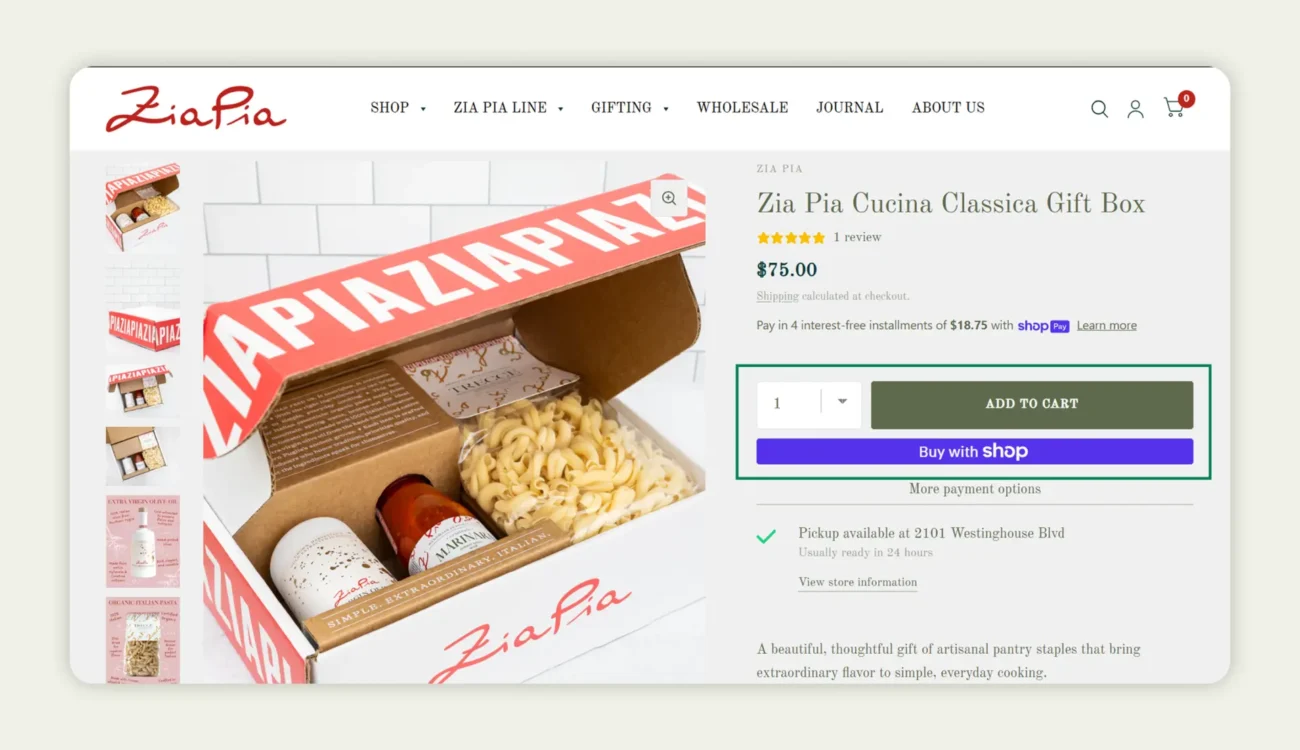
A call-to-action (CTA) on a PDP in ecommerce isn’t just a button; it guides the buyer’s next move. Whether it’s Add to Cart, Request a Quote, or Buy in Bulk, your CTA acts as the decision point between browsing and converting. For wholesalers especially, a clear CTA reduces friction, encourages larger commitments, and supports faster repeat ordering.
A good CTA stands out visually, uses simple copy, and removes doubt about what happens next. The more predictable and seamless the action, the more likely buyers will follow through especially when they already understand the value and pricing.
What makes a high-performing CTA on an ecommerce PDP?
- Action-focused language: The most effective CTAs tell the shopper exactly what to do and what happens next. Phrases like Add to Cart, Buy Now, or Request Bulk Pricing remove doubt and create momentum. Clear, direct text helps buyers make decisions faster, especially in wholesale, where the purchase value is higher, and hesitation can delay conversion. Simple copy works better than clever wording, clarity builds confidence, and specificity reduces hesitation.
- Visibility in the right places: A CTA shouldn’t make shoppers go searching for the next step. The primary CTA should appear above the fold so buyers see it immediately, but secondary CTAs placed strategically further down the product page can re-capture buyers still comparing details, checking product ratings, or reading the overview of the product. Well-timed placement acts like a gentle prompt at the moment purchase decisions are being made.
- Aligned with the target audience: The CTA should reflect how that particular audience buys. Retail buyers typically respond to Add to Cart and Buy Now, while wholesalers need options like Request a Quote or Check Product Availability. Distributors may prefer Download Product Sheet or Share with Buyer. Tailoring CTA language to the context of online shopping signals that your PDP understands and supports the buyer journey, which increases trust and reduces cart abandonment.
Best practices to boost conversion with cta placement
- Use consistent colors and button styles across the ecommerce website
- Pair CTAs with trust signals like warranties or secure checkout icons
- Keep surrounding copy short and benefit-focused
- A/B test text variations, sometimes one verb makes the difference
- Ensure CTAs are optimized for responsive design on mobile
Good CTA placement and language help boost conversion rates, especially when combined with clear product information, visuals, and social proof.
Cross-selling and upselling strategies for ecommerce product detail pages
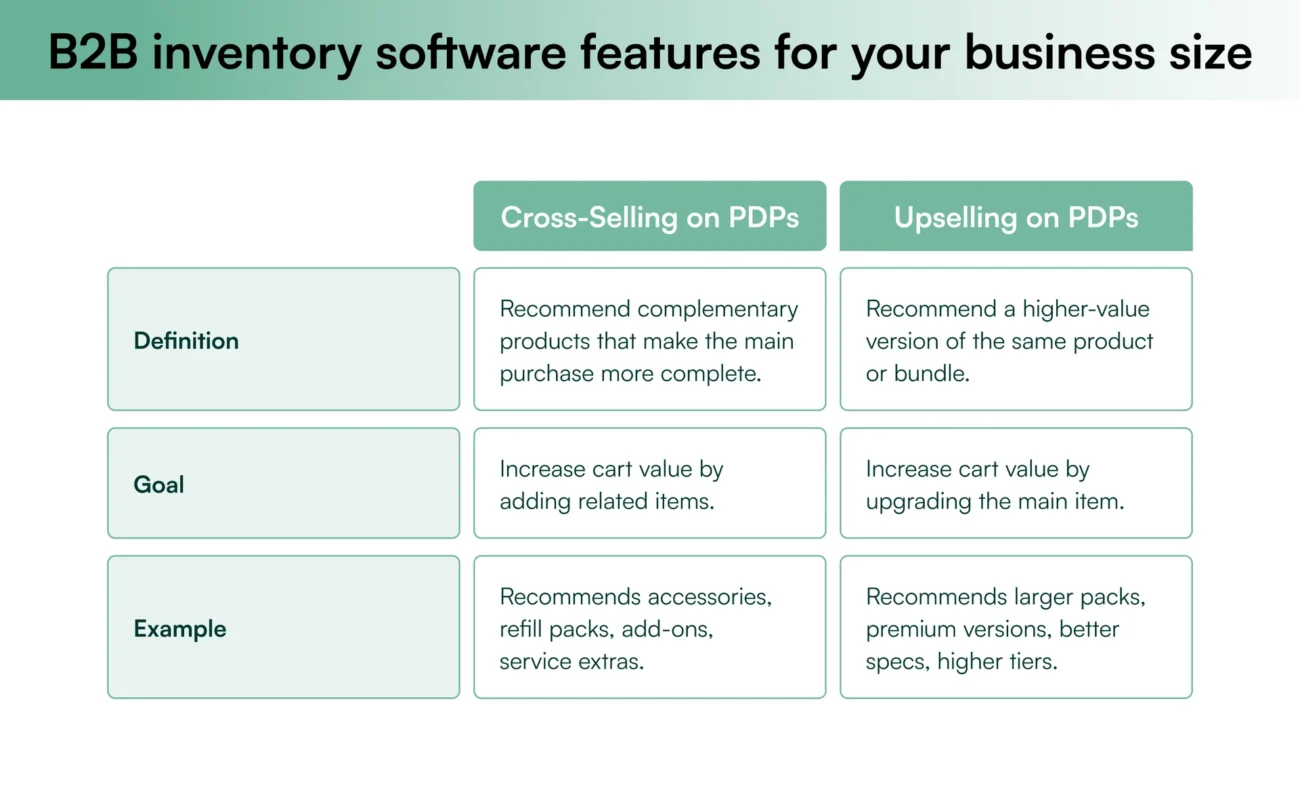 Cross-selling and upselling on ecommerce product detail pages are more than a revenue tactic; they help guide buyers toward better purchase decisions by showing relevant product recommendations that genuinely add value. When implemented with clarity and customer intent in mind, they improve average order value, deepen customer satisfaction, and create a more complete shopping experience.
How cross-selling works on a PDP?
Cross-selling introduces similar products or complementary items that enhance the primary purchase. For a wholesaler, this might look like recommending display stands for beauty products, replacement parts for tools, or bundle quantities for faster restocking. Cross-sell placement near product reviews or just above the shopping carts section is a great way to capture customers after they’ve validated quality.
How upselling influences purchase decisions?
Upselling presents an upgraded or more premium version of a specific product. It works well in categories where performance, durability, or branding matter, electronics, apparel, and packaging. For distributors and retailers, showing upgraded variants with detailed information about why they cost more supports better search engine visibility and reduces customer complaints later, because expectations are clearer.
Best practices for cross-selling & upselling on ecommerce PDPS
- Relevance above volume: Limit suggestions on the landing page to items that truly match customer intent; too many can distract and trigger choice fatigue.
- Use titles and bullet points: Quick-hit highlights of key features provide context without overwhelming the shopper.
- Leverage social proof: Featuring high product ratings on suggested items is a trust signal proven to boost conversion rates.
- Keep offers personalized: Recommendations based on browsing history, cart behavior, or past orders are more likely to convert.
When executed thoughtfully, cross-selling and upselling transform your PDP from a single-product showcase into a revenue-generating decision hub, without feeling salesy.
Mobile optimization for ecommerce PDPs
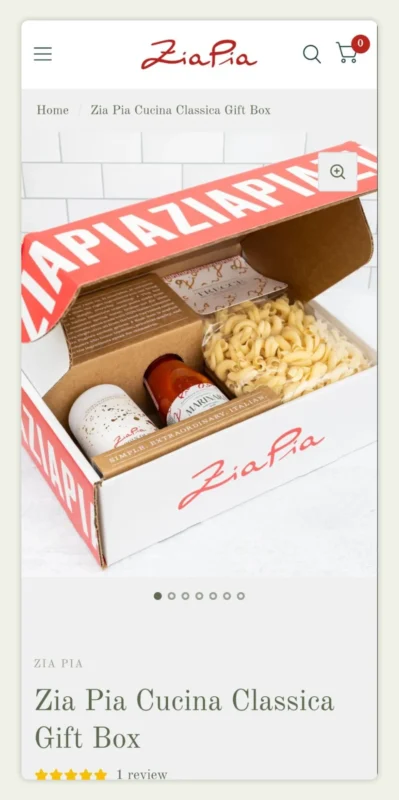
With a rising number of B2B buyers and retail customers completing orders through smartphones and tablets, a fully optimized ecommerce PDP for mobile is now a core requirement, not an enhancement. A product page needs to load quickly, display cleanly, and deliver relevant information at first glance, just like the desktop version.
Why does mobile-friendly PDPs matter in online shopping?
Mobile visitors are more impatient than desktop users. Slow load times, misplaced buttons, or overcrowded layouts create cart abandonment. Modern ecommerce sites win when navigation feels effortless, swipe-friendly image galleries, short bullet points summarizing key features, and simple copy that helps users scan faster.
Google favors ecommerce websites that deliver a great mobile experience, meaning faster load times contribute to higher organic traffic. Reducing large, unoptimized image sizes and using clean code are simple ways to enhance performance without compromising the visuals that showcase a particular product from different angles.
A mobile-optimized PDP boosts customer satisfaction, prevents lost orders from smaller screens, and provides a frictionless path from browsing to checkout across all shopping carts and devices.
Best practices for mobile PDP optimization
- Responsive design: A responsive layout adapts automatically to different screens, preventing text overlaps and ensuring CTAs and pricing remain visible without zooming. This is essential for better search engine results, especially as mobile-first indexing influences overall search engine optimization performance.
- Prioritize essential elements first: Product title, price, product availability, shipping costs, and CTAs should appear before long paragraphs. Mobile users prefer an overview of the product first, with expanded details available via dropdowns.
- Enable fast interaction: Make the Add-to-Cart CTA, quantity selector, live chat, and similar products easy to tap. Buttons placed too close together lead to customer frustration and lost opportunities.
How WizCommerce supports optimized product detail pages?
Running an ecommerce business involves juggling product information, images, pricing, inventory, and customer interactions. WizCommerce helps streamline these workflows, making it easier to implement the best practices we’ve discussed for ecommerce product detail pages (PDPs).
- Centralized product data management: With WizCommerce, all product data from descriptions and images to key features and pricing is maintained in one system. This ensures your PDPs are accurate, up-to-date, and consistent across your product listing pages and landing pages, improving user experience and reducing errors.
- Enhanced product descriptions and WizStudio for images: The platform supports high-quality lifestyle images, rich media, and detailed product information that highlight features and benefits. This allows your PDPs to guide customers through purchase decisions with confidence.
- Integrated reviews and ratings: WizCommerce makes it simple to display customer reviews and ratings, providing social proof directly on your PDPs. This transparency helps build trust and supports better conversion rates.
- SEO-friendly PDPs: Product titles, descriptions, meta tags, and structured data can be managed in a way that improves search engine visibility. By keeping your PDPs optimized, you attract more potential customers through organic search results.
- Responsive design and mobile optimization: All PDPs created with WizCommerce are optimized for mobile devices, ensuring your target audience can shop seamlessly on smartphones and tablets.
By using a platform like WizCommerce, ecommerce wholesalers and distributors can bring together product information management, visual content, reviews, and SEO practices in a single system, helping PDPs convert more visitors into buyers without requiring manual juggling or multiple tools.
Book a demo today to streamline your PDPs and boost conversion rates.
FAQ
What is a PDP in online marketing?
In online marketing, a PDP (Product Detail Page) is the central page where marketers highlight a product’s features, benefits, and value proposition to attract and convert potential customers. It’s where product content, visuals, and social proof work together to influence purchase decisions.
What is a PDP on Shopify?
A Shopify PDP is the page for a single product on a Shopify store. It includes product images, descriptions, pricing, variants, inventory status, and an “Add to Cart” button, often enhanced with reviews, recommendations, and shipping information to improve the user experience and drive conversions.
What is the purpose of a PDP?
The main purpose of a PDP is to inform and convert. It gives potential customers detailed product information, builds trust through reviews and social proof, and guides them toward making a purchase with clear CTAs.
What is the difference between PDP and PLP in ecommerce?
The difference between a PDP and PLP in ecommerce is that a PLP (Product Listing Page) displays multiple products, often in a category or search results, while a PDP focuses on a single product, providing in-depth details, images, reviews, and purchasing options. PLPs help users explore options, and PDPs help them commit to a purchase.
What does a product detail page look like?
A typical PDP includes high-quality images, a descriptive title, key features and specifications, price and availability, customer reviews, shipping information, and a prominent call-to-action button. Many PDPs also include recommendations for related or similar products.
What are the benefits of having a PDP?
The benefits of a PDP include increased conversion rates, reduced cart abandonment, improved customer trust through reviews and social proof, boosted SEO, and customers making informed purchase decisions by clearly displaying product information and availability.
What is an example of a PDP?
An example of a PDP (Product Details Page) in ecommerce would be WizShop, a customer portal where clicking on a single product from a category page leads to its PDP. Here, the customer can see multiple product images, read a detailed description, check pricing, and add the item to the cart all in one place.