Distributor e-commerce platform
E-Commerce for distributors that lets your buyers order on their own.
Distributor e-commerce is where approved buyers sign in, see the contract pricing you agreed with them, check live availability, and reorder without calling a rep. Whether you call it a distributor e-commerce platform, a customer portal, ordering software, or a digital commerce solution, WizShop gives you the storefront, the pricing and buyer controls behind it, and ERP-integrated e-commerce that keeps your ERP the system of record.
our customers
Built for Wholesale. Powered by AI.
Built for Distribution.
Powered by AI.
migrated from AMP
migrated from magento
migrated from WooCommerce
migrated from magento
migrated from woocommerce
migrated from bigcommerce
migrated from optimizely
migrated from shopify
Overview
Everything you need to power distributor e-commerce
Distribution orders still arrive through reps, the counter, phone, email, and PDF purchase orders. Most e-commerce software for distributors stops at a storefront, so WizShop covers the catalog, the pricing and buyer controls, the ordering portal, and the real-time ERP sync behind it all.
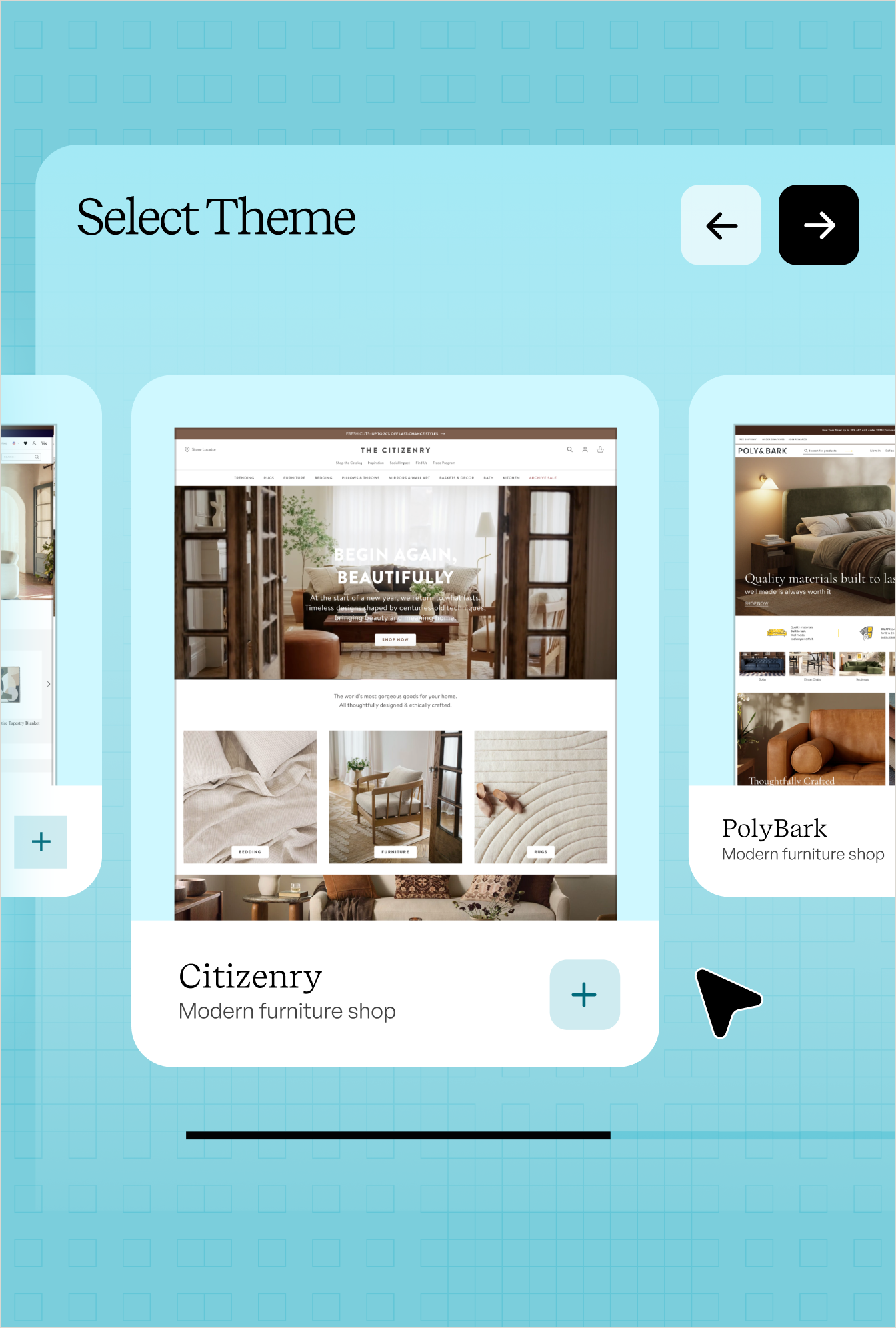
Distributor storefront
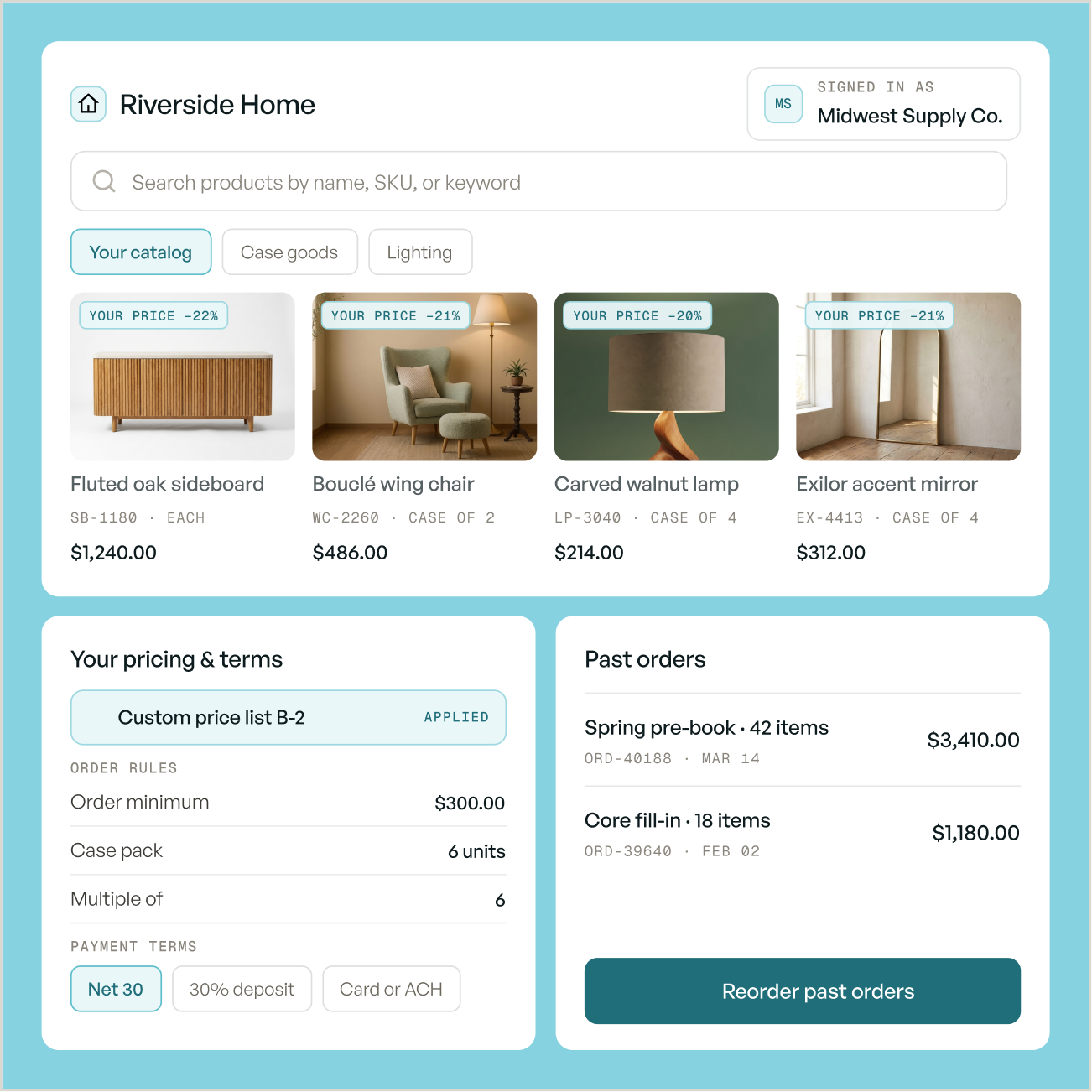
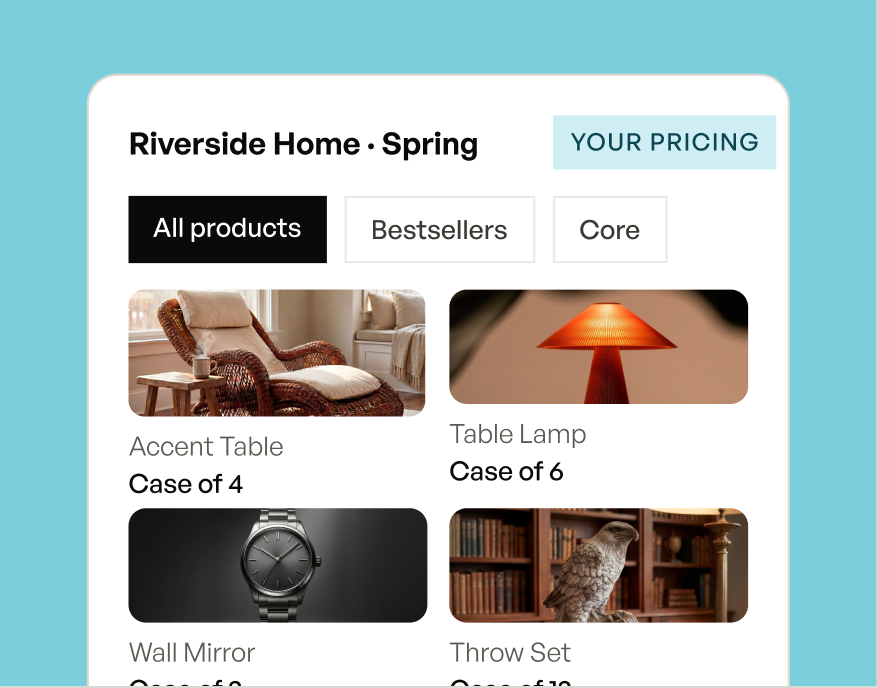
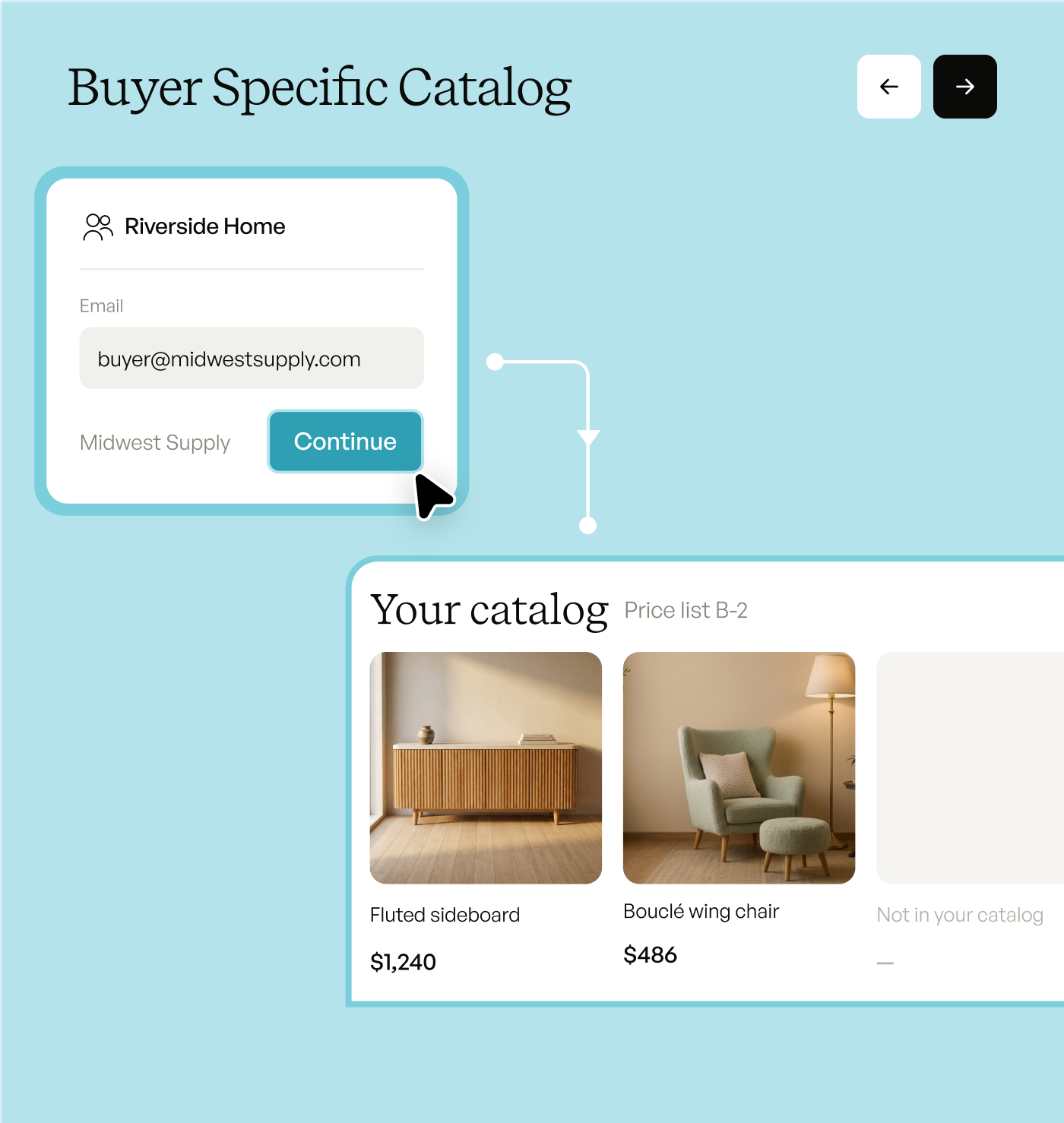
A branded login opens a buyer-specific catalog, with themes, layouts, and custom collections built around each account.
Distributor pricing, ordering rules
Custom price lists, payment terms, quantity rules, and volume pricing applied automatically to every order.
Distributor ordering portal
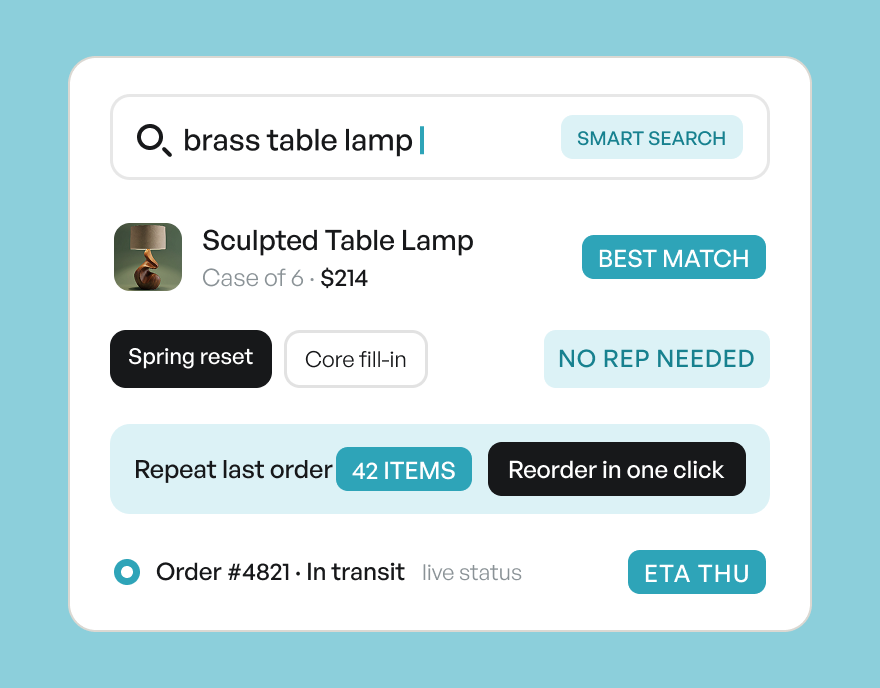
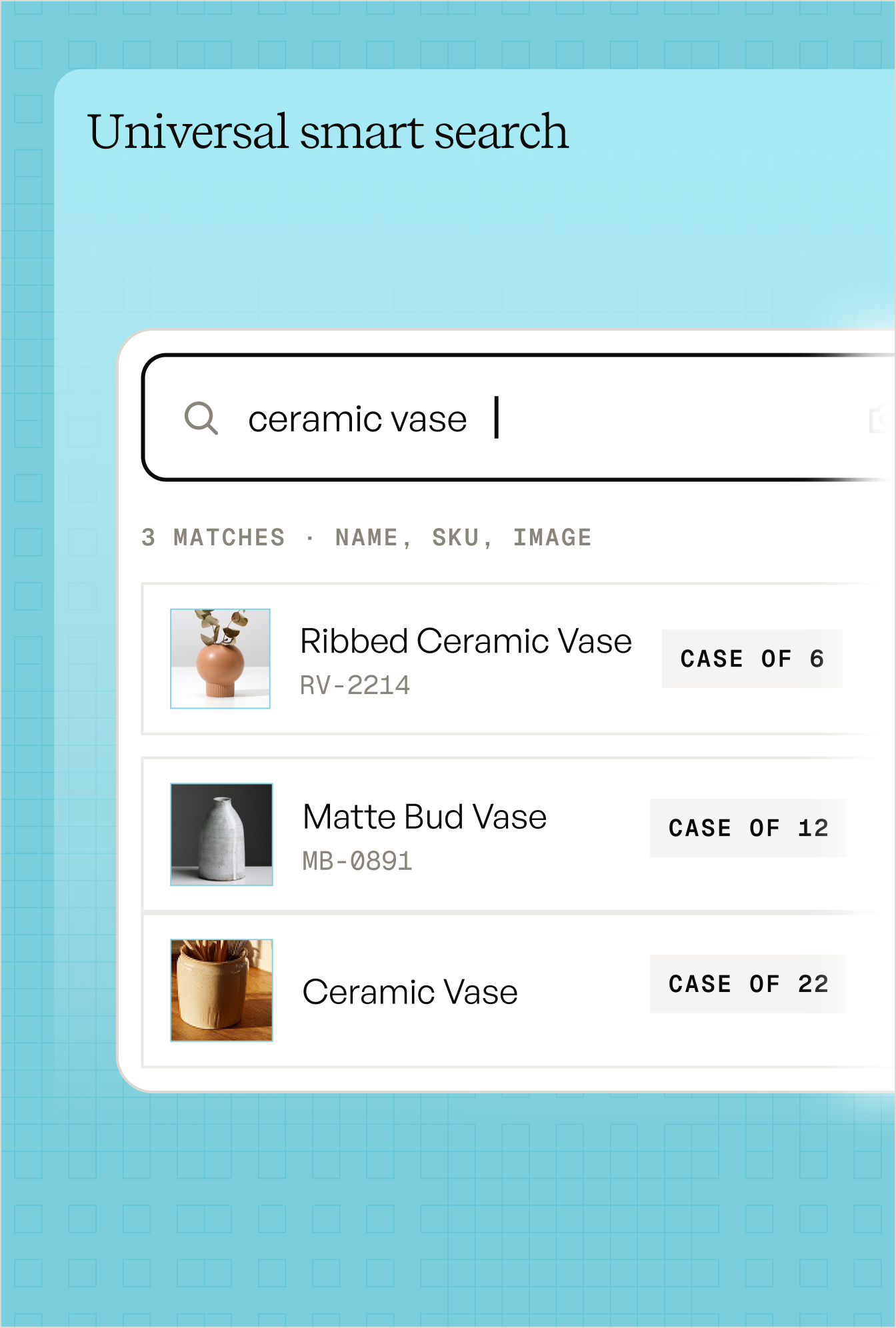
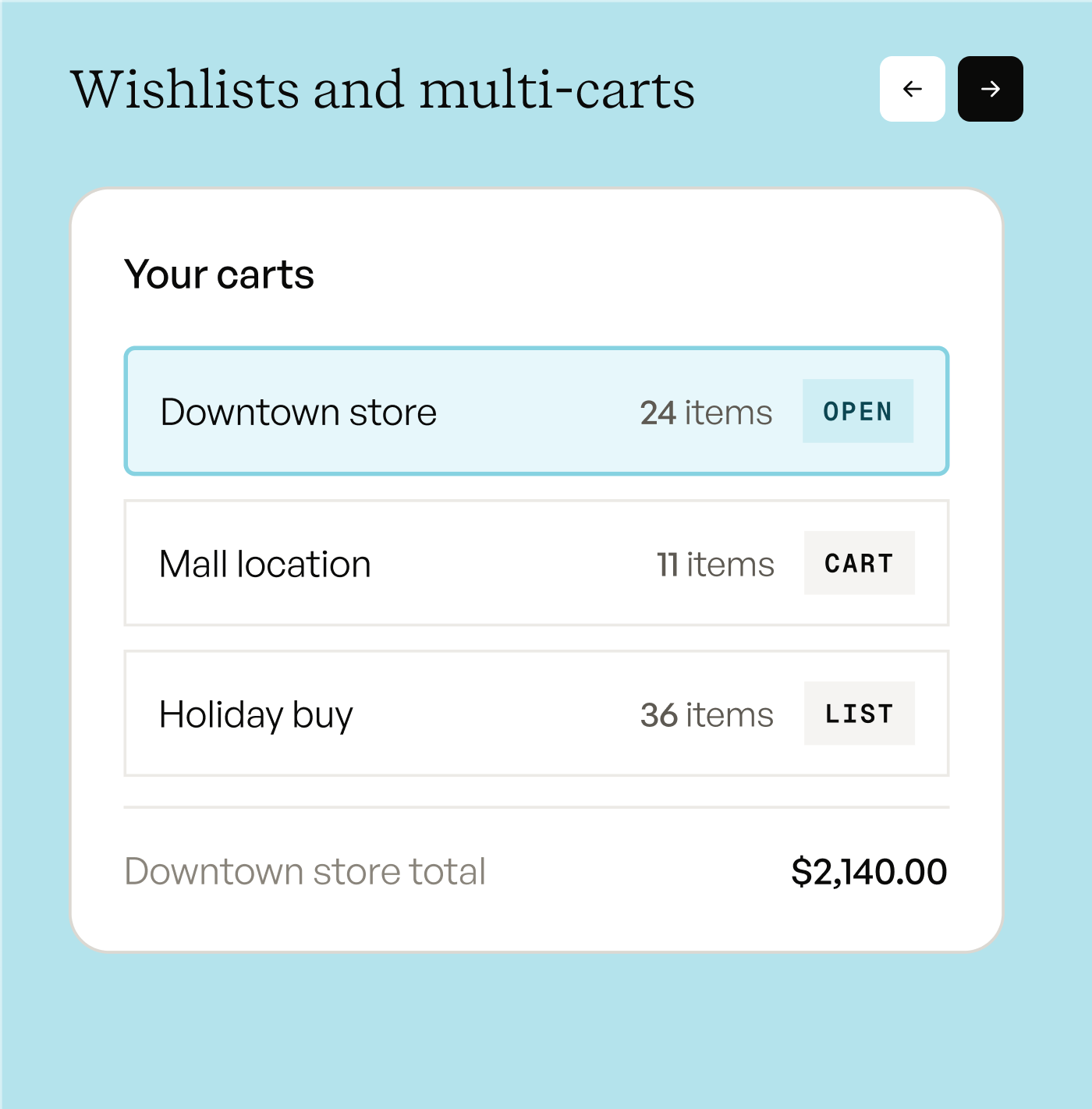
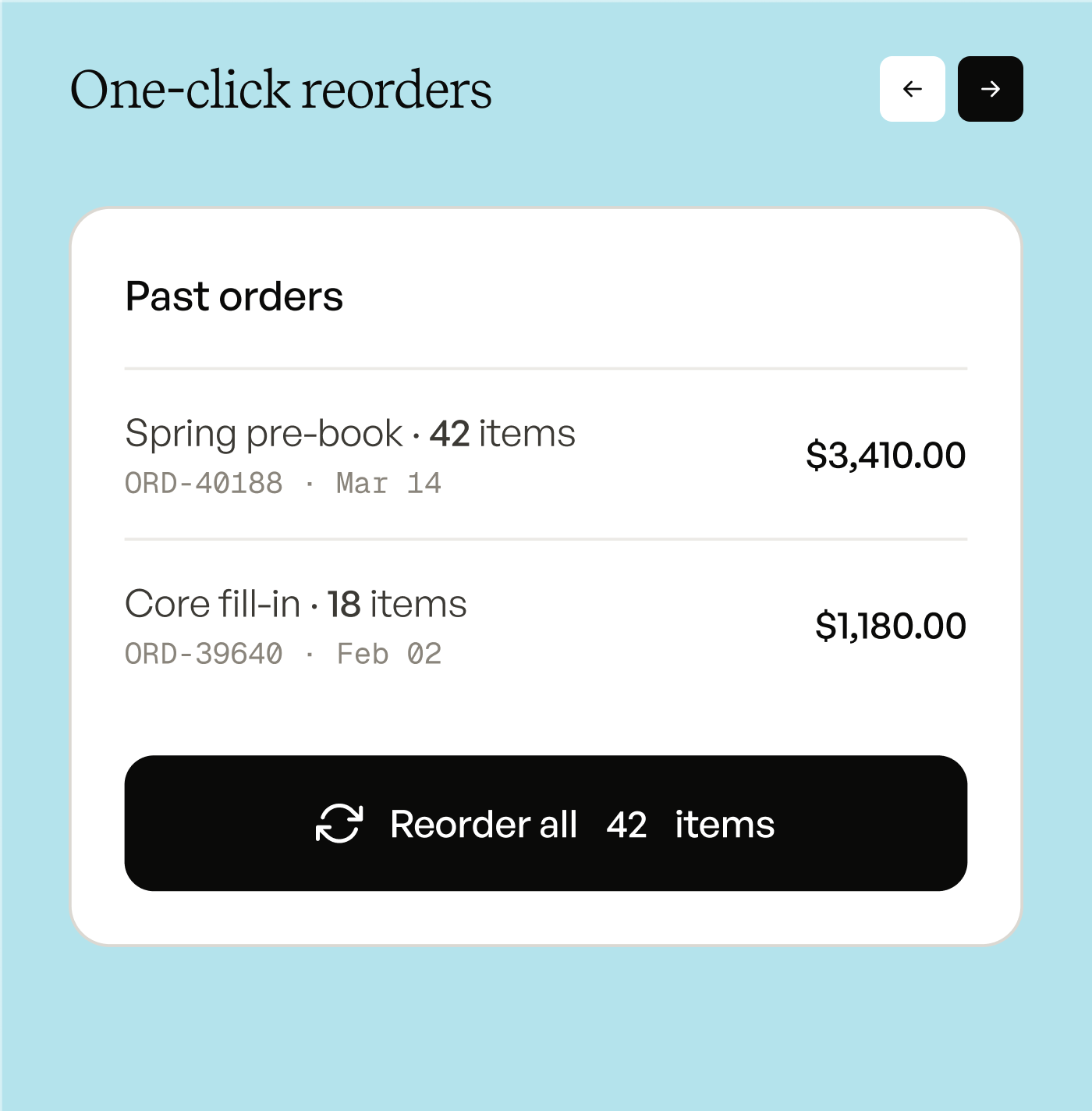
Universal smart search, one-click reorders, multi-carts, and live order status, without a rep in the loop
Distributor storefront
Create a distributor storefront that adapts to every buyer
Themes, Layouts & Branding
Your storefront looks like your business, not a template. A white-labeled distributor ecommerce portal carries your branding from the login screen through checkout.
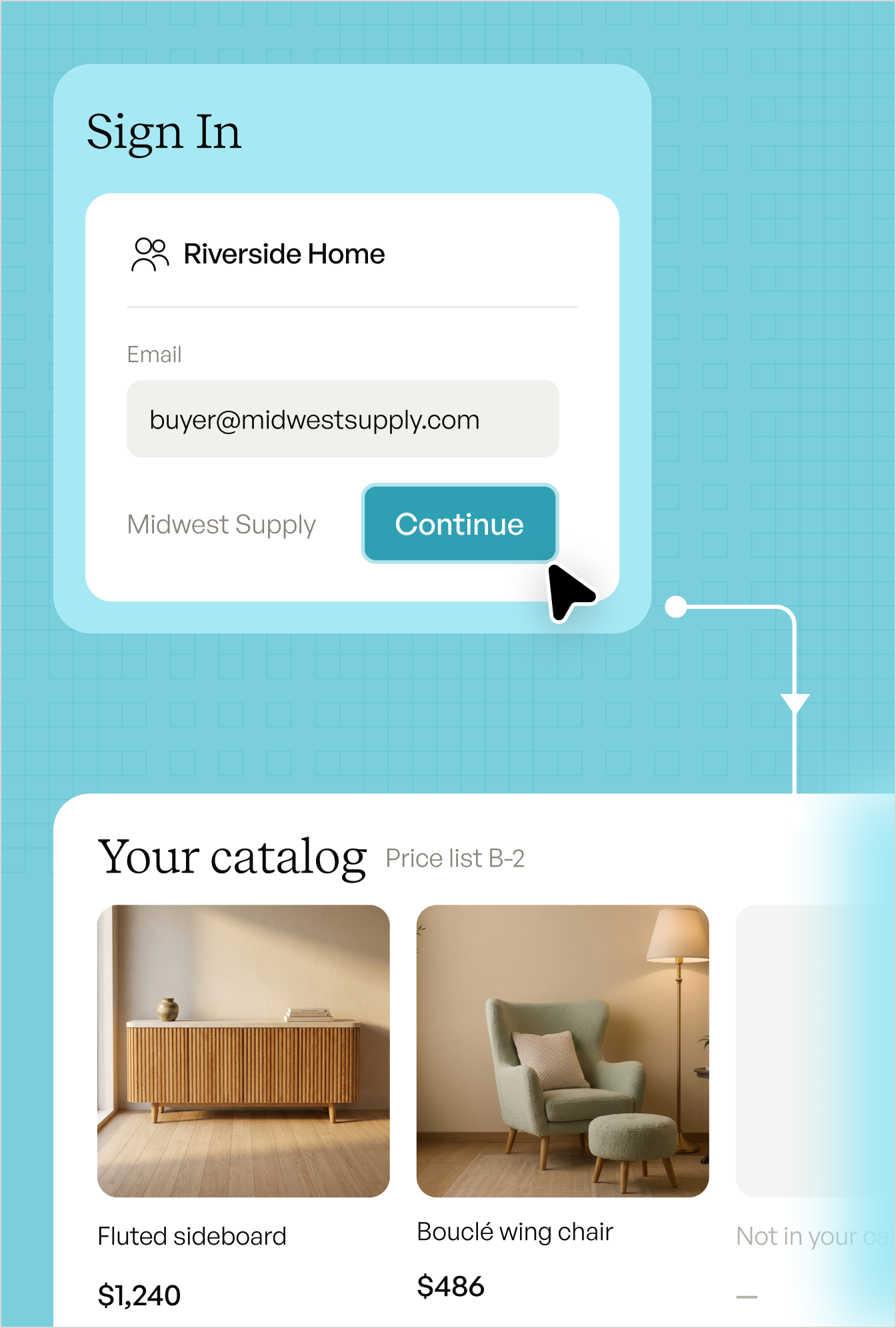
Buyer-Specific Catalogs
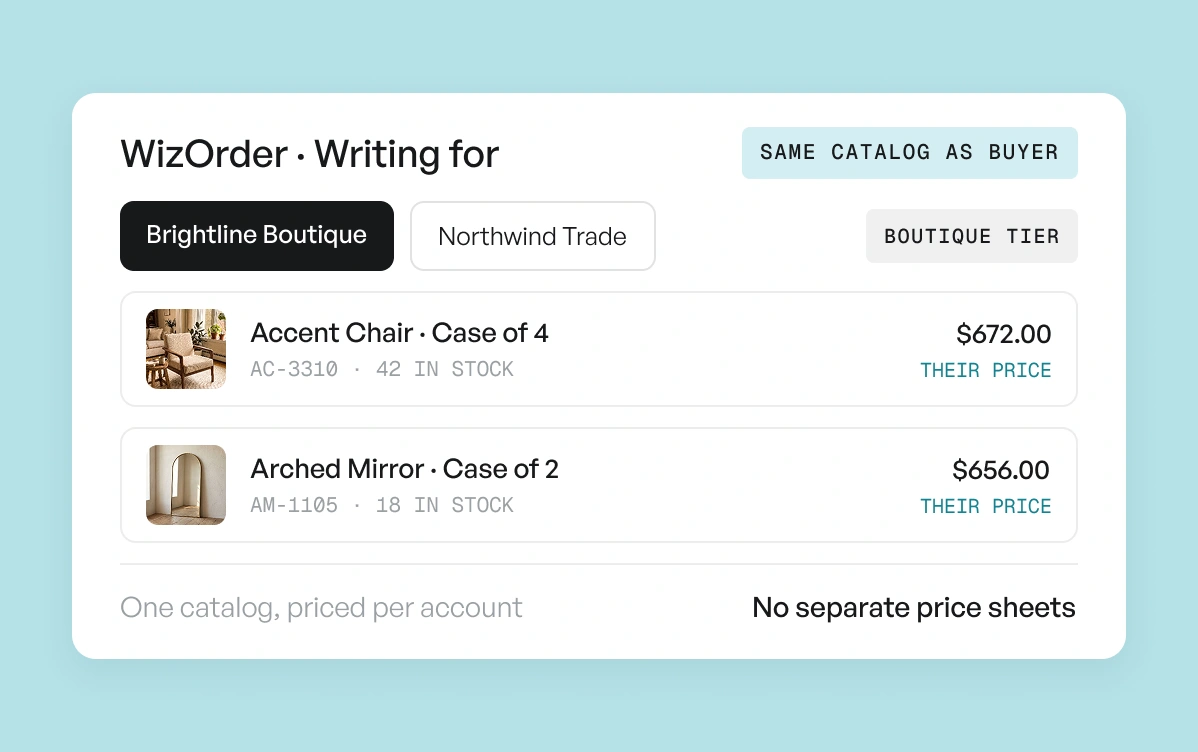
A branded login opens the catalog that account is entitled to buy. Restricted lines stay hidden and each buyer sees their own products and their own pricing.
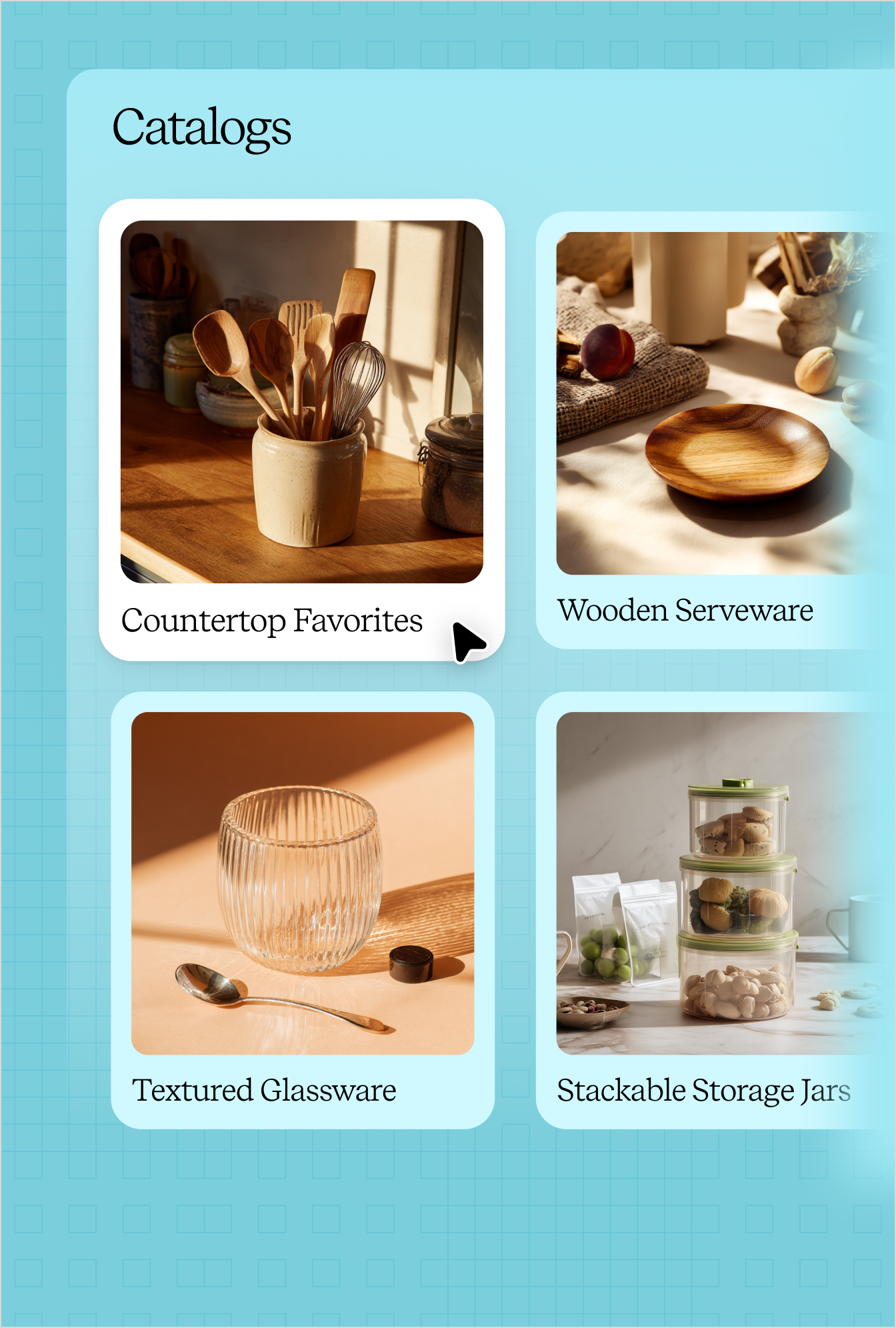
Custom Collections
Group products the way your accounts actually order: by job, by line, by season, or by the assortment a particular type of buyer works from.
Universal Smart Search
Buyers search by manufacturer part number, SKU, name, collection, or any attribute with fuzzy matching, plus AI image-based search for when nobody knows the number.
AI Product Recommendations
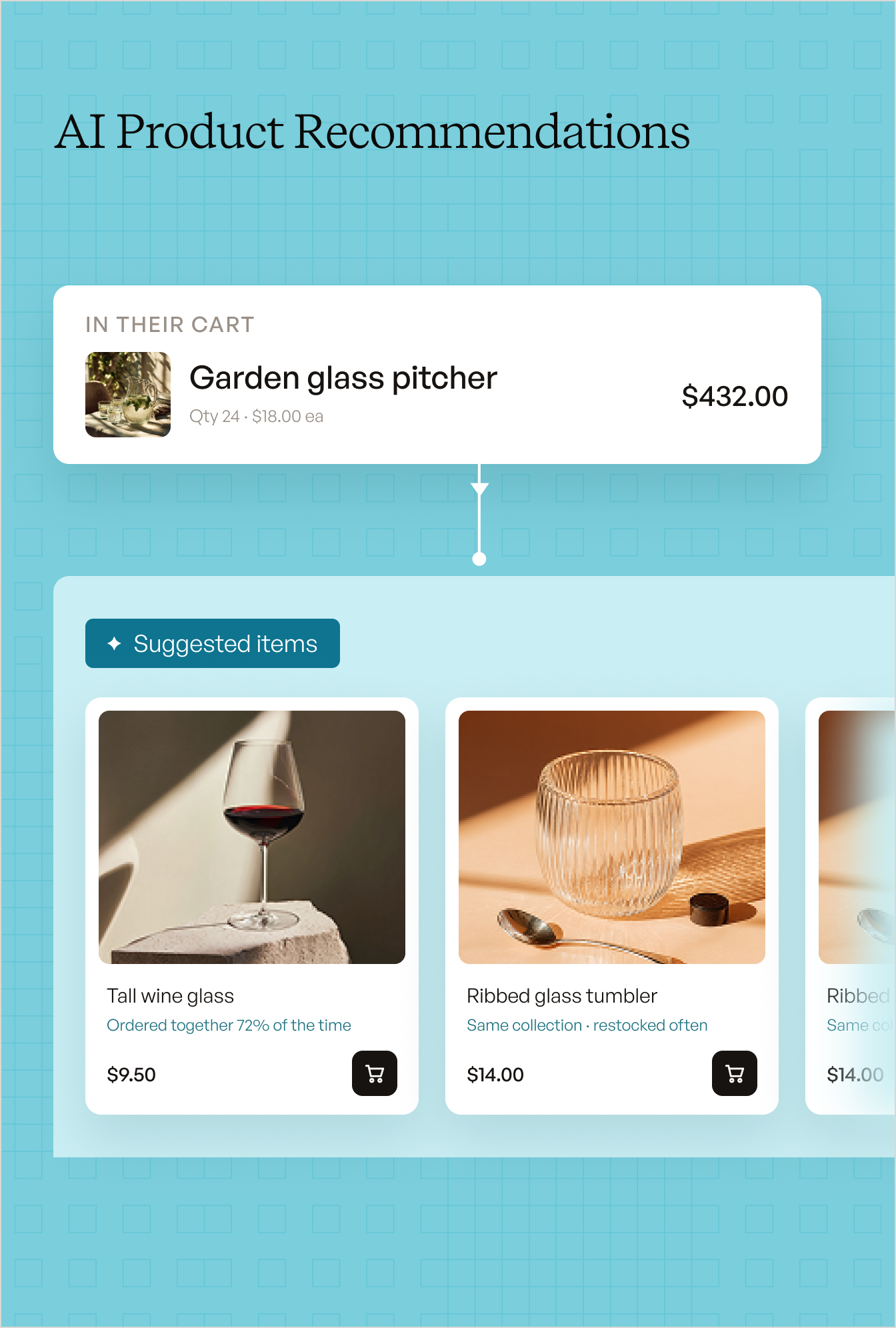
Surface similar, related, and high-intent lines against what is already in the cart, tailored to each buyer’s own history, so orders cover what a phone call would have missed.
Variants In One Grid
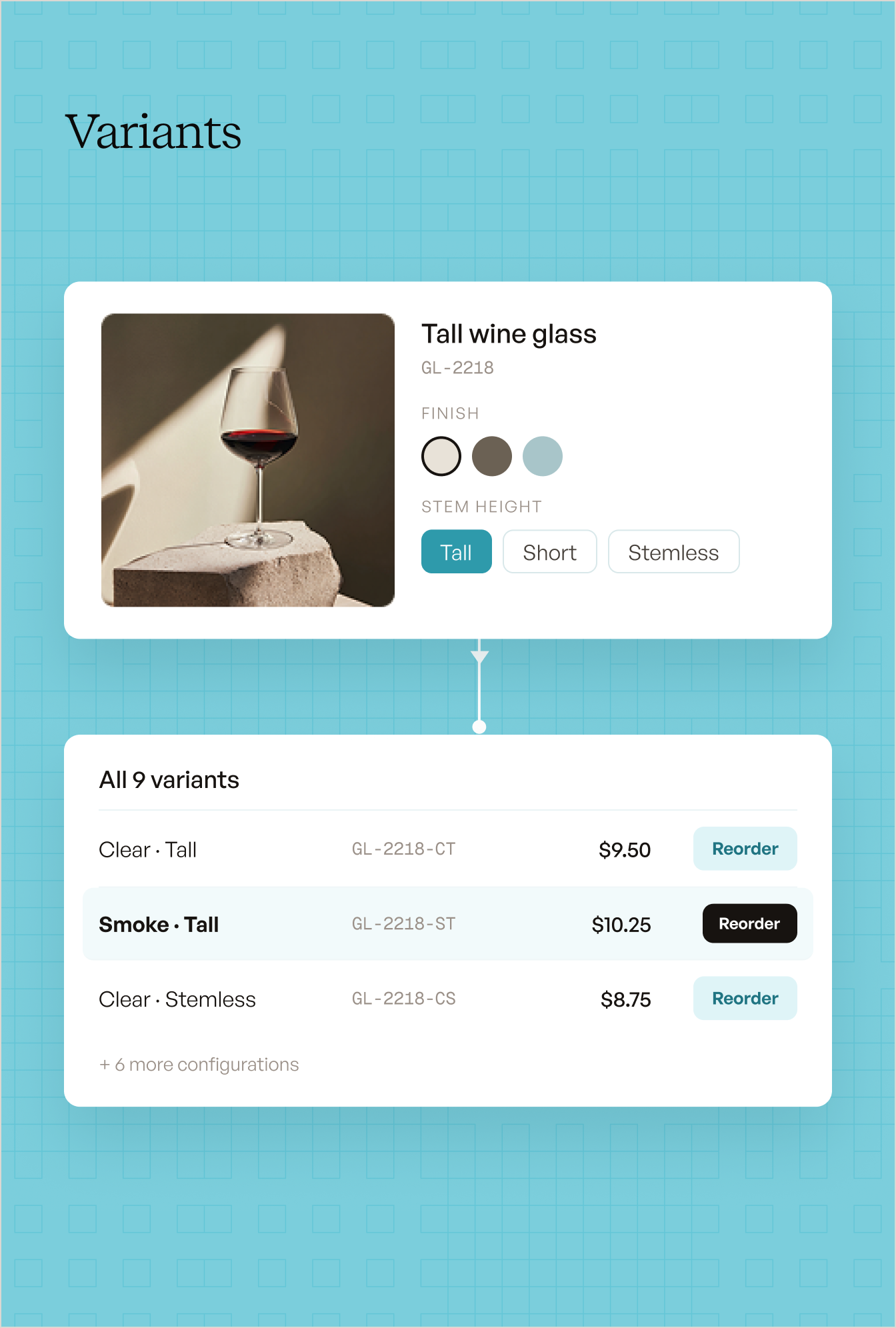
Every size, colour, and finish sits in one grid with quantities entered across the row, so a twelve-variant product becomes one line of work instead of twelve.
DISTRIBUTOR PRICING
Custom distributor pricing, payment terms, and ordering rules that match how you sell
Custom price lists
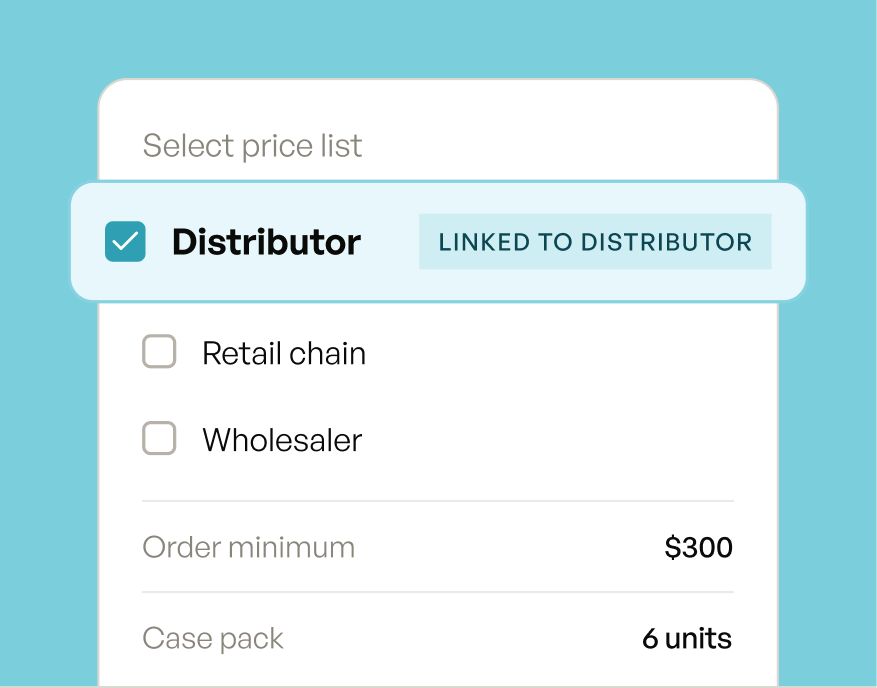
Dealers, contractors, OEMs, and end users each see only the price list you assigned them - at sign-in and at checkout.
Custom payment terms
Offer the net terms already held against each account, with credit limits respected and the buyer's own PO captured at checkout.
Custom quantity rules
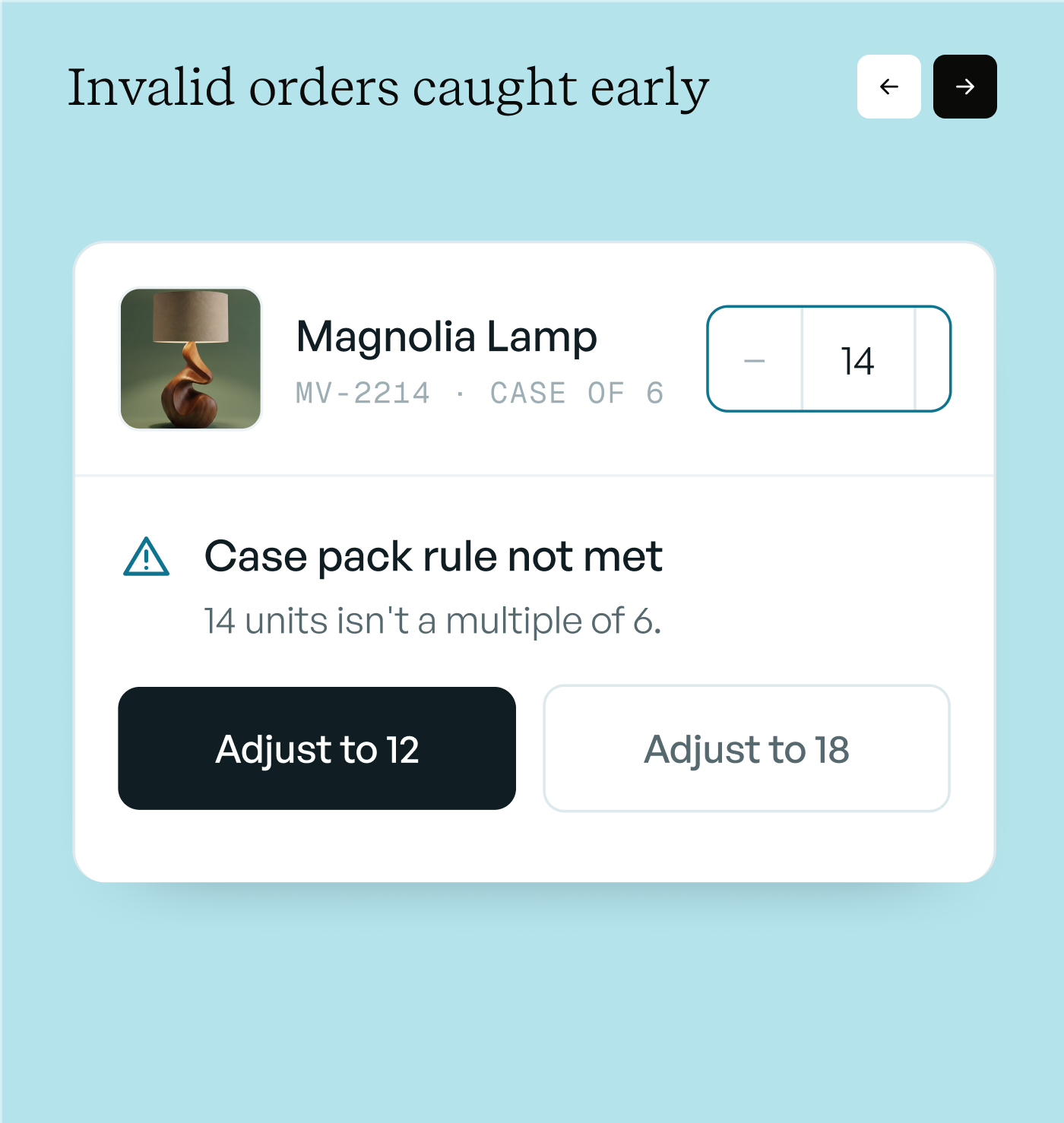
MOQ, case-pack, bundle, and unit-of-measure rules enforced inline, so invalid orders get caught before submit.
Volume pricing
Reward larger orders with quantity breaks that apply automatically as the buyer builds the cart, without a rep intervening to reprice.
Pricing that stays in sync
Price lists, terms, and rules flow from your ERP, so the counter and the portal never quote different numbers.
Account hierarchies
Parent accounts, branches, and ship-to locations roll up under one agreement and one set of prices.
Multiple buyers per account
Every buyer at an account signs in with their own login and lands on the same contract pricing.
Roles and permissions
Decide who can see pricing, who can place orders, and who only builds carts for someone else to approve.
Order approval flows
Route carts over a threshold to the account's own approver before they ever reach your order desk.
- Colleen Daly
- Vice President, The Howard Elliott Collection
"Our new website is so much easier for customers to navigate and place orders. The smooth integration with our sales app allows reps to upsell and recommend products more effectively."
15%
Increase in Online Orders
600+
new website customers
- Abed Ayesh
- Operations Manager, Indian Touch of Gallup
"Partnering with WizCommerce has been a game changer for us. WizCommerce has not only streamlined our operations but also opened up new revenue streams with the website."
50+
new website leads every month
10%
revenue increase
- Michael Novak
- head of marketing & PRoduct, PD Home
"Our customers tell us the new website is much easier to use. With improved navigation, and AI-driven product recommendations, our customers are discovering more products and buying more."
15%
increase in online sales
30~
day seamless implementation
Distributor ordering portal
Make distributor buying easy to search, shop, and reorder
A distributor ordering portal is where your approved accounts sign in to browse their catalog, see their own pricing, place and repeat orders, and follow order status, 24 hours a day. Online ordering for distributors should feel like your trade counter, not a shopping cart.
Branded Login On Your Own Subdomain
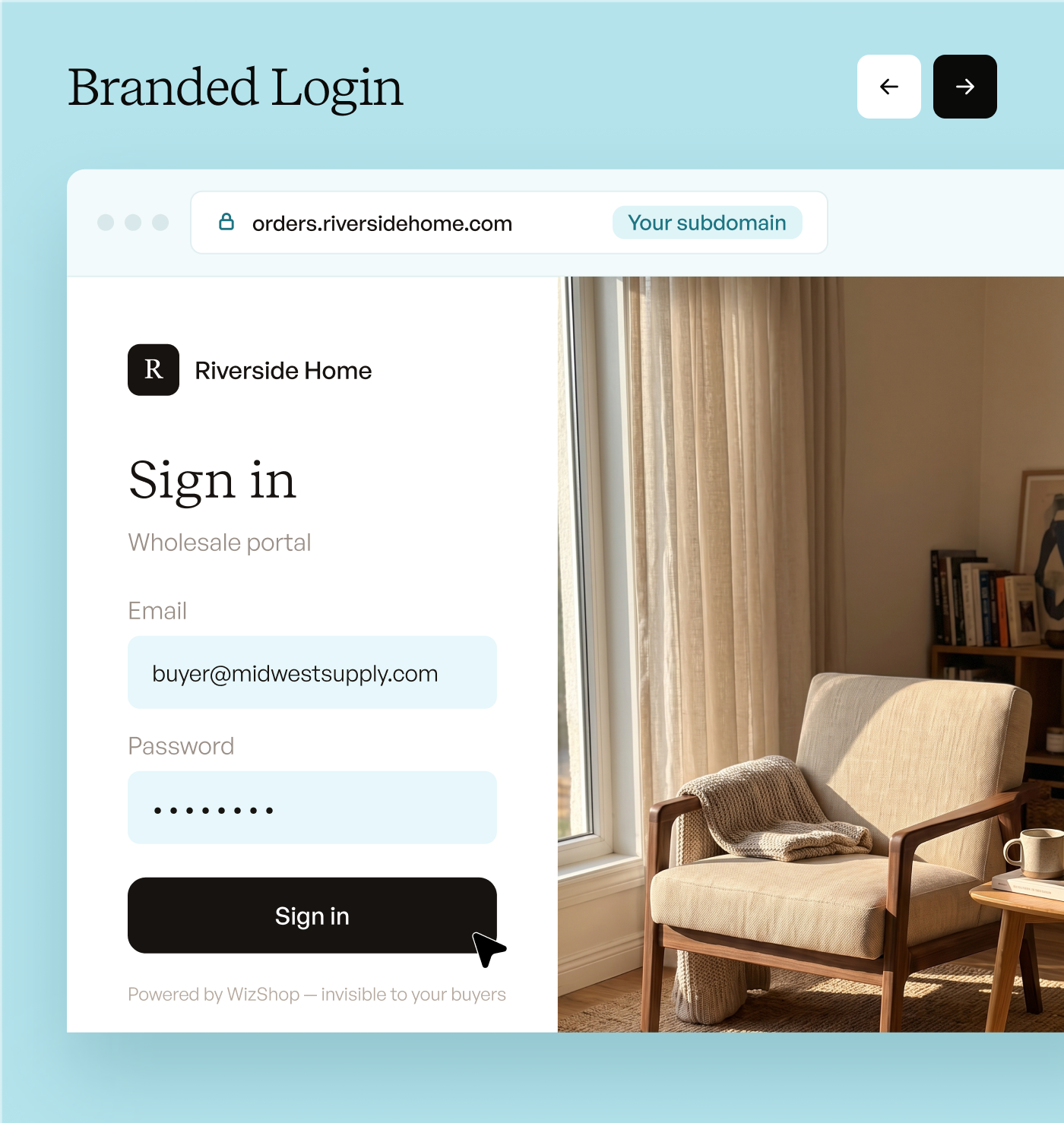
Buyers sign in on your subdomain to a white-labeled portal, so pricing is never publicly exposed and the experience carries your brand rather than a marketplace’s.
Structured Signup, One-Click Approval
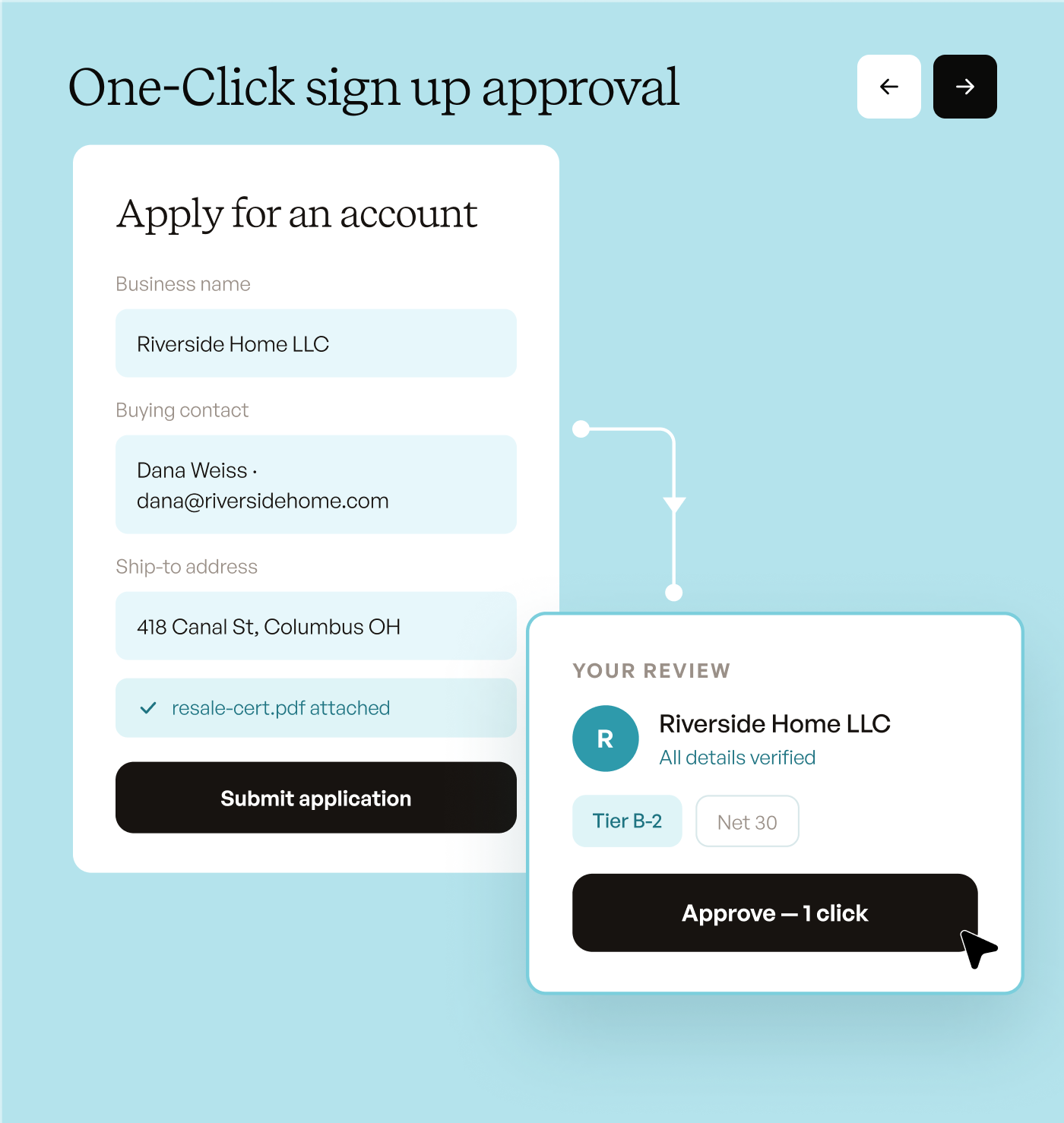
New buyers submit business details, contacts, and ship-to addresses through a structured signup form. You approve the account in one click, assign a tier, and they are live.
Buyer-Specific Catalog At Tier Prices
Each account sees only the SKUs it is authorized to buy, at its own tier or contract price. A single-location dealer and a national chain sign into entirely different catalogs.
Configure Once, Applies To Every Order
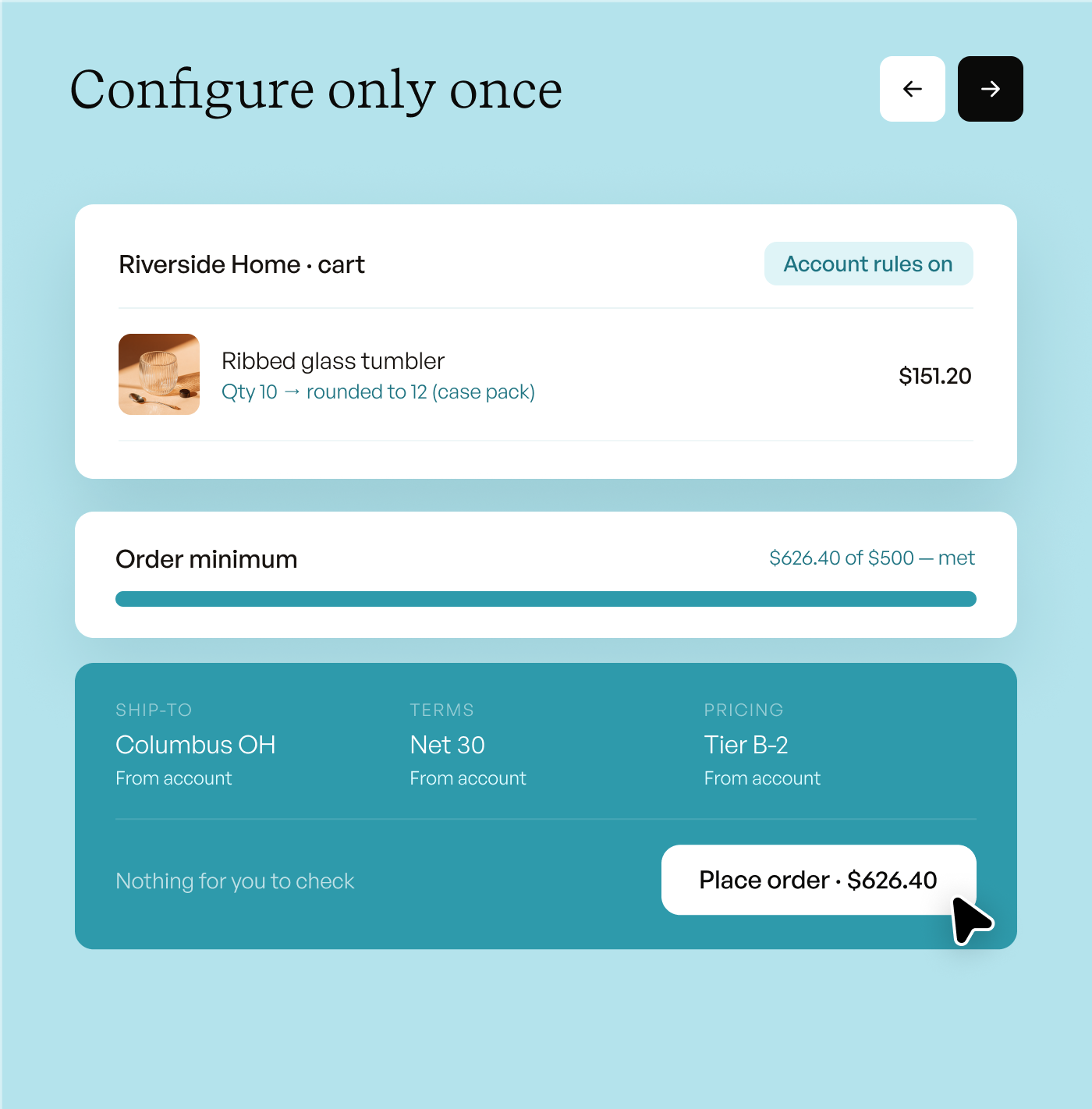
Tier pricing, MOQ, case-pack rules, ship-to addresses, and net terms are set per buyer account, then locked in. You configure the account once instead of policing every order.
Live Inventory And ETAs At Add-To-Cart
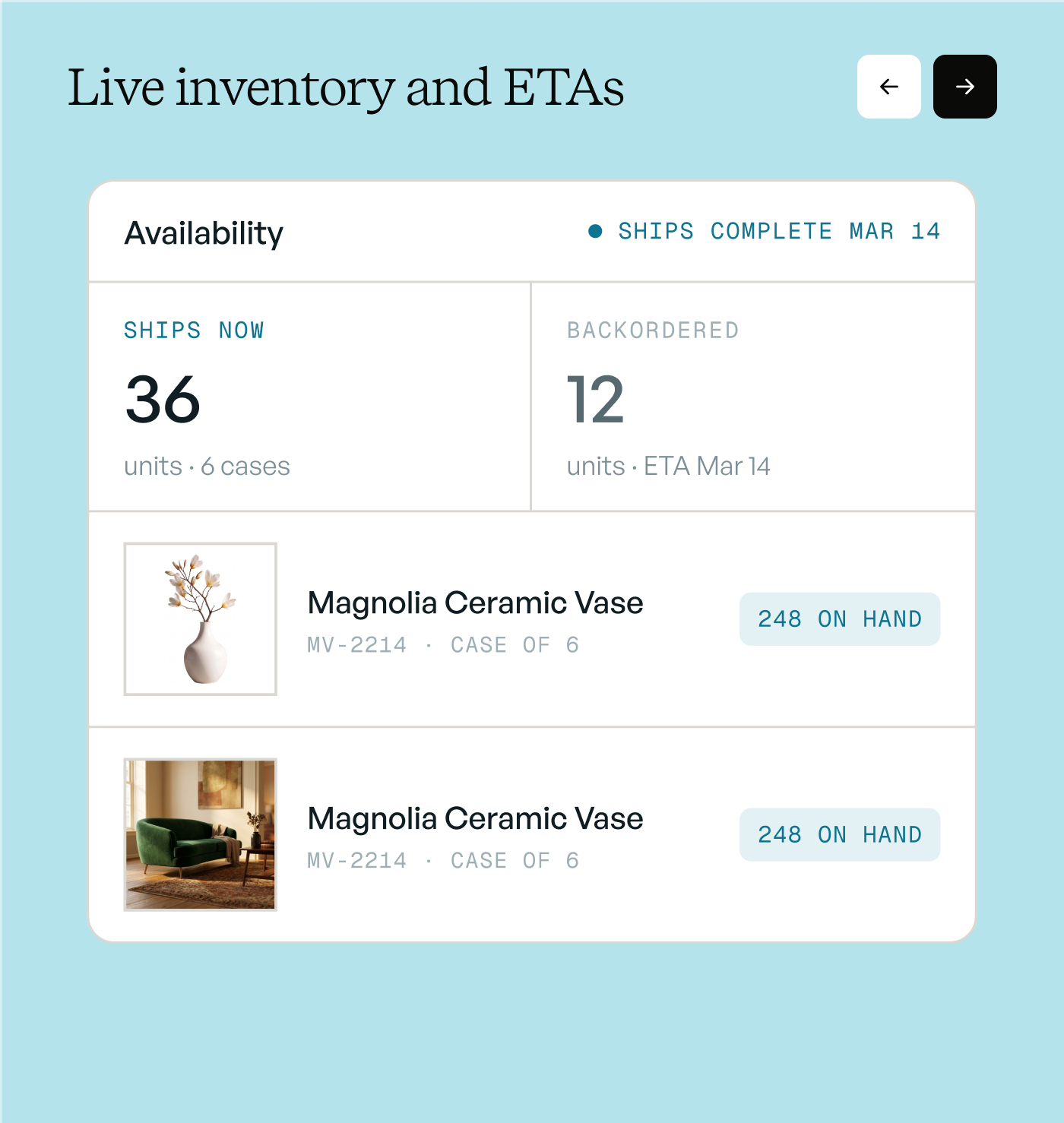
Real-time inventory and ETAs are pulled from your ERP as the buyer adds to cart, including ETAs on backordered lines, so nobody orders against stock that is not there.
Invalid Orders Caught Before Submit
MOQ, case-pack, bundle rules, and unit of measure, whether each, case, or pallet, are enforced inline. Orders reach your warehouse fulfillable as placed, which cuts exception handling.
Multi-Cart Per Location Or Job
Buyers run a separate cart for every branch, project, or pre-book season they manage, so a contractor ordering for three jobs never mixes them up.
One-Click Reorder From Past Shipments
Buyers repeat a past shipment straight from their order history in one click, on desktop or from a phone after hours, which is how most distribution replenishment gets placed.
Live Order Status And Tracking
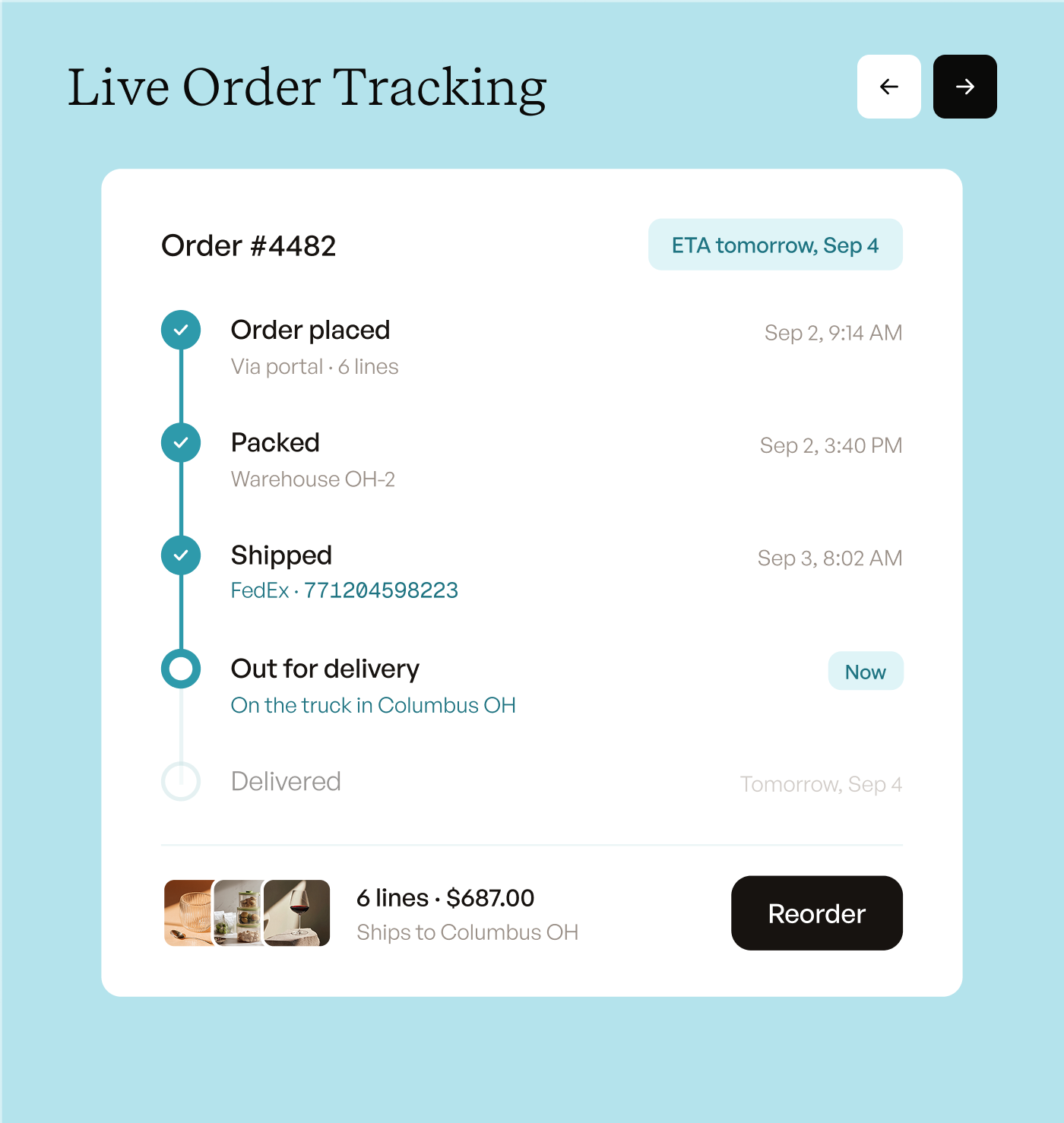
Tracking, ETAs, and shipment status surface in the portal with one-tap reorder on the next cycle, and every order lands in one history whatever channel it came through.
Reps & trade shows
Distributor e-commerce that works with your reps and at trade shows
Ecommerce does not replace distributor sales reps. It moves routine reorders online so reps spend their time on larger orders, and gives them an order taking app for the ones they still write by hand, on the road, at the counter, or at a booth.
A B2B Order Taking App For Distributors
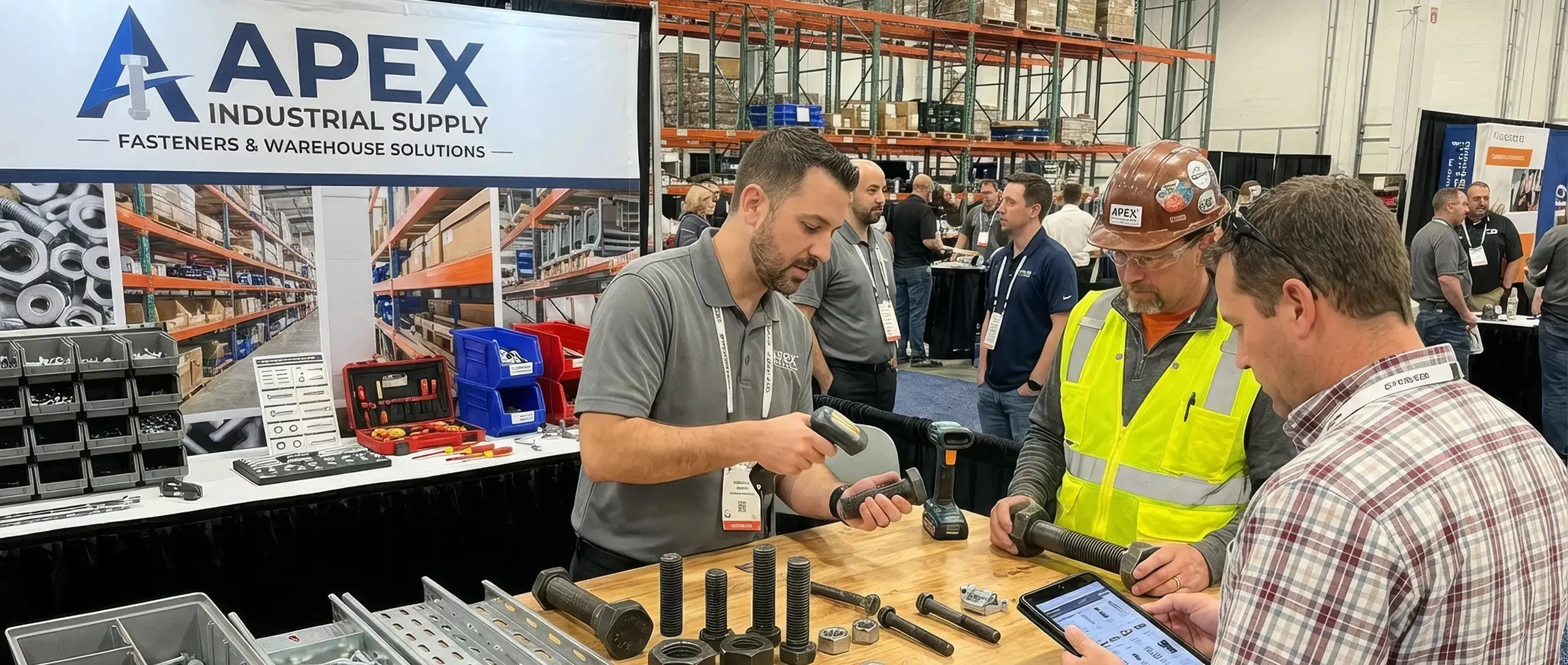
Reps handle order taking in WizOrder, WizCommerce’s sales rep app, from the same catalog and customer-specific pricing, and capture trade-show orders fully offline on iPad with barcode scanning.
Syncs When Connectivity Returns
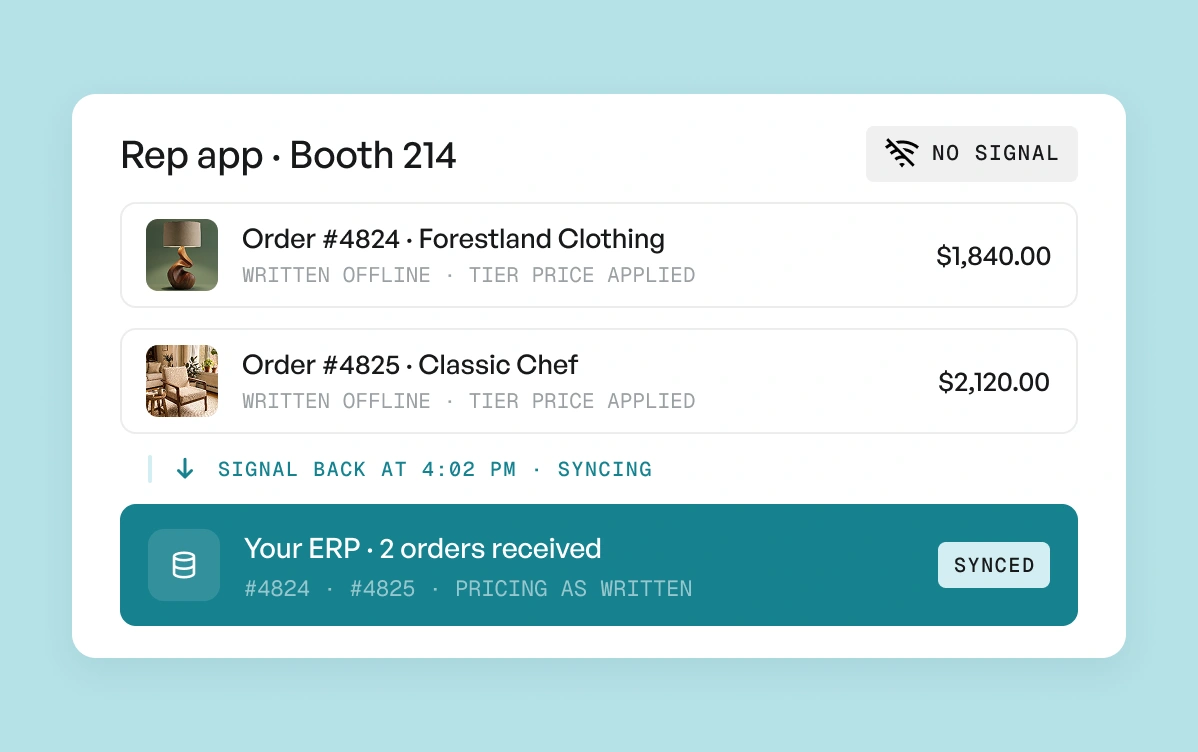
Offline orders written at a booth or a customer site sync to your ERP the moment there is a signal, with pricing applied on the spot.
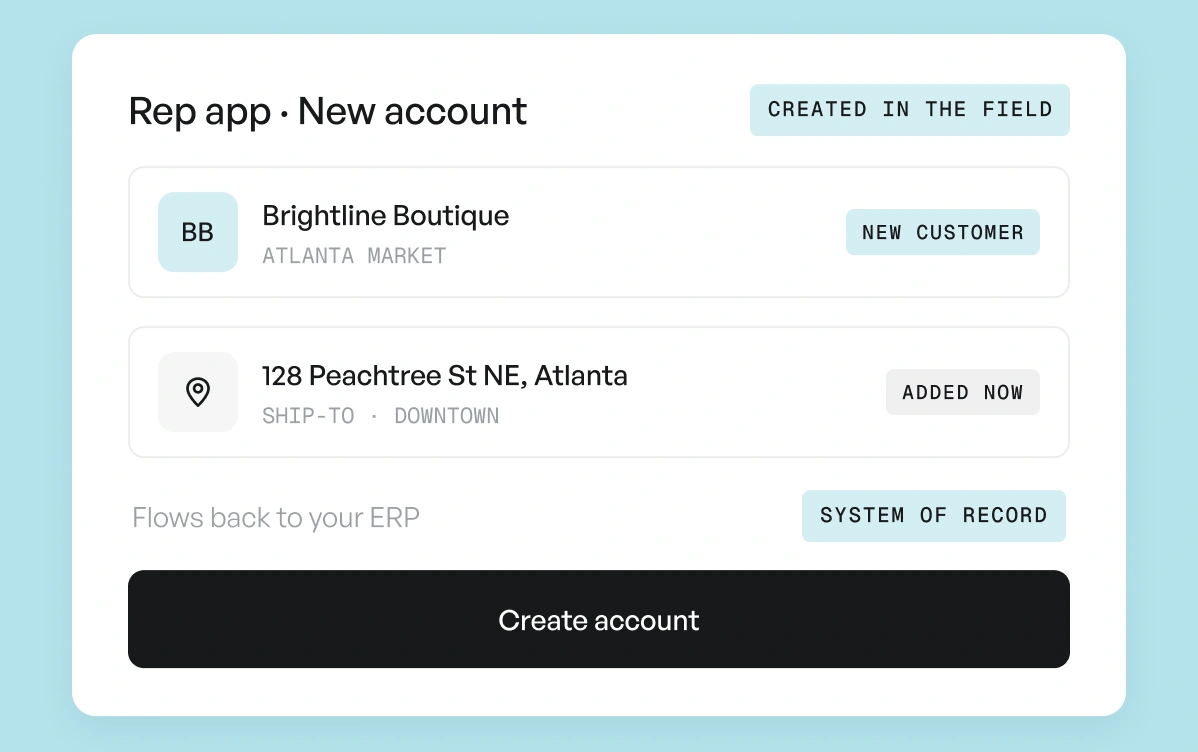
New Accounts Created In The Field
Reps open new customers and ship-to addresses on the road, and those flow back into your ERP as the system of record.
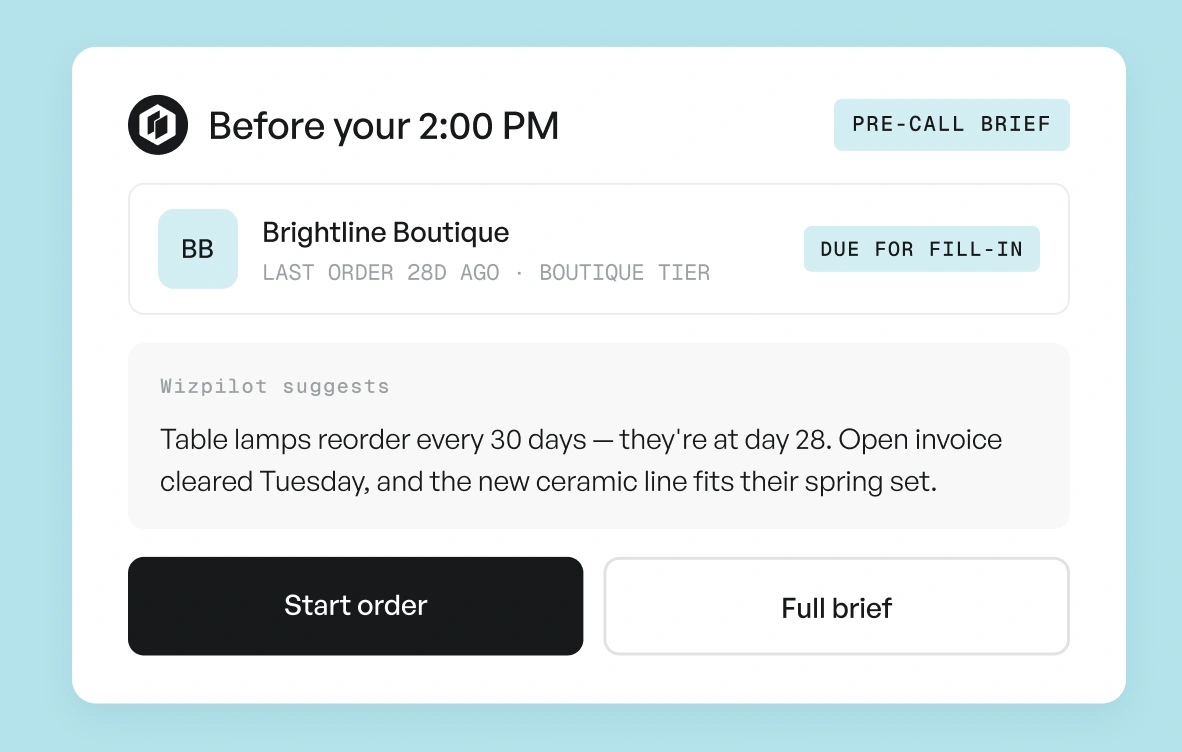
An AI Copilot For Every Call
WizPilot gives reps instant context before a customer conversation, personalized recommendations per account, and on-demand sales insights.
Distributor e-commerce built for every vertical
Every vertical has one ordering constraint that decides whether a platform fits. These are the ones we build for.
B2B E-Commerce for Industrial Goods
Built for complex SKUs, contract pricing, and quantity rules.
Native connectors keep pricing in sync with your ERP in real time.
SEE IT IN DETAILS

B2B E-Commerce for Gifts & Accessories
Built for seasonal drops, bundles, and fast one-click reorders.
Toynk raised average order value by 20%.
SEE IT IN DETAILS

B2B E-Commerce for Furniture
Built for large pieces, container orders, and dimension-ready product pages.
Howard Elliott added 600+ new buyers.
SEE IT IN DETAILS

B2B E-Commerce for Home Furnishings
Built for rugs, lighting, decor, and textiles with seasonal collections.
Jaipur Living replaced manual purchase orders with self-serve online ordering.
SEE IT IN DETAILS

B2B E-Commerce for Food & Beverage
Built for case pricing, order minimums, and live inventory in sync.
Turkana Foods went live with SAP integration in three weeks.
SEE IT IN DETAILSERP integrations

Real-time ERP sync, no middleware, with your ERP as the system of record
ERP-integrated ecommerce for distributors is only as strong as the connection, and distributor order management software that does not write back to the ERP just moves the rekeying somewhere else. You do not need to replace the ERP you run today. Submitted orders push as clean records, no rekey, and inventory deducts from your live view in real time.
One-click order approvals
Review, edit, or flag incoming distributor orders before they reach your ERP, so your team stays in control of what lands.
Real-time, two-way sync
Two-way sync covers the customer master, SKU catalog, pricing tiers, and inventory, with real-time push to NetSuite, SAP, QuickBooks, Acumatica, Sage, and Dynamics 365.
200+ Pre-Built ERP Connectors
Connectors deploy through configuration rather than a custom build, so integration is set up, not engineered. New customers and ship-to addresses created in the field flow back to your ERP as the system of record.
Your ERP Stays The Record
New customers and ship-to addresses created in the field flow back into your ERP, so nothing is maintained in two places.
Native integrations with the ERP and accounting tools you already run
ERP
NetSuite
NetSuite ERP integration syncing items, customers, account pricing, inventory, and orders through a native connector.
ERP
Dynamics 365
Microsoft Dynamics ERP integration with orders and new customer records written back to Dynamics automatically.
Accounting
Zoho Books
Zoho Books integration pushing orders, customers, and payments into your books while items and pricing flow back to the storefront.
ERP
SAP Business One
SAP ecommerce integration with orders into SAP and inventory and pricing back out. Turkana Foods integrated in three weeks.
ERP
Epicor Prophet 21
Epicor ERP integration through the P21 open API for distribution pricing and live availability.
ERP
Sage 100
Sage ERP integration keeping items, customer pricing, and orders aligned across both systems.
Accounting
QuickBooks
QuickBooks ecommerce integration pushing orders, customers, and payments into your books. Online and Desktop supported.
Inventory
Fishbowl
Fishbowl inventory integration keeping live stock counts aligned across every warehouse you run.
Results
Fewer orders to key, and more revenue from the accounts you have
Distributor order automation is not about cutting your team. It moves the orders that never needed a person, so reps sell instead of typing and your service team handles the calls that need judgment. Most distributor e-commerce projects do not fail at launch, they stall at adoption, so the rollout work matters as much as the software.
Less Manual Order Entry
Emailed and phoned orders stop being rekeyed. Ella reads emails, PDFs, and other formats and maps customer SKUs into clean orders.
Fewer Exception Cases
Quantity, case-pack, and unit-of-measure rules block invalid orders before submit, which cuts the exceptions your team has to chase.
Lighter Service Load
Stock checks, order status, invoices, and reorders move to self-service, because tracking and ETAs surface in the portal.
Higher Average Order Value
AI product recommendations attach related lines to what is already in the cart, which is where most online order growth comes from.
A Channel That Runs Without Reps
The portal opens a revenue channel that operates 24/7, so order volume grows without adding order-entry staff.
Reps On Higher-Value Work
With routine reorders self-served, reps focus on larger and more complex orders and on the accounts that need a conversation.
No Replatform Of Your ERP
Your ERP stays the system of record. Most implementations go live in about 30 days including ERP integration, data migration, and onboarding, against the three to six months usually quoted elsewhere.
Configure Once, Applies To Every Order
Price lists, quantity rules, terms, and hierarchies are set up once and then applied automatically, so the portal is correct from the first order.
Onboard Accounts In Waves
Load each account’s order history and pricing before you invite them, so one-click reorder works on the first visit rather than an empty catalog.
Reps Introduce The Portal
Reps bring their own accounts online, which is usually the difference between a portal that gets used and one that does not.
Get in touch
Bring your distribution business online, without compromising how you sell with WizCommerce
Frequently Asked Questions
What is a distributor ecommerce platform?
A distributor ecommerce platform is an online storefront and ordering system built for selling to business accounts rather than consumers. It gates the catalog behind a login, prices it per account from your ERP, enforces MOQ, case-pack and unit-of-measure rules, models company accounts with several buyers, and writes every order back into the ERP as a clean sales order.
How is distributor ecommerce different from regular B2C ecommerce?
Regular ecommerce sells a public catalog at one price to anyone. Distributor ecommerce sells an entitled catalog at negotiated pricing to approved accounts, with order minimums, units of measure, credit terms and live inventory. The other difference is architectural: the ERP stays the system of record, and the storefront reads from it rather than replacing it.
Is a distributor ecommerce platform the same as a B2B marketplace?
No. Marketplaces such as Alibaba, Faire, IndiaMART, Thomasnet and DHgate list your products alongside competitors and own the buyer relationship. A distributor ecommerce platform is your own branded storefront behind your own login, at the contract pricing you agreed, with the account relationship and the buyer data staying yours.
What should a distributor ecommerce platform be able to do?
Six things decide whether a platform fits distribution: customer-specific pricing and catalogs, part-number and attribute search across a full item master, live inventory with ETAs, company accounts with roles and approvals, MOQ and case-pack enforcement at checkout, and native two-way ERP sync. Quotes, net terms and rep-assisted ordering follow from those.
Can a distributor add ecommerce without replacing its ERP?
Yes, and it is normally the right approach. The ERP stays the system of record for pricing, inventory, customers and orders, and the storefront reads and writes to it through pre-built connectors with no middleware layer to license or maintain. That is what keeps implementation to around 30 days rather than a multi-quarter replatform.
What data syncs between distributor ecommerce and the ERP?
The customer master, SKU catalog, contract pricing and price lists, inventory availability, and payment terms flow out of the ERP. Orders, new customers and ship-to addresses created in the field flow back in. Sync is two-way and near real time, and it is monitored and corrected rather than run as a scheduled batch export.
Which ERP systems does distributor ecommerce integrate with?
NetSuite, SAP Business One, QuickBooks Online and Desktop, Acumatica, Sage 100, Microsoft Dynamics 365 Business Central and Epicor Prophet 21, plus inventory systems including Fishbowl, Xoro and SOS Inventory. There are 200+ pre-built connectors in total, deployed through configuration rather than a custom integration build.
Can each customer see their own negotiated pricing?
Yes. Every account sees only the contract price, tier or price list you agreed with them, applied at sign-in and at checkout. Pricing is read live from the ERP rather than stored as a copy, so changing a contract in NetSuite or Acumatica updates the storefront and the trade counter never quotes a different number.
Can distributor ecommerce enforce MOQ, case packs and units of measure?
Yes, inline as the buyer builds the cart and per account. Order minimums, case packs, order multiples, bundle rules and variant compatibility are all applied before submission, and a part that sells by the each, the box and the pallet prices correctly in each. Orders arrive at your warehouse fulfillable as placed.
What payment terms and methods can distributor buyers use?
Net 15, 30 and 60 terms, using the terms already held against each account in your ERP, alongside card-on-file, ACH and secure payment links. Partial and split payments are supported on large orders, and credit position is respected at checkout. Payments run inside the order flow rather than in a separate tool.
How do buyers find the right part in a catalog of thousands of SKUs?
Through search rather than browsing, because category navigation breaks down past a few thousand SKUs. Universal smart search does fuzzy matching by manufacturer part number, SKU, product name, collection or any attribute, and image-based search lets a buyer identify a part from a photo when nobody knows the number.
Can different customers see different catalogs?
Yes. Customer-specific catalogs control what each account is entitled to see before any pricing is applied, so restricted lines stay hidden and private-label ranges stay private. A single-location dealer and a national chain can be shown entirely different catalogs at entirely different prices from the same item master.
How does AI change ordering for distributors?
AI does the finding and the reminding. Smart search and image search get buyers to the right part without the part number. AI recommendations surface similar, related and high-intent items from each buyer’s own history. Ella reads orders and quote requests arriving as email or PDF, so your team reviews exceptions instead of retyping.
How do buyers reorder without contacting anyone?
They repeat a past order in one click from their order history, which is how most distribution replenishment gets placed. They can also save recurring lines as named lists, keep separate carts, reorder a specific variant configuration, and track order status and invoices in the same account, 24 hours a day.
Can several buyers with different permissions order under one account?
Yes. A company account holds every purchaser at that customer, each with their own login, while you keep one commercial relationship and one credit position. You control who sees pricing, who can place orders and who can only build a cart, and orders above a threshold can route to a customer-side approver.
Can buyers see accurate live inventory?
Yes. Inventory is synced from the ERP in near real time and shown with ETAs as the buyer builds the cart, so the number they see at 9pm is the number your warehouse can pick in the morning. The integration monitors and corrects each sync, which is what prevents overselling.
Does distributor ecommerce replace sales reps?
No. It moves the routine reorders that never needed a person, so reps spend their time on larger and more complex orders. Reps also log in as a buyer to place or edit orders, write orders offline in WizOrder at trade shows with barcode scanning, and keep credit for portal orders on their accounts.
Can buyers request quotes and turn them into orders?
Yes. Buyers submit a cart as a quote request with job detail attached, and the AI Quote Automation Assistant drafts an accurate quote from it in seconds. Quotes and approval steps run in the same system as ordering, so an agreed quote is not rekeyed and never gets quoted twice at two prices.
What CRM do distributors run alongside ecommerce?
Many run Salesforce, Microsoft Dynamics 365, HubSpot, Zoho CRM or the CRM inside an ERP such as Acumatica or NetSuite. The recurring problem is that the CRM, the storefront and the ERP hold three versions of the same account. WizCRM is built for distributors so accounts, contract pricing, quotes and order history sit on one record.
How long does it take to launch, and how do you get customers to use it?
Most implementations go live in about 30 days including ERP integration, data migration and onboarding, against the three to six months usually quoted. Adoption is the harder half: onboard accounts in waves with their history and pricing preloaded, and let reps introduce it. Howard Elliott added 600+ new website customers and a 15% increase in online orders.
Skip to content