Skip to content




Are you planning to start a wholesale business? Well, it’s time to bulk up on some brilliant ideas and strategies! Starting a wholesale business can be a beneficial venture, especially in 2026. With the right strategies, you can bridge the gap between manufacturers and retailers, creating a thriving business. In this guide, we’ll explore the essential steps to starting and running a wholesale business successfully, along with some top ideas to consider for the upcoming year.
What is a wholesale business?
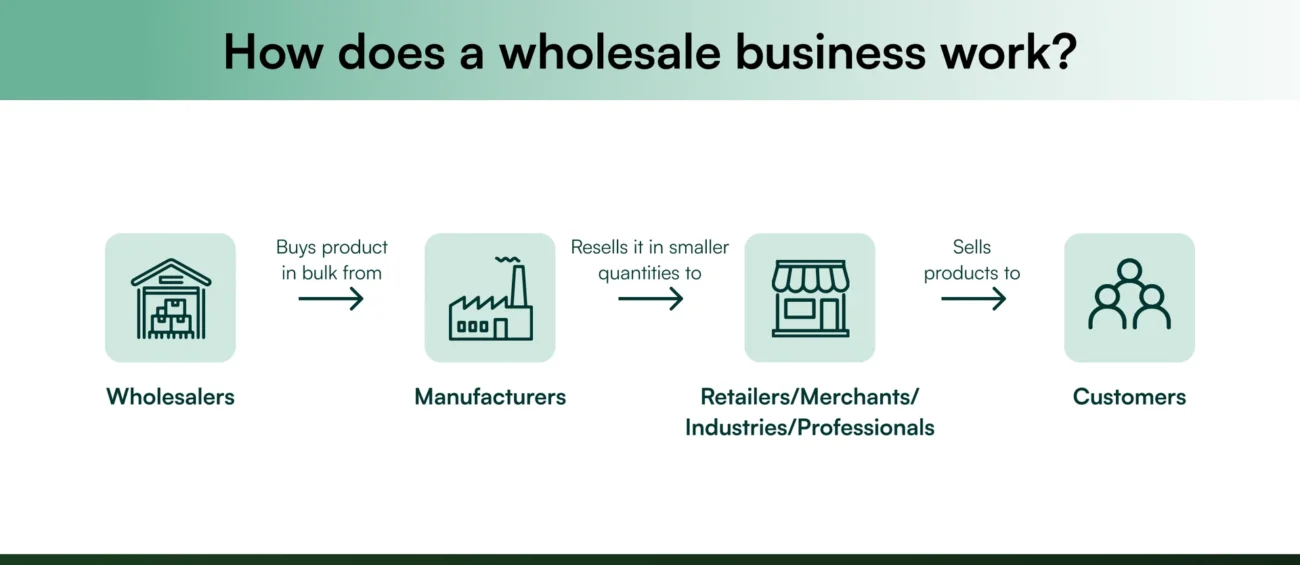
A wholesale business involves buying products in bulk directly from manufacturers and selling them to retailers or other companies at a higher price. According to a recent study, the global wholesale market is expected to expand to $12.4 trillion by 2025, with a compound annual growth rate (CAGR) of 7.1% from 2020 to 2025. Unlike retail companies that sell directly to consumers, wholesalers operate in the B2B (business-to-business) space, providing the necessary link in the distribution chain.
The role of wholesale businesses in B2B sales
Wholesale businesses play a crucial role in B2B sales by offering bulk products at lower prices, ensuring a steady supply chain, and often providing additional services like storage and shipping. By providing products at competitive prices, wholesalers help retailers maintain their profit margins while offering consumers affordable prices. This function allows retailers to maintain their inventory without dealing directly with manufacturers.
Wholesale businesses ensure a steady and reliable supply chain. Retailers can depend on wholesalers for a consistent flow of products, which is essential for maintaining inventory levels and meeting customer demand. This reliability is particularly crucial during peak seasons or when specific products are in high demand.
Understanding the new wholesale business model
The wholesale business landscape has evolved, offering more opportunities for small businesses and startups to thrive. Advances in technology, logistics, and ecommerce platforms have made it easier than ever to start and run a wholesale business while reaching new markets and customers. Today, digital tools allow wholesalers to manage orders, inventory, and customer relationships efficiently, transforming top wholesale business ideas into profitable ventures with minimal overhead.
1. Developments in B2B wholesale marketplaces
Modern B2B marketplaces have transformed how wholesalers connect with retailers, distributors, and even direct consumers. These platforms provide comprehensive solutions for transactions, shipping, and communication, making wholesale operations faster and more accurate.
- Efficiency and convenience: Marketplaces streamline procurement, allowing businesses to find and order wholesale items quickly without delays.
- Wide range of products: From home decor and beauty products to pet supplies and party favors, marketplaces provide a diverse selection to meet consumer demand.
- Enhanced communication: Integrated messaging, negotiation tools, and inventory updates make supplier–buyer interactions smoother and reduce errors.
For instance, let’s look at the numbers: estimates indicate that US B2B ecommerce site sales rose to about $2.3 trillion in 2024 and are projected to surpass $3 trillion by 2028. This shift has expanded opportunities for small wholesale business ideas, enabling new wholesalers to enter the market without heavy upfront investment or complex infrastructure.
2. Increased accessibility for small businesses
Global supply chains and digital tools now allow even small wholesalers to source products internationally and reach wider customer bases.
- Global reach: Small businesses can import goods from manufacturing hubs around the world, from China to India, and distribute to local retailers or online customers.
- Cost-effective solutions: Affordable shipping and logistics options lower startup costs, making profitable wholesale business ideas more achievable.
- Market expansion: Access to international suppliers opens doors for niche markets such as organic food, wellness products, essential oils, or pet food, helping businesses find steady demand.
Cross-border commerce plays a crucial role in driving the global ecommerce market, which Juniper Research predicts will grow by 108% from 2023 to 2028. This accessibility highlights why exploring B2B business opportunities and ideas for wholesale business is now a strategic move for entrepreneurs who want to scale efficiently.
3. Utilization of ecommerce platforms for B2B and DTC sales
Ecommerce platforms are no longer just for retail; they are essential for wholesalers looking to expand. By combining B2B and direct-to-consumer (DTC) sales, wholesalers can boost revenue and brand visibility simultaneously.
- B2B sales: Platforms like Shopify and WizCommerce offer bulk ordering, customer-specific pricing, and inventory management tailored for wholesale operations.
- DTC sales: Selling directly to consumers increases margins, builds brand loyalty, and complements traditional B2B channels.
- Integrated marketing tools: Digital platforms provide SEO, email campaigns, and social media integration to attract new customers and improve online visibility.
By using these tools, wholesalers can implement small wholesale business ideas with minimal risk while creating multiple revenue streams from one platform. Leveraging ecommerce also supports top B2B wholesale business ideas, allowing businesses to combine traditional distribution with digital growth strategies. A study by Statista shows that global B2B ecommerce sales are expected to reach $6.6 trillion by 2025. This growth demonstrates the importance of leveraging ecommerce platforms for both B2B and DTC sales.
Steps to starting a wholesale business
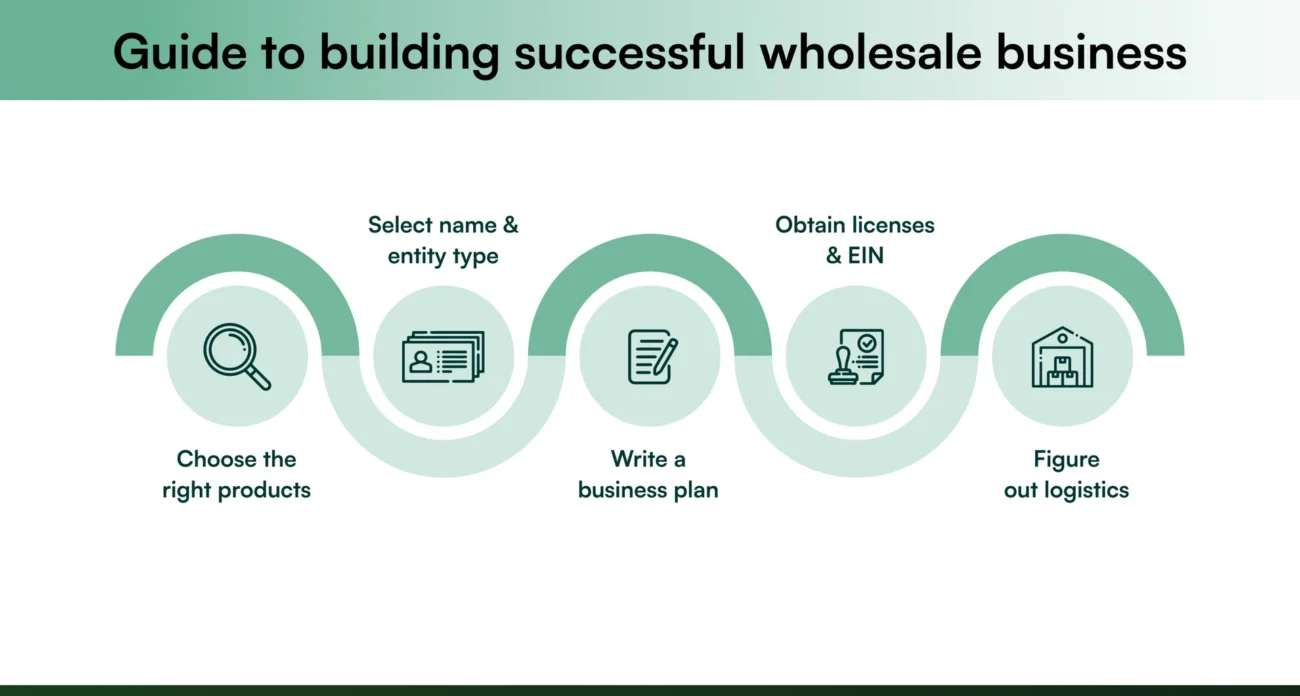
Starting a wholesale business requires careful planning and execution. Here’s a detailed step-by-step guide to help you start on the right foot.
1. Choosing the right products to sell
Selecting products with high consumer demand is crucial for any profitable wholesale business idea. Look for items that have steady growth potential, appeal to a wide audience, and can be sourced reliably.
- Market research: Conduct thorough market research to understand current trends, consumer preferences, and emerging markets. Analyze trends in industries such as pet supplies, home decor, wellness products, beauty products, and party supplies to find products that attract steady demand.
- Competitor analysis: Study what competitors are offering and identify gaps that your wholesale business can fill.
- Supplier relationships: Partner with reliable suppliers who provide consistent quality products, whether you source bulk orders, organic food, or friendly products for consumers.
Choosing the right products ensures your small wholesale business ideas have room to grow, low investment requirements, and high chances of success.
2. Selecting a business name and entity type
Your business name is more than just a label; it reflects your brand identity. Combine a memorable name with the right legal structure to build credibility and protect your business.
- Business name: Pick a name that is easy to remember, relevant to your niche, and available for trademark registration. Incorporating keywords like “wholesale”, distribution, or your target product category can improve recognition.
- Legal structure: Decide whether to operate as a sole proprietorship, partnership, LLC, or corporation. Each structure has implications for taxes, liability, and growth potential.
3. Writing a comprehensive business plan
A well-crafted business plan acts as a roadmap for your wholesale small business ideas. It helps you define objectives, secure funding, and stay on track while growing your business.
- Executive summary: Summarize your business idea, vision, and goals.
- Market analysis: Detail consumer demand, target audience, and industry trends for products such as home goods, pet products, or personal care items.
- Marketing strategy: Plan how to reach retailers, small businesses, and consumers using digital tools, social media, and email campaigns.
- Financial projections: Forecast expected revenue, startup costs, and profitability to ensure your venture is sustainable.
4. Obtaining necessary licenses, permits, and an EIN
To operate legally, you need to secure the appropriate licenses and permits. Additionally, apply for an Employer Identification Number (EIN) from the IRS.
Operating legally is essential for any wholesale business to start. Depending on your location and product types, you may need several licenses.
- Licenses and permits: depending on your location and industry, you may need a general business license, sales tax permits, and health or safety approvals.
- EIN (Employer Identification Number): This number is required for tax reporting, especially if you plan to hire employees or operate as an LLC or corporation.
5. Figuring out logistics with manufacturers and shipping providers
Efficient logistics form the backbone of a successful wholesale business. Coordinating suppliers, inventory, and delivery ensures smooth operations and satisfied customers.
- Manufacturers: Build strong relationships with trusted suppliers who can provide raw materials, wholesale items, and bulk orders at competitive prices.
- Shipping providers: Select reliable carriers to deliver products on time, whether for local retail stores or cross-border distribution.
- Inventory management: Use inventory management tools to track stock levels, reduce waste, and streamline order fulfillment.
By combining these steps with ideas for a wholesale business that targets growing demand, you can create a foundation for a small wholesale business with long-term potential.
How to run a wholesale business successfully?
Running a wholesale business involves more than just selling products. Here are some essential tips to ensure success:
1. Create an accessible website and optimize for B2B ecommerce
A user-friendly website is a must for any wholesale business to start. Your online presence should make it easy for retailers and B2B buyers to browse your catalog, place bulk orders, and manage accounts.
- Bulk ordering: Allow buyers to order large quantities effortlessly, improving customer satisfaction and increasing sales.
- Customized pricing: Offer tiered pricing based on order volume, loyalty, or B2B agreements.
- Navigation and support: Make your site intuitive with fast search tools, FAQs, and live support.
Ecommerce optimization also helps wholesalers tap into top B2B wholesale business ideas by reaching broader markets and providing a seamless buying experience for new customers.
To learn more about optimizing your B2B ecommerce website, visit Wizcommerce.
2. Use ERP Systems for inventory management
Efficient inventory management ensures your wholesale small business ideas can scale without running into stock issues.
- Inventory tracking: Monitor real-time stock levels to avoid overstocking or shortages.
- Order processing: Streamline the order-to-delivery process, reducing errors and delays.
- Analytics: Track product performance, sales trends, and customer preferences to make data-driven decisions.
Implement an Enterprise Resource Planning (ERP) system to streamline inventory management, order processing, and other business operations. ERP systems streamline distribution business operations, helping you manage everything from home goods to pet supplies efficiently.
3. Select reliable suppliers and familiarize with legal requirements
Strong supplier relationships are critical for any profitable wholesale business idea. Reliable suppliers ensure high-quality products, timely delivery, and competitive pricing.
- Supplier vetting: Verify reputation, product quality, and delivery consistency. Choose suppliers who offer quality products and reliable service.
- Legal compliance: Stay informed about contracts, taxes, import/export regulations, and industry-specific licenses.
- Quality control: Inspect products regularly to maintain standards and reduce returns.
4. Focus on customer service and develop a clear vision
Excellent customer service sets you apart from competitors in the wholesale distribution space.
- Responsive support: Provide fast and helpful communication for inquiries, complaints, and orders.
- Customer feedback: Use feedback to refine your offerings and improve processes.
- Clear vision: define your business mission and objectives to guide growth and decision-making.
Prioritizing service and clarity helps convert ideas for wholesale business into loyal partnerships with retail stores, pet stores, or other B2B buyers.
5. Incorporate technology for efficiency and growth
Leveraging modern technology can make your small wholesale business ideas scalable and more profitable. Use technology to automate processes, improve efficiency, and scale your business. Tools like CRM systems, marketing automation, and data analytics can provide valuable insights and streamline operations.
- CRM systems: Manage relationships, track sales interactions, and segment customers for targeted marketing.
- Marketing automation: Automate email campaigns, social media, and promotional activities to attract new customers.
- Data analytics: Gain insights into product trends, buyer behavior, and inventory optimization.
By combining technology with a strong operational foundation, your top wholesale business ideas can reach wider markets, reduce costs, and maintain steady growth.
Top wholesale business ideas
The wholesale space is wide, but certain categories consistently outperform because they pair strong consumer demand with predictable bulk-buying patterns from retailers. If you’re looking for niches with staying power, these ideas are some of the most promising.
1. Beauty & skincare wholesale
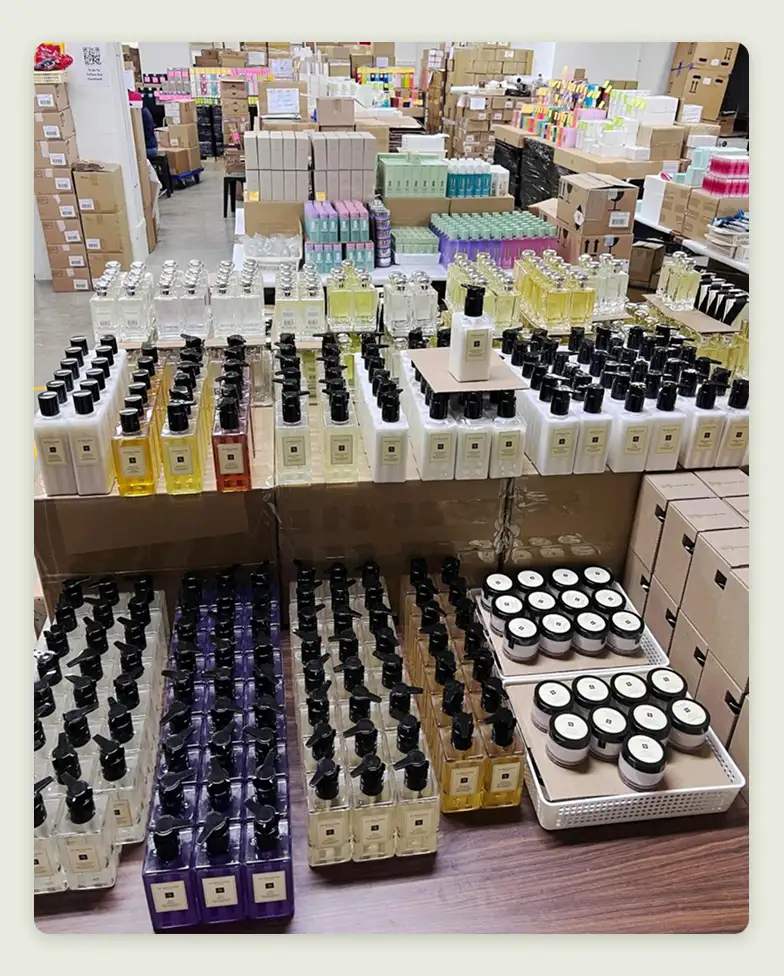
Wholesaling beauty products like skin care, cosmetics, and wellness lines remains a strong opportunity thanks to consistent consumer demand and a broad range of buyers in salons, boutiques, and wellness stores. Beauty has a built-in advantage; people replenish these items often, and retailers want a steady stream of new, interesting products to stock. Everything from serums to body care and clean-beauty lines moves well in bulk, especially with the rise of boutique spas and online beauty stores.
This model works well because spas need consistency. When they discover a serum that their clients love, they reorder it for months. Wholesalers also become the bridge between new skincare innovations and small studios that can’t test dozens of brands. The best ones provide fast replenishment, testers, small-batch sample kits, and seasonal education materials to help spas sell more confidently.
How much you can make: $150,000 – $3 million annually
How much it costs to start: $20,000 – $120,000
How long it takes to build: 3–6 months
Example brands
Anastasia Beverly Hills: Runs a thriving professional wholesale channel for salons and makeup retailers.
SheaMoisture: Supplies bulk orders to beauty shops and supermarkets globally.
2. Pet supplies wholesale
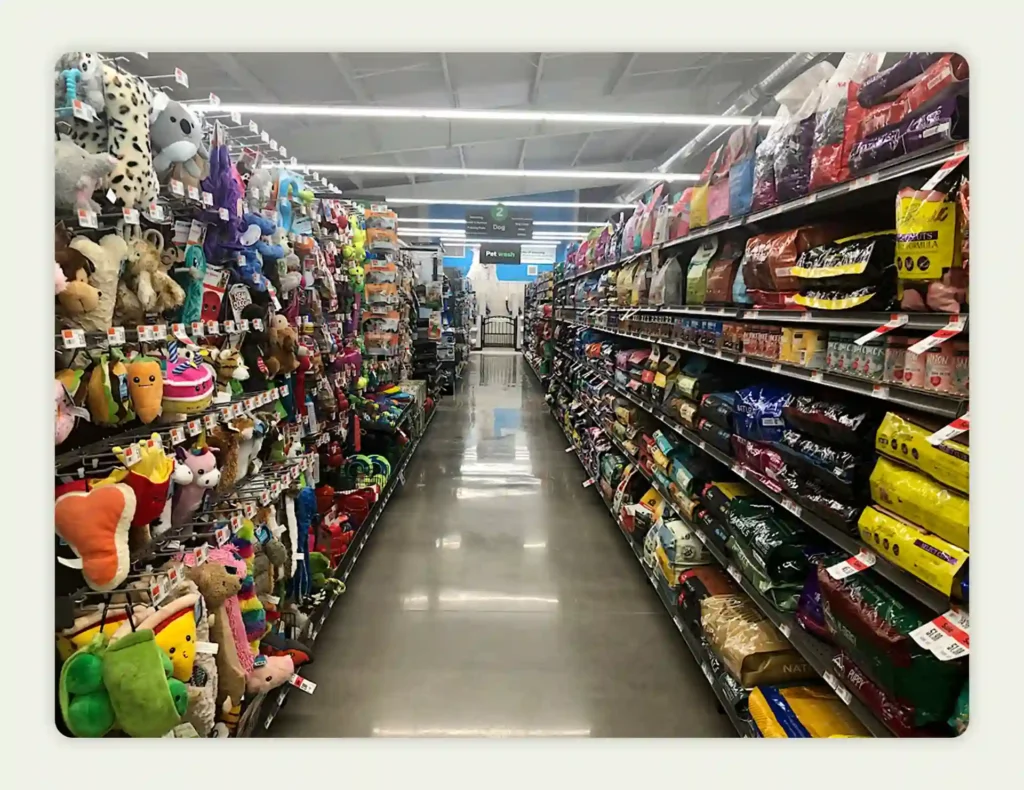
Pet supplies wholesalers source treats, toys, grooming tools, pet apparel, and home essentials for pet shops, vet clinics, mobile groomers, and online pet retailers. The market works in their favor because pet parents rarely switch products once they find something their dogs or cats enjoy. Wholesalers streamline that steady demand by offering a curated catalogue with consistent pricing, fast restocks, and access to products that retail stores can’t afford to import individually.
The value is simple: retailers avoid high shipping costs from multiple suppliers, and the wholesaler ensures shelves stay full with items that move quickly. Trends like dental treats, enrichment toys, and natural-ingredient snacks continue to grow, giving wholesalers plenty of space to specialize and expand.
How much you can make: $80,000 – $2.5 million annually
How much it costs to start: $10,000 – $60,000
How long it takes to build: 2–5 months
Example brands:
KONG: Their durable dog toys are distributed in bulk to pet stores and online retailers.
Blue Buffalo: Works with wholesale distributors for pet food across regions.
3. Home goods & décor wholesale
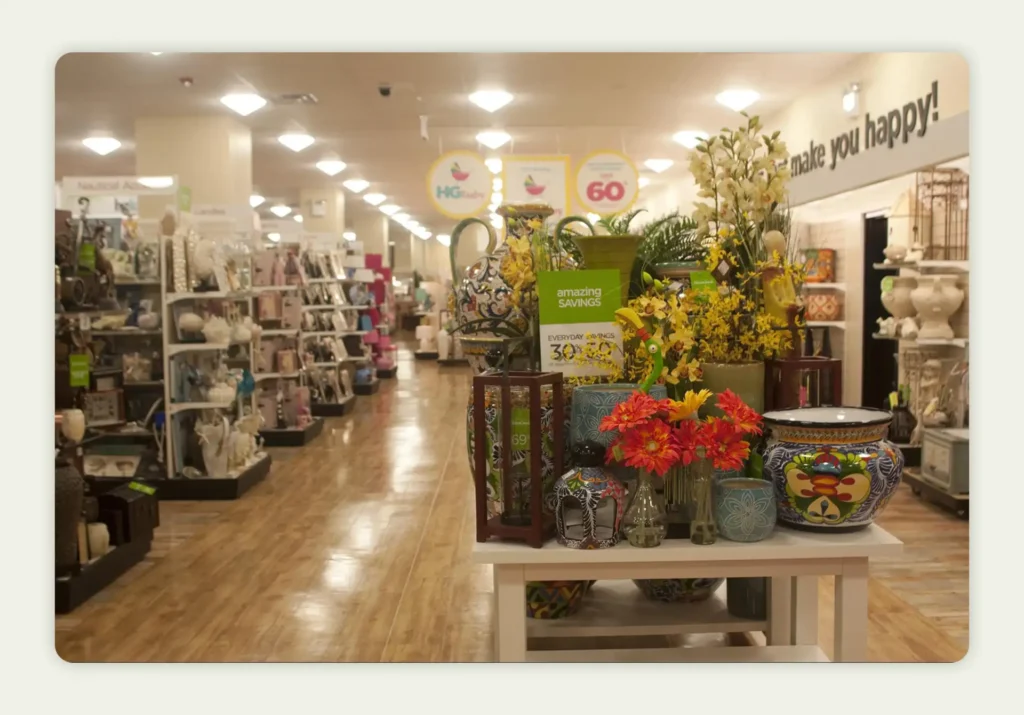
Home-decor wholesalers work behind the scenes, supplying boutiques, interior designers, Airbnb hosts, and décor retailers with candles, tableware, textiles, and artisan pieces. Unlike fast fashion, home goods rely heavily on aesthetic curation; retailers trust wholesalers who understand trends, color palettes, and materials that perform well in real homes.
The business thrives on variety. A wholesaler might carry dozens of SKUs, from textured ceramics to contemporary wall art, giving smaller stores access to products they’d never be able to design or manufacture themselves. With interior décor trending heavily on social media, retailers look for fresh and photogenic inventory without carrying production risk.
How much you can make: $100,000 – $2 million annually
How much it costs to start: $15,000 – $80,000
How long it takes to build: 3–9 months
Example brands:
The Howard Elliott collection: A home decor wholesaler and manufacturer known for decorative mirrors, accent furniture, wall art, and accessories.
PD home & garden: A home and garden decor wholesaler offering trend-driven indoor, outdoor, and seasonal decor collections.
Kalalou: Known for handcrafted home décor collections sold wholesale to interior stores.
4. Activewear & accessories wholesale
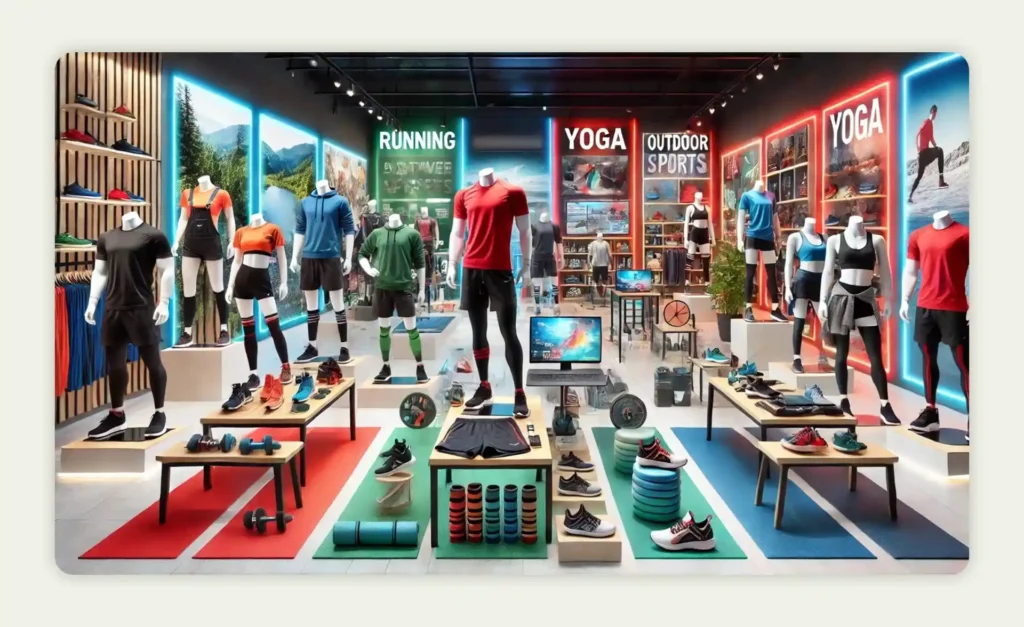
Activewear wholesalers supply gyms, fitness studios, online boutiques, and retail stores with leggings, tops, hoodies, socks, and lightweight accessories. Since activewear follows seasons and trends, wholesalers play an important role by refreshing collections and handling the manufacturing complexities that small stores don’t want to manage.
Stores rely on this model because activewear has one of the strongest repeat-purchase cycles. Customers return for colors, matching sets, and updated fits. A wholesaler’s catalog lets retailers buy in small batches while still offering a wide selection. Accessories like caps, belts, and socks add easy upsell opportunities with minimal inventory risk.
How much you can make: $120,000 – $4 million annually
How much it costs to start: $25,000 – $150,000
How long it takes to build: 4–12 months
Example brands:
Bella+canvas: Popular for blanks and basics sold in volume to fashion retailers.
Capri blue: Known for accessories and lifestyle products like the CB Volcano candle line.
5. Phone case & tech accessories wholesale
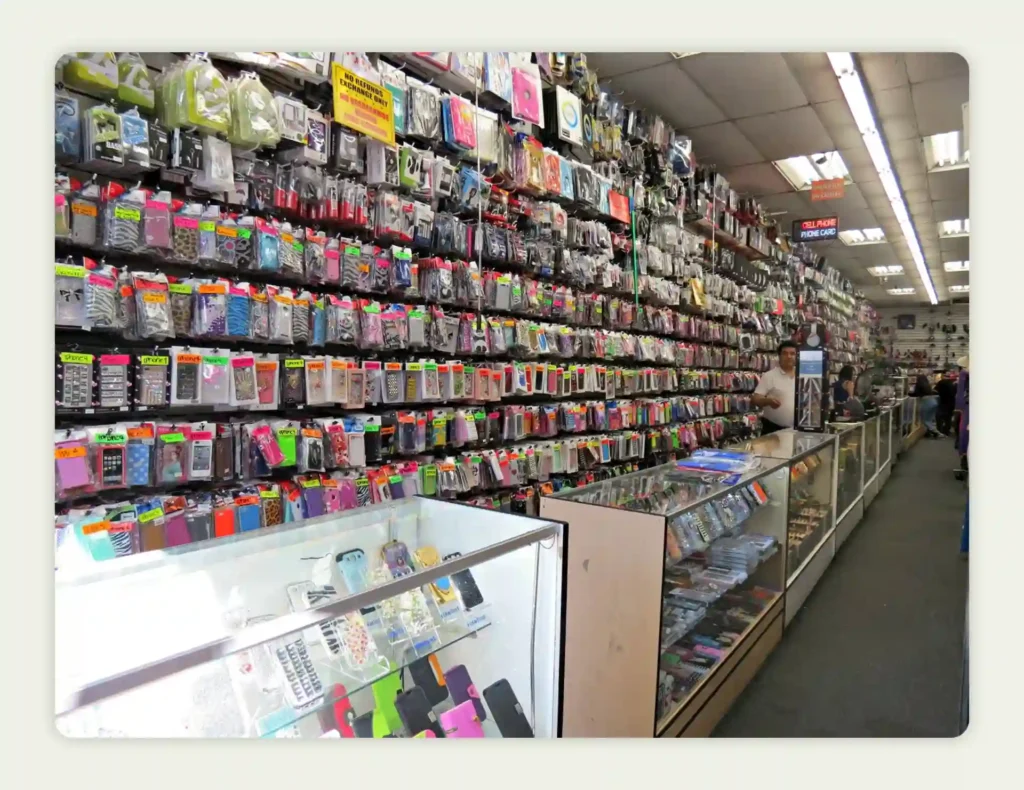
Phone case wholesalers focus on moving large batches of cases, chargers, cables, holders, and protective accessories to mobile shops and electronics retailers. Stores love wholesalers because they can keep up with trending patterns and fast releases without stocking thousands of units themselves.
This business scales quickly because margins are stable and products are lightweight. New phone models launch consistently, meaning predictable waves of demand. A wholesaler who keeps an eye on emerging materials (silicone, impact-resistant polycarbonate, magnetic cases) can supply retailers with what customers ask for before competitors catch up.
How much you can make: $100,000 – $2 million annually
How much it costs to start: $5,000 – $50,000
How long it takes to build: 2–4 months
Example brands:
Amscan: One of the world’s largest party supply wholesalers.
Qualatex: A major balloon brand that supplies event decorators and party stores.
6. Wellness, supplements & natural products wholesale
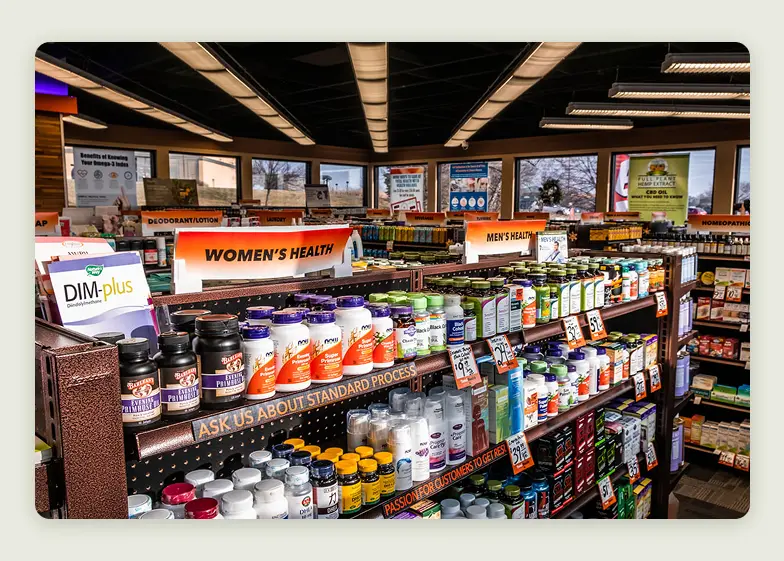
This wholesale segment supplies pharmacies, gyms, health shops, and online wellness retailers with products like herbal blends, collagen powders, natural oils, and vitamins. The demand stays strong because wellness trends evolve constantly, and consumers are willing to try new formulas.
Retailers depend on wholesalers to filter out unreliable suppliers, manage quality checks, and offer compliant, shelf-ready products. The wholesaler becomes the gateway that connects small brands to local retail shelves without the complexity of navigating regulations alone.
How much you can make: $150,000 – $5 million annually
How much it costs to start: $30,000 – $200,000 (due to testing and compliance)
How long it takes to build: 6–12 months
Example brands:
Nature’s way: Supplies vitamins and herbal products to large and small retailers.
Vital proteins: Distributes collagen and wellness products to supermarkets and health shops.
7. Party & event supplies wholesale
Wholesale party suppliers stock event planners, party stores, and online retailers with themed décor, balloons, banners, tableware, and seasonal kits. It’s a volume-driven business where trends move fast, from color palettes to themed birthday sets, and wholesalers help retailers stay stocked without overcommitting.
The business works because the end customers (parents, planners, and schools) always need new designs. Retailers rely on wholesalers to bring in variety and ship quickly. Since products are small and lightweight, inventory is easy to manage, and margins stay healthy.
How much you can make: $60,000 – $1.2 million annually
How much it costs to start: $5,000 – $30,000
How long it takes to build: 1–4 months
Example brands:
Case-mate: Provides phone cases and tech accessories to electronics retailers globally.
Anker: Popular for chargers and accessories sold wholesale across markets.

How WizCommerce supports fast-growing wholesale businesses?
Wholesale appears simple from the outside: buy in bulk and sell in bulk. But once orders start coming in, things get chaotic quickly. Reps juggling spreadsheets, buyers asking for updated stock levels, pricing that changes by customer type, and the pressure to respond quickly so you don’t lose the sale. WizCommerce steps in as the system that keeps all these moving parts clean, fast, and predictable.
Here are five features that make the biggest difference when a wholesale business is scaling:
Real-time inventory & ERP sync
Stock updates should never be a guessing game. With everything synced in real time, reps always know what’s actually available, buyers see accurate quantities, and you avoid the embarrassment of accepting orders you can’t fulfill. It keeps operations tight as order volumes increase.
Custom price lists & catalogs
Wholesale pricing isn’t one-size-fits-all. Some buyers negotiate better rates, some need restricted catalogs, and some only buy seasonal items. WizCommerce lets you assign pricing tiers and curated catalogs to each customer group, so every buyer sees exactly what’s meant for them, no mix-ups, no manual corrections.
AI-powered recommendations
When your catalog grows, finding the right products becomes harder for both reps and buyers. AI tools for wholesalers help surface frequently bought-together items, relevant substitutes, and alternatives for out-of-stock SKUs. It quietly increases order value without pushing buyers, and helps new reps sell like seasoned ones.
Mobile order-taking on the go
Most wholesale deals happen outside an office, at trade shows, on showroom floors, and in-store visits. WizOrder makes it easy for reps to check stock, browse catalogs, and submit orders instantly, even with weak internet. It keeps sales moving in moments when speed makes the difference between closing and losing.
Self-serve wholesale portal
Some buyers prefer to order at midnight. Some reorder the same SKUs monthly. WizShop gives them a clean, 24/7 portal where they can browse updated catalogs, see their negotiated prices, and place orders without waiting for a rep. It reduces back-and-forth and gives customers more control over their purchasing.
WizCommerce brings order and speed into the parts of wholesale that usually slow businesses down. Whether you’re selling beauty essentials, home goods, accessories, or pet supplies, the platform gives you the structure to scale without getting buried in operations.
Book a demo and explore firsthand how these features support your wholesale idea from day one.
FAQs
How do I start selling wholesale?
You can start selling wholesale by choosing a product category you can source reliably, then secure suppliers who offer good margins at low minimum order quantities, register your business, and set up pricing tiers for buyers. Use a B2B platform like WizCommerce to manage orders, catalogs, and inventory efficiently.
What are the easiest wholesale businesses to start?
The easiest wholesale businesses to start are categories with low investment, high demand, and require minimal logistics, like phone accessories, beauty products, stationery, home décor items, or pet supplies.
How much money do you need to start a wholesale business?
Most small wholesalers start with $2,000 – $15,000 when beginning a wholesale business, depending on the product. Lower-ticket categories like fashion accessories or small electronics fall at the lower end, while beauty, wellness, or home goods may require more to buy inventory in bulk.
What are the risks of wholesaling?
The biggest risks of wholesaling are holding too much inventory, misjudging demand, inconsistent suppliers, and losing money on pricing mistakes. Managing inventory and pricing accurately reduces these risks.
How do I become a wholesale distributor?
To become a wholesale distributor, choose a niche, build relationships with manufacturers, negotiate pricing that leaves room for a healthy markup, and create a distribution system that retailers can rely on. As you grow, the key is becoming the supplier retailers trust for fast responses, clear catalogs, and accurate stock updates. Tools like WizOrder and WizShop make your operations look polished even if you’re just starting out.