Skip to content



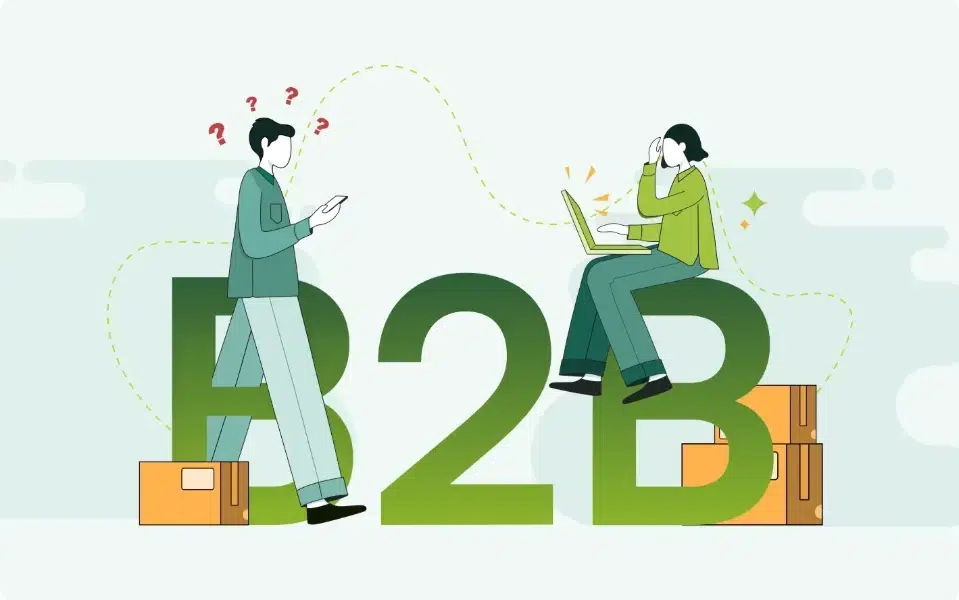
The pace in B2B ecommerce over the past year has been wild. Buyers now want the same smooth experience they enjoy as consumers, fast deliveries, personalized catalogs, simple reorders, and the freedom to handle things themselves without waiting for a sales rep.
Recent analysis based on Grand View Research estimates puts the global B2B e-commerce market at roughly $22 trillion and is still growing. At the same time, McKinsey’s B2B Pulse research shows that 27% of buyers are willing to spend $500,000 or more in a single transaction via remote or self-service digital channels, and hybrid sales models that blend in-person, remote, and e-commerce interactions can drive up to 50% more revenue than traditional field-only approaches. Businesses that meet buyers with this kind of seamless, omnichannel experience are the ones capturing that growth.
Following the right B2B e-commerce platform best practices helps businesses deliver a seamless shopping experience, improve user experience, and meet the unique needs of business customers
Why B2B e-commerce best practices matter?
A well-built B2B e-commerce site doesn’t just “look good.” It reduces the friction inherent in the B2B purchasing process, long approvals, bulky catalogs, unclear pricing, and missing product info. The businesses doing well this year are the ones designing their ecommerce websites around what their buyers complain about daily: slow checkout processes, limited self-service options, and too many back-and-forth emails.
| Focus area | Key benefit | Outcome |
| Personalization | Tailored experiences | Higher loyalty |
| Self-service options | Buyer independence | Faster, easier purchases |
| Mobile-first design | Optimized for mobile users | Increased engagement |
| AI & automation | Streamlined processes | Cost savings, efficiency |
| Multichannel selling | Broader sales reach | Higher revenue |
What are the top B2B e-commerce best practices?
Following the right best practices for B2B e-commerce ensures you meet buyer expectations, helps you deliver speed, consistency, and personalization without bloating your team’s workload. How far you push each one depends on your category — vertical ecommerce operators can standardise catalogs and pricing rules in ways broad-line distributors cannot.
1. Create a custom buyer experience
In 2026, personalization in B2B isn’t a bonus; it’s expected. Buyers want content, recommendations, and pricing tailored to their needs. Businesses that fully integrate AI into their personalization strategies see higher retention and customer lifetime value. Tailored catalogs, custom pricing, flexible payment terms, and shipping options all make buyers feel understood and valued, boosting not just sales but also loyalty. Understanding potential customers allows businesses to customize product descriptions and promotions, aligning with business goals while improving user experience. But creating this level of personalization requires strategy and smart use of data.
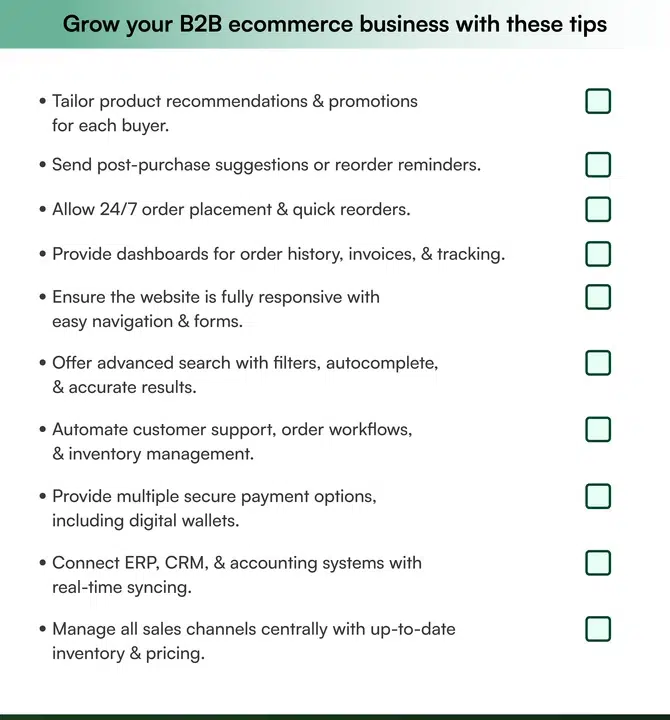
- Start with data: Tailoring product details and product information to business buyers’ specific needs increases loyalty and repeat orders. Personalization begins with understanding your customers. Focus on first-party data: analyze purchase history, browsing behavior, average order values, and preferred payment methods. These insights let you create targeted recommendations and content that actually resonates.
- AI-powered recommendations: Artificial intelligence can take personalization to the next level. AI tools can suggest products, upsells, and even timing for reorder reminders based on past behavior. For example, Indian Touch of Gallup used WizCommerce’s AI features to generate $279,000 in additional revenue in just five months.
- Post-purchase personalization: The buyer journey doesn’t stop at checkout. B2B buyers expect personalized follow-ups, like curated product suggestions, reorder reminders, or account-specific offers. Doing this builds loyalty and keeps buyers coming back.
2. Add self-service buying options
Providing self-service options aligns with B2B buyers’ expectations, improves customer feedback, and reduces the strain on approval processes. B2B buyers today want control over how they purchase. According to a recent Gartner survey, 61% of B2B buyers now prefer a rep-free, self-service buying experience, signaling a strong shift toward digital independence and automated order management.
So, adding self-service can increase revenue, improve customer satisfaction, and enhance operational efficiency. Buyers feel empowered, and your team can focus on higher-value tasks instead of routine order handling.
Your platform should provide these key features for self-service:
- 24/7 order management: Allow buyers to place orders anytime without needing a sales rep.
- Account dashboard: Real-time access to order history, tracking, and account information.
- Quick reorder options: Let buyers repeat previous orders with a single click.
- Custom price lists: Display account-specific pricing automatically.
- Order status tracking: Enable buyers to check their order progress independently.
For self-service to be effective, ensure your self-service tools allow customers to manage multiple delivery addresses, view and download invoices, and handle account administration in one unified platform. Self-service doesn’t replace human interaction; it complements it. By giving buyers independence, you reduce friction and boost loyalty while streamlining operations.
3. Build mobile-first websites
Mobile is no longer optional in B2B e-commerce. Since 2019, mobile engagement in B2B purchases has quadrupled, and buyers now rely on about 10 channels for research. Optimizing your online store for mobile devices improves visibility in search engines and ensures smooth interaction for business buyers.
But beware! Slow or clunky mobile sites frustrate users, risk lost sales, and reduce engagement. A responsive, mobile-first design ensures your platform meets modern expectations, improves search engine visibility, and allows business customers to access the online store anytime, anywhere.
Key features to have in your mobile-first design:
- Responsive layouts: Automatically adjust to any screen size without losing functionality.
- Easy navigation: Use touch-friendly menus and intuitive interfaces.
- Mobile-friendly forms: Shorten forms and use larger input fields for easier completion.
- Fast page loads: Compress images and streamline code for quicker load times on mobile networks.
Example: With WizCommerce’s mobile-optimized storefronts, buyers enjoy a smooth, engaging experience anywhere, improving engagement and conversions.
4. Improve product search
A powerful product search can dramatically boost conversions by 7–10× compared to users who don’t use search. Yet, only a few B2B businesses prioritize enhancing their search experience, leaving a huge opportunity to stand out. A modern B2B search experience should do more than match keywords. It should help buyers express what they need in their own words and guide them to the best options.
By moving beyond basic results, you unlock the benefits of personalized search, which ensures that every buyer sees the products most relevant to their specific industry and history.
That means a modern B2B search experience should:
- Suggest results as they type so they don’t need to know exact product names or codes.
- Catch typos automatically so they don’t end in “no results” pages.
- Understand natural language queries, like “eco-friendly packaging for cosmetics” or “bulk pet food for small retailers,” and return relevant results.
- Work flawlessly on mobile so field reps and on-the-go buyers can place accurate orders from any device.
- Provide clear filters to refine results by features, price range, availability, order minimums, or industry-specific attributes (like material, certification, or region).
This combination of smart search and precise filtering reduces decision fatigue, speeds up ordering, and makes your B2B store feel like a helpful assistant rather than a static catalog.
5. Use AI to automate tasks
AI adoption in B2B e-commerce is an upward trend; 67% of B2B e-commerce companies are now using AI or machine learning to drive growth. Using AI for order processing and customer support enhances the sales process while maintaining data security. From customer service to inventory management, AI streamlines repetitive processes and frees teams to focus on strategic work.
Here’s where businesses implement AI:
| Business function | AI tools | Impact | Implementation tips |
| Customer service | Chatbots & virtual assistants | 24/7 support, faster responses, lower support workload, and more consistent customer experiences | Start small with one high-volume use case (e.g., FAQs), then integrate bot transcripts into your CRM for better insights. |
| Inventory management | Predictive analytics | Fewer stockouts, reduced overstock | Connect your AI tool to ERP data, and invest in clean, accurate stock and sales history before scaling models. |
| Order processing | Automated workflows | Accurate, faster order handling | Integrate with ERP and CRM so orders, approvals, and status updates sync automatically; pilot on one region or segment first. |
| Security | AI threat detection & anomaly monitoring | Stronger data protection through real-time monitoring; 51% of companies use AI for threat detection, and 75% to safeguard sensitive data. | Feed AI tools with logs from key systems (ERP, ecommerce, CRM), define alert rules, and regularly review incidents to refine models and response playbooks. |
6. Add multiple payment methods
Offering diverse payment options is no longer a nice-to-have; it’s a driver of growth. B2B buyers increasingly expect the flexibility to pay in ways that suit their business needs, like digital wallets, BNPL, and traditional credit cards. Platforms that support diverse payment options experience accelerated order completion, fewer transaction failures, increased customer loyalty, and a potential up to 30% increase in revenue.
Popular payment methods for B2B
| Payment method | Benefits | Ideal for |
| Credit/Debit cards | Fast, widely accepted | Everyday transactions |
| Digital wallets | Secure, convenient | Tech-savvy clients |
| Bank transfers | Handles large amounts | High-value orders |
| Buy now, Pay later | Improves cash flow | Growing businesses |
| Mobile payments | Easy on-the-go | Field sales teams |
Traditional paper checks can cost $4 to $20 per transaction. Switching to digital payments reduces costs, minimizes errors, and speeds up the process. Utilizing AI tools for real-time fraud detection adds an extra layer of security, ensuring safer transactions.
With emerging trends like cryptocurrency and blockchain gaining traction in B2B, early adoption can set businesses apart, offering innovative payment experiences and appealing to forward-thinking clients.
7. Connect business systems
Disconnected systems create inefficiencies, errors, and delays in B2B operations. Linking your B2B e-commerce platform with tools like ERP, CRM, and accounting software is essential for smooth workflows, accurate data, and faster decision-making. Many teams now lean on cloud-based integrations because SaaS tools make the setup lighter, faster, and easier to maintain.
| Integration | Key benefits | Business impact |
| ERP | Real-time inventory updates, automated orders | Faster order fulfillment, fewer stockouts |
| CRM | Centralized customer data, personalized experiences | Higher satisfaction and retention |
| Accounting | Automated invoicing, payment tracking | Reduced billing errors, improved cash flow |
Key integration capabilities:
- Secure data transfer: Use HTTPS, SFTP, or API encryption to keep sensitive information safe.
- End-to-end process flow: Link supplier pricing, purchase orders, and inventory for seamless operations.
- Automation & alerts: Automatically notify teams of order issues, stock changes, or system errors.
- Scalability: Choose solutions that grow with your business, supporting more products, customers, and locations.
Integration works best when the data is clean and consistent, so the first step is validating and standardizing every data point before it moves between systems. Once that foundation is solid, real-time syncing keeps inventory, orders, and pricing aligned everywhere without manual updates slowing things down. Security also has to be woven into the setup, regular audits, automated backups, and compliance with GDPR or CCPA protect both the business and its customers.
8. Make data-driven decisions
Data is the backbone of modern B2B ecommerce, helping businesses uncover buyer behavior, optimize operations, and make decisions that directly impact revenue. Companies that use data effectively outperform competitors in conversion rates, customer satisfaction, and operational efficiency. Analytics provide insights on consumer shopping, target audience, and unique needs, enabling smarter pricing, inventory management, and marketing efforts.
Key metrics to track and how to use data effectively:
| Data category | What to track | How to use the data effectively | Business impact |
| Customer behavior | Browse patterns, on-site search terms, cart abandonment, and purchase history | Segment buyers by behavior and preferences, personalize content and recommendations, and trigger time-limited offers for frequent abandoners. | Tailored experiences, higher loyalty, recovered revenue, increased conversions |
| Inventory & demand | Stock levels, turnover rates, lead times, seasonal trends | Use predictive analytics to forecast which products will sell faster and when; schedule production and restocks to match demand. | Better stock management, lower storage costs, fewer stockouts, and lost sales |
| Pricing & promotions | Discount usage, promo performance, margin by product, response to price changes | Run dynamic pricing and targeted promotions based on demand, competitor pricing, and buyer behavior (e.g., special offers for high-value segments). | Higher revenue per buyer, healthier margins |
| Funnel performance | Drop-off points across checkout, time to complete purchase, and error rates | Identify friction points (e.g., payment page, shipping step), run A/B tests, and simplify forms or options to reduce abandonment. | Fewer abandoned carts, smoother checkout, better conversion rates |
| Cross-channel & marketing ROI | Channel-level performance across website, mobile app, marketplaces, social; campaign results, email engagement, CTR | Compare ROI across channels, double down on top performers, and fix weak spots (e.g., optimize mobile checkout if abandonment is higher there). | Smarter marketing spend, improved ROI, stronger channel strategy |
With live visibility into sales, stock levels, and website engagement, teams can react quickly to emerging trends, push high-performing products, adjust search placements, or update pricing before competitors do. The same analytics uncover hidden opportunities by revealing underserved customer segments, under-promoted products with strong potential, or regions where adoption is quietly growing.
Research consistently shows that data-driven businesses are 23 times more likely to attract customers and have higher profit margins than those relying on intuition alone. In the B2B ecommerce space, this can translate to more efficient operations, higher customer retention, and increased revenue.

9. Keep customer data safe
In 2026, cybersecurity is no longer an embellishment; it’s a business-critical requirement. B2B e-commerce portals store sensitive information, including corporate accounts, payment data, and proprietary purchase history. According to IBM’s 2025 X-Force Threat Intelligence Index, credential harvesting was the top impact in 28% of incidents, and credentials or data were stolen in nearly half of all cyberattacks in 2024, clear proof that identity and data are prime targets. Protecting this data safeguards not just your reputation but also buyer trust and revenue.
For added protection, businesses should adopt these multiple layers of security:
| Security level | Security layer | Purpose | Implementation |
| Basic | SSL certification | Encrypt customer data in transit | Enable SSL/TLS on all pages handling logins, checkout, and account data to avoid “Not Secure” warnings. |
| Basic | Multi-Factor Authentication (MFA) | Prevent unauthorized account access | Require MFA for admins, sales reps, and enterprise buyers—especially where multiple users share one account. |
| Basic | Strong password policies | Reduce breach risk from weak credentials | Enforce complex passwords, periodic resets, and prevent reuse across accounts and critical systems. |
| Advanced | Web application firewall (WAF) | Block malicious web traffic | Monitor HTTP/HTTPS traffic and automatically block SQL injection, XSS, and other common attacks. |
| Advanced | VPN services | Secure remote access to systems | Require VPN for admins and staff performing sensitive tasks or accessing internal tools remotely. |
| Advanced | Payment gateway security | Safeguard financial and cardholder data | Use PCI DSS–compliant payment gateways and never store raw card data on your own servers. |
| Advanced | Role-based access | Limit user permissions to the least privilege | Assign roles and restrict access to features and data based on job responsibilities. |
Even with strong prevention, breaches or system failures can happen. A dependable recovery plan ensures the business keeps running even when something goes wrong. Automated backups should be scheduled frequently and stored off-site, encrypted to prevent misuse if intercepted. Routine recovery tests are equally important; they confirm your systems can come back online quickly without guesswork or downtime.
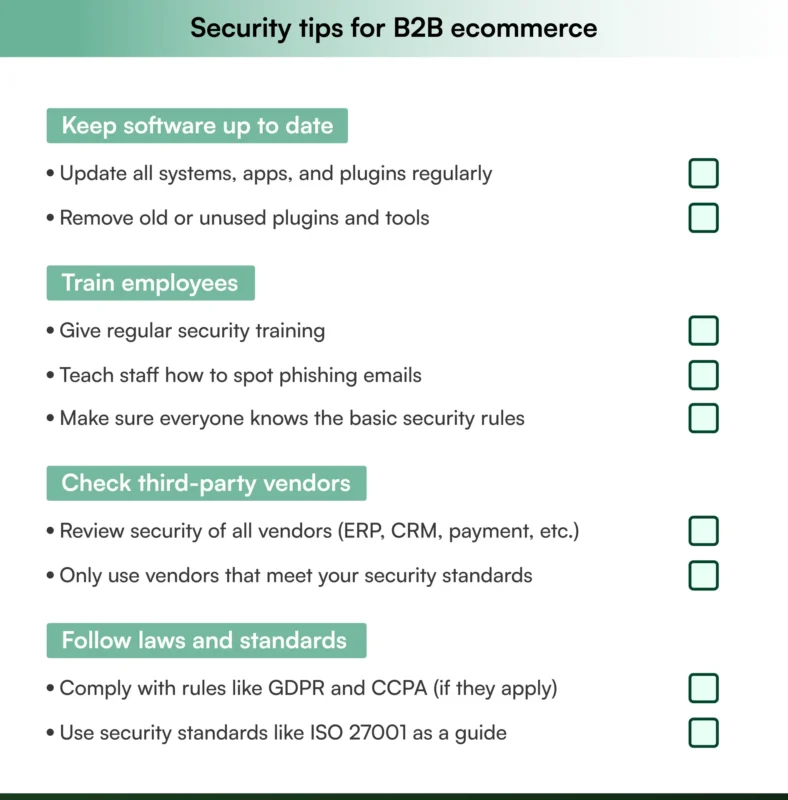
When companies adopt this multi-layered approach, the impact shows up quickly: higher buyer trust, fewer fraud-related losses, reduced operational disruptions, and a stronger competitive position in the market.
10. Sell through multiple channels
By 2026, relying on a single sales channel will have become a real business risk. B2B buyers expect to interact with suppliers through their preferred channels, including websites, mobile apps, marketplaces, email, or even social platforms. McKinsey notes that companies using multiple channels can increase revenue by up to 50% and the reason is straightforward: multichannel selling makes buying easier, expands your visibility, and positions your brand exactly where buyers already spend their time. When customers can check stock on mobile during a commute, place bulk orders on desktop, or reorder via email, they stay engaged and loyal. This expanded presence not only drives order volumes but keeps your brand top-of-mind throughout the buying journey.
Key channel integration strategies:
| Channel type | Key benefits | Implementation priority |
| Mobile commerce | 70% of shoppers prefer using smartphones | High – Critical for upcoming years |
| Social commerce | 25% of users have purchased via social media | Medium – Rapidly growing |
| Traditional website | Acts as the core hub for all operations | High – Essential foundation |
| Email marketing | Provides direct, personalized communication | Medium – A strong support tool |
Best practices for channel management
- Use a single dashboard to manage inventory, pricing, and orders across all channels to prevent overselling and keep branding consistent.
- Update stock levels, prices, and promotions instantly across every channel to avoid mismatched information and customer confusion.
- Track key metrics, such as conversion rates, revenue per channel, and customer acquisition costs, to optimize performance and guide marketing strategies.
- Ensure fast, frictionless checkouts with touch-friendly forms and fully responsive design on every device.
- Create visually engaging content tailored to each channel, highlight clear product benefits, and integrate direct “buy” buttons wherever possible.
- Keep your product catalog detailed, easily searchable, and always up-to-date with accurate inventory and pricing.
- Personalize campaigns using purchase history, abandoned cart data, and account-specific promotions to increase relevance and conversion.
Advanced features to look for:
- Multi-location inventory management
- Automated pricing updates
- Bulk ordering capabilities
- Specialized invoicing for different buyer segments
- Mobile-friendly admin dashboards
By customizing the approach for each channel, you maximize its contribution to overall revenue while maintaining a smooth buyer experience.
Also read: Omni Channel Vs Multi Channel Retailing: Complete Guide 2026
WizCommerce, the one platform that aligns with B2B e-commerce best practices
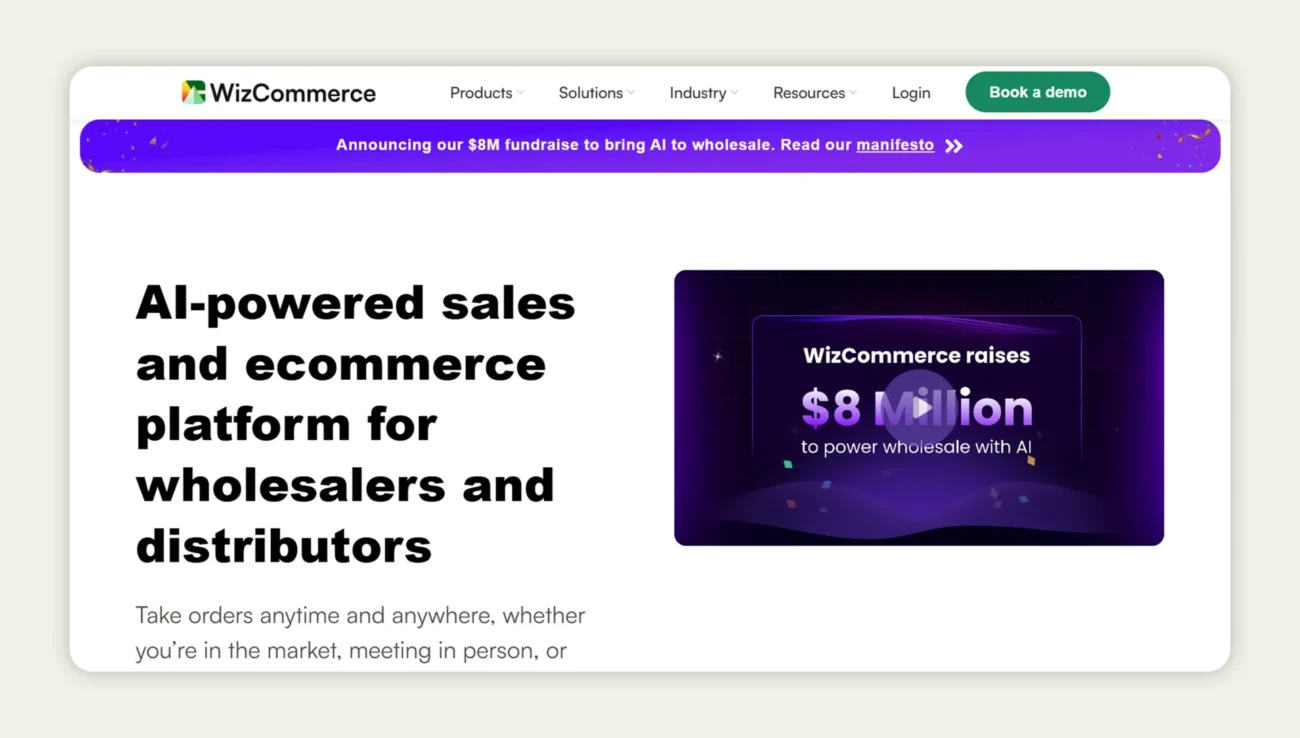
Implementing B2B ecommerce best practices is one thing; doing it efficiently and at scale is another. When you’ve already mapped out what “best practices for B2B ecommerce” look like, the right platform should deliver them seamlessly, reliably, and in one place. WizCommerce is built precisely for B2B businesses. It brings all the essential tools under one unified platform, helping you deliver seamless, personalized, and scalable experiences.
| Best practice | WizCommerce’s solution | Why it matters |
| Personalization & custom pricing | Custom pricing tiers and customer‑specific catalogs are core features. It allows businesses to create customer-specific catalogs and pricing tiers, ensuring that buyers only see products and prices relevant to them. | This level of customization reduces friction during the purchase process, strengthens trust, and encourages repeat orders. |
| Self‑service buying & reorders | WizCommerce provides streamlined workflows that let customers reorder previous purchases with a single click, place bulk orders, and manage their accounts independently. | Empower buyers to act on their own schedules while freeing up sales and support teams to focus on higher-value interactions. |
| Mobile‑ / field‑sales‑ready | Whether buyers are in the office, on the road, or attending trade shows, the platform supports full order taking. | Sales reps or buyers on mobile have full capability, both offline access, ensuring no opportunities are missed due to location or connectivity constraints. |
| Enhanced search & discovery | AI‑powered product recommendations, attribute‑level filters, typo‑tolerance, help buyers quickly find exactly what they need, even in complex catalogs. | Reduces search frustration and increases conversion rates, especially for high-volume or recurring orders. |
| System integration | Connects seamlessly with ERPs, CRMs, and accounting tools (QuickBooks, NetSuite, etc), ensuring that inventory, orders, and customer data stay in sync across platforms. | By connecting these systems, businesses avoid manual errors, accelerate order fulfillment, and maintain accurate reporting critical for both efficiency and strategic decision-making. |
| Flexible payments & order management | Supports flexible payment options, from net terms to digital payments, making it easier for buyers to transact on terms that suit their business while building confidence in the supplier. | Matches business‑buyer expectations around payment terms and ease. |
| Scalability & efficiency | WizCommerce, built for wholesale scale, allows companies to grow without worrying about outgrowing their ecommerce infrastructure.
|
Future‑proofing your ecommerce site for growth, new product lines, and multi‑region selling. |
WizCommerce helps businesses implement these B2B ecommerce best practices, improving user experience, meeting business goals, and delighting potential customers.
Book a demo and see how your business can streamline operations, delight buyers, and stay ahead in a rapidly changing market.
FAQ on B2B E-Commerce Best Practices
1. How does e-commerce work for B2B?
In B2B e-commerce, businesses sell directly to other businesses through an online platform, allowing buyers to browse catalogs, view custom pricing, place orders, and manage accounts without relying solely on sales reps. Integrations with ERP, CRM, and payment systems streamline fulfillment and payments.
2. What is a common challenge in B2B e-commerce?
One of the biggest challenges is handling complex purchasing processes with multiple stakeholders, approvals, and unique pricing rules. Without the right platform, this complexity can lead to delays, errors, and frustrated buyers who expect the same convenience they get in B2C shopping.
3. Which e-commerce platform is best for B2B?
A platform built for B2B offering features like custom pricing, bulk ordering, multi-user accounts, and integration with other business systems. Like WizCommerce, support custom pricing, bulk orders, multi-user accounts, and integrations, helping businesses scale efficiently.
4. What are three drawbacks of e-commerce?
E-commerce can limit physical interaction with products, which may lead to increased return rates or buyer hesitation. Security concerns are also significant, as platforms must protect sensitive customer data. Finally, high competition in online markets requires businesses to innovate to retain customers and stand out continuously.
5. What are three things required for e-commerce?
At a minimum, e-commerce needs a product to sell, a digital platform to display and transact the product, and a secure payment system to process purchases. Each component ensures that buyers can discover, order, and pay for products efficiently and safely.
6. What are 5 ways that B2B is distinctive from B2C?
B2B differs in customer type, sales cycle, transaction size, relationship, and purchase motivation. B2B serves businesses rather than individuals, involves longer sales cycles with multiple decision-makers, and has higher-value transactions. Relationships are long-term and trust-driven, with purchases motivated by ROI rather than impulse or personal desire.